

For decades, the popular imagination of the Terracotta Army has been dominated by the image of massive imperial workshops operating under brutal militaristic discipline, manned entirely by hardened adult laborers and specialized artisans. Built more than 2,200 years ago to guard the tomb of Qin Shi Huang, China's first emperor, the thousands of life-sized clay soldiers unearthed near Xi'an remain one of the most astonishing archaeological finds of the twentieth century. Each statue possesses unique facial features, armor styles, and hairstyles, suggesting an immense logistical effort backed by a centralized state machine. However, recent scientific investigations are turning conventional historical assumptions upside down by revealing who actually shaped the clay under the imperial gaze.
Recent examinations of ancient fingerprints and physical impressions left indelibly in the ceramic matrix of the pottery have uncovered a surprising reality. Researchers analyzing micro-morphological data and biometric markers from the clay figures have found compelling evidence indicating that women and children played a significant, active role in manufacturing the famous imperial army. This pivotal discovery bridges long-standing gaps in our understanding of Qin Dynasty labor mobilization, shifting our historical perspective from a narrow view of elite male military artisans to a comprehensive societal endeavor that involved nearly every demographic of the ancient population.
The Scientific Methodology Behind Biometric Analysis
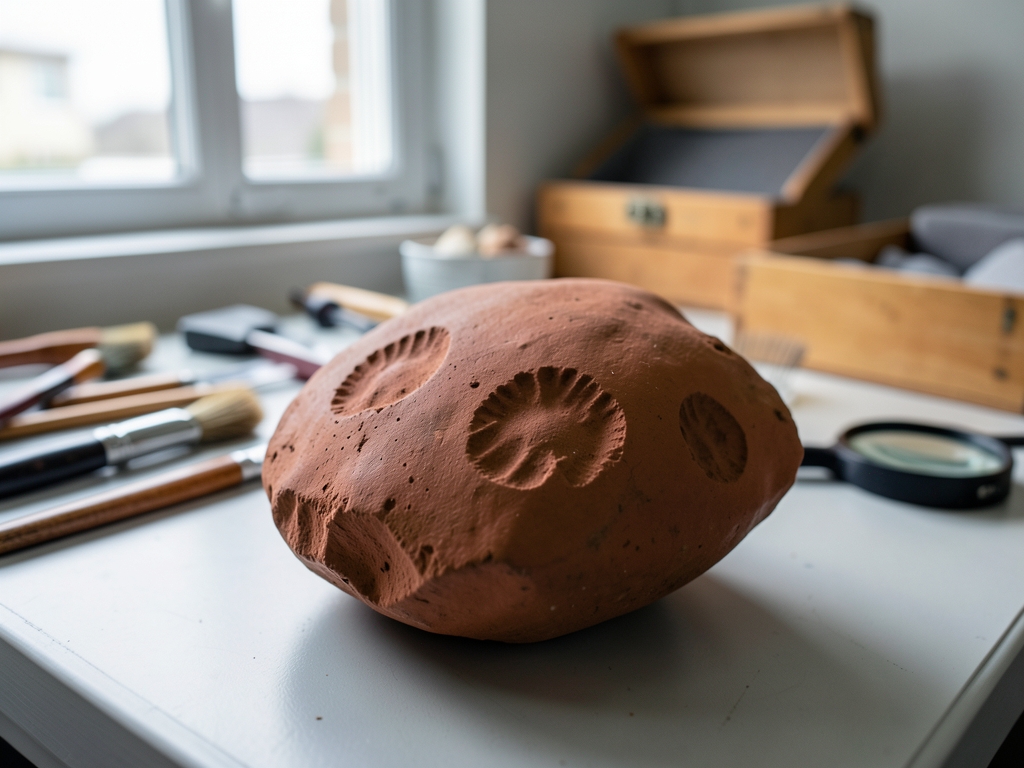
Unlocking the identity of ancient craftspeople who left no written records requires advanced forensic archaeology. Modern researchers utilize high-resolution surface scanning, ridge-count analysis, and biometric algorithms to examine ancient fingerprints trapped in clay matrices before firing. When moist ceramic clay is molded, handled, and smoothed by human hands, epidermal ridge patterns—the unique loops, whorls, and arches of human fingerprints—are permanently fossilized during the high-temperature kiln-firing process.
By comparing the density, breadth, and interstitial spacing of these ancient ridge patterns with modern biometric demographic databases, forensic scientists can estimate the age and biological sex of the hands that shaped the artifacts. Biological studies of human growth indicate that epidermal ridge breadth correlates closely with physical stature and age, allowing specialists to differentiate between adult male hands, adult female hands, and the smaller hands of juveniles. When applied to the terracotta figures, these rigorous analytical methods revealed a distinct clustering of prints that did not conform to the traditional profile of adult male soldiers or state-registered guild masters.
The preservation of ancient fingerprints on terracotta sculptures offers a direct, intimate link to the anonymous hands that built the First Emperor's subterranean empire more than two millennia ago.
Furthermore, scanning electron microscopy has allowed researchers to analyze tool marks, clay consistency, and firing temperatures associated with specific workshops. These technical insights demonstrate that while master sculptors oversaw the general aesthetic and structural integrity of the complex military formations, an extensive subsidiary workforce was deployed to handle mass production tasks, preliminary molding, and surface detailing.
Qin Dynasty Labor Mobilization and Imperial Scale
To understand why women and children were integrated into the production of a military garrison for an emperor's afterlife, historians must look closely at the socioeconomic structures of the Qin State. The construction of Qin Shi Huang's vast mausoleum complex was an unprecedented logistical challenge that required hundreds of thousands of workers over decades. Historical texts describe corvée labor systems where households across the empire were obligated to provide service, materials, or manufactured goods to support state projects.
State production was organized through strict bureaucratic oversight, featuring standardized inscriptions on weapons and pottery that identified the producing workshops, local prefectures, and individual supervisors. This quality control mechanism ensured absolute accountability. However, the sheer volume of clay needed to build thousands of life-sized figures, horses, chariots, and architectural elements meant that local family units and rural cooperative networks were likely pulled into the supply chain.
| Aspect of Production | Traditional Historical View | New Archaeological Findings |
|---|---|---|
| Labor Force | Adult male military artisans and state guild workers | Broad community involvement including women and children |
| Workshop Structure | Strictly segregated militarized factories | Decentralized rural and auxiliary production networks |
| Evidence Utilized | Written legal codes and surviving imperial steles | Biometric fingerprint analysis and ceramic micro-morphology |
| Scale of Operation | Centralized imperial monopoly | Hybrid imperial-household mobilization model |
Within these rural production units, pottery making was traditionally a household skill passed down through generations. Women and older children within farming households possessed advanced dexterity and experience in crafting domestic ceramics, storage vessels, and tiles. When imperial demands for standardized military figures escalated, regional administrative offices likely mobilized entire households to meet strict imperial quotas, blending domestic craft traditions with state-sponsored manufacturing.
Challenging Long-Held Historical Assumptions
For generations, popular histories of ancient China portrayed major imperial construction projects as monuments to absolute authoritarian control, built exclusively by male conscripts enduring harsh conditions. While the physical toll of building the mausoleum was undoubtedly severe, the inclusion of women and children complicates the simple narrative of forced male slave labor. It suggests that entire communities participated in supporting the imperial project, reflecting a more deeply integrated economic framework where family units contributed collectively to state tax and labor obligations.
Info! The presence of juvenile and female fingerprints does not imply child slavery in the modern sense, but rather highlights the reliance on pre-industrial household production models where families worked collectively to fulfill state obligations.
This discovery also sheds light on the division of labor within ancient workshops. While master artisans concentrated on facial expressions, armor detailing, and structural assembly, auxiliary hands managed preparatory tasks such as kneading clay, packing mold cavities, and smoothing interior seams. Such specialized task-sharing maximized efficiency and allowed workshops to achieve the rapid output required by the imperial court.
Broader Implications for Qin Dynasty Archaeology
The identification of diverse demographic fingerprints opens exciting new avenues for future research across other archaeological sites in China and beyond. Scholars are now re-examining ceramic roofing tiles, bricks, and storage jars found at other Qin and Han dynasty sites to determine whether household-based auxiliary labor was a widespread phenomenon across the empire.
By shifting the focus from imperial elites and military generals to the anonymous women and children who shaped the clay, modern archaeology restores a human dimension to a monument often viewed solely through the lens of political power. These quiet contributors left an indelible, literal mark on history, preserved in fired earth for over two millennia until modern science learned how to read their stories.
How did scientists discover that women and children helped build the Terracotta Army?
Researchers used advanced biometric analysis, measuring the ridge breadth and patterns of ancient fingerprints preserved in the clay of the sculptures and comparing them with modern demographic databases to estimate age and sex.
Does this mean children were forced into hard labor?
Historians explain that production relied on pre-industrial household labor models, where entire rural families worked together to fulfill imperial corvée tax and manufacturing quotas assigned to their communities.
What specific tasks were women and children likely performing in the workshops?
They likely handled auxiliary tasks such as preparing and kneading clay, filling mold cavities, and smoothing interior surfaces, while master artisans focused on facial sculpting and fine detailing.
When was the Terracotta Army originally created?
The Terracotta Army was constructed over 2,200 years ago during the Qin Dynasty, specifically to accompany the tomb of Qin Shi Huang, China's first emperor.
As archaeological techniques continue to evolve, the integration of forensic science with traditional historical study promises to reveal even more about the hidden lives of ancient peoples. The story of the Terracotta Army is no longer just a testament to imperial might, but a collective achievement shared by men, women, and children whose labor shaped the foundations of an empire.
Sources and Further Reading
- Fingerprints on China's 2,200-year-old clay army point to women and children among its makers - VnExpress International — VnExpress International (published 2026-10-22 14:12)
- China’s Terracotta Army may have been mainly built by women and children: study - South China Morning Post — South China Morning Post (published 2026-10-21 07:17)
