

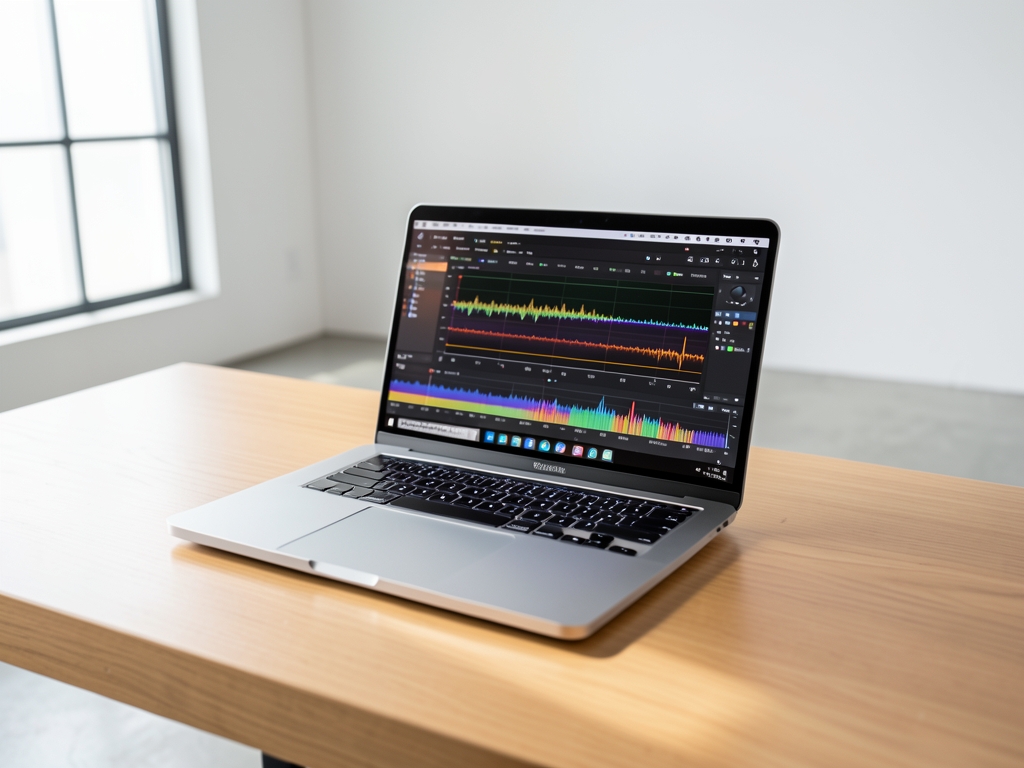
For more than two decades, Apple maintained an unwavering stance on personal computing ergonomics: laptop screens were meant for viewing, while trackpads and keyboards handled tactile input. Steve Jobs famously dismissed touchscreens on vertical computer displays as ergonomically exhausting and unnecessary for desktop-class operating systems. Over the years, while competitors across the Windows ecosystem experimented with folding panels, detachable tablets, and dual-screen hinge designs, macOS remained strictly bound to traditional pointer navigation. That long-standing era of resistance has officially ended with Apple's landmark hardware announcement.
The tech giant has officially introduced its first-ever touchscreen MacBook Pro lineup, featuring advanced PROLED XDR Tandem OLED displays and high-refresh-rate capabilities. Available in both 14-inch and 16-inch configurations, this new generation of professional portable workstations merges decades of macOS refinement with capacitive touch integration. Designed to cater to professional creators, developers, and power users who demand uncompromising performance, the release marks one of the most significant paradigm shifts in modern laptop engineering.
The Engineering Behind the PROLED XDR Tandem OLED Touch Display
The centerpiece of the newly announced MacBook Pro is its custom-engineered PROLED XDR display architecture. Unlike standard LCD or traditional single-layer OLED panels found in previous generations, this new screen utilizes a tandem OLED stack combined with advanced local dimming algorithms and a smooth 120Hz refresh rate. By layering two light-emitting diode structures, the display achieves unprecedented peak brightness levels, deeper blacks, and exceptional color accuracy without risking long-term burn-in or degradation.
Integrating touch capabilities into a high-end professional workstation required a complete overhaul of the glass substrate and digitizer layer. Apple engineers developed an ultra-thin, low-latency capacitive sensor grid embedded directly within the panel stack rather than sitting on top of the protective glass. This ensures that stylus input and multi-touch gestures register instantly without introducing visual glare or altering the optical clarity of the XDR panel. Colorists, video editors, and digital artists can now interact directly with timeline scrubbing, color grading wheels, and vector scopes while maintaining extreme reference-grade color fidelity.
The introduction of touch input on a professional Mac workstation is not merely about adding a feature found on mobile devices; it represents a carefully calibrated expansion of how creators interact with complex creative software pipelines.
Performance Architecture and M6 Silicon Integration
Beyond the display upgrades, the new MacBook Pro models are powered by Apple's latest generation M6 series processors, bringing massive leaps in neural processing units, CPU multi-threaded performance, and unified memory bandwidth. The M6 architecture is built on an advanced semiconductor node that maximizes power efficiency, allowing the 14-inch and 16-inch models to maintain silent operation under heavy sustained workloads while delivering multi-day battery life.
Graphics performance has also received a substantial boost, featuring next-generation GPU cores with hardware-accelerated ray tracing and enhanced tensor engines tailored for local artificial intelligence workflows. For professionals running heavy code compilation, 8K video rendering, or large-scale language model inference locally on device, the new hardware eliminates traditional thermal throttling bottlenecks. Coupled with upgraded Creator Studio software packages and deeper Siri AI integration, the M6 Macs function as highly responsive mobile computing nodes.
Global Pricing, Configurations, and Market Availability
As expected from a top-tier professional release, the pricing reflects its flagship status within the mobile computing market. In the United States, base configurations for the touchscreen MacBook Pro start at $2,899, scaling significantly higher depending on RAM allocations, storage tiers, and processor upgrades. International markets are seeing concurrent rollouts, with Indian retail pricing starting at Rs. 3,49,900 for introductory configurations.
Official shipping and in-store availability are scheduled to begin on November 6. Enterprise buyers, creative agencies, and individual consumers can place pre-orders through Apple's official sales channels and authorized premium resellers. Given the historical significance of bringing touch to the Mac platform, initial demand is projected to outpace supply across major global metropolitan hubs.
| Model Specification | 14-inch MacBook Pro | 16-inch MacBook Pro |
|---|---|---|
| Display Technology | PROLED XDR Tandem OLED 120Hz | PROLED XDR Tandem OLED 120Hz |
| Input Support | Multi-Touch & Stylus Integration | Multi-Touch & Stylus Integration |
| Processor Options | M6 Series Silicon | M6 Pro / Max Series Silicon |
| Starting Price (US) | $2,899 | Configurable upwards |
| Release Date | November 6 | November 6 |
Software Ecosystem Adaptation and Developer Support
Integrating touch input into macOS required a delicate balance between preserving the precise window management of desktop software and accommodating intuitive touch gestures. Apple's updated Creator Studio software suite has been optimized to recognize touch inputs seamlessly, allowing users to manipulate 3D models, audio mixing boards, and photo retouching masks directly on the screen.
Third-party software developers are also rolling out updates to support the new hardware interface. Major creative applications from Adobe, Blackmagic Design, and Maxon have announced compatibility patches that leverage the low-latency digitizer. Developers can utilize updated APIs within macOS to map custom touch shortcuts and gesture-driven workflows into their respective applications without altering the traditional pointer-and-keyboard experience.
Info! Applications that do not explicitly require touch input will continue to operate with standard pointer precision, ensuring complete backward compatibility with existing legacy software pipelines.
Evaluating the Shift: Is the Touch MacBook Pro Right for You?
Deciding whether to invest in the new touchscreen MacBook Pro depends heavily on individual workflow requirements. Traditional software developers, data analysts, and writers who rely purely on mechanical keyboard shortcuts may find the touch capability to be an incidental luxury rather than an essential upgrade. However, for mobile video editors, digital illustrators, audio engineers, and UI/UX designers, the ability to touch the screen directly transforms the portable workstation experience.
The premium pricing ensures that these machines remain targeted firmly at enterprise professionals and dedicated creative studios rather than casual consumers. For those heavily invested in the Apple ecosystem who have long desired touch controls on a true macOS desktop operating system, the hardware finally delivers a seamless bridge between mobile intuitiveness and workstation power.
When will the new touchscreen MacBook Pro be available for purchase?
Official availability and shipping for the new 14-inch and 16-inch touchscreen MacBook Pro models begin on November 6, with pre-orders currently open through Apple's official retail channels.
What display technology does the new MacBook Pro use?
The new MacBook Pro features a groundbreaking PROLED XDR Tandem OLED 120Hz display that integrates capacitive touch sensors directly into the panel stack without sacrificing brightness or color accuracy.
What is the starting price of the touchscreen MacBook Pro?
In the United States, base configurations for the new touchscreen MacBook Pro start at $2,899, with regional pricing varying across international markets such as India, where it starts at Rs. 3,49,900.
Do legacy macOS applications support touch input?
Yes, legacy applications function normally with standard pointer controls, while updated software packages in the Creator Studio suite leverage native multi-touch gestures and direct screen interaction.
Apple's decision to embrace touch input on its flagship professional laptop line shatters two decades of rigid design philosophy. By combining advanced tandem OLED hardware, high refresh rates, and powerful M6 processing silicon, the company has redefined what a professional mobile workstation can achieve in modern computing.
Sources and Further Reading
- Apple Unveils First Touchscreen MacBook Pro - 조선일보 — 조선일보 (published 2026-10-28 20:25)
- Apple Touchscreen MacBook Pro: $2,899, Nov. 6 [2026] - https://tech-insider.org/ — https://tech-insider.org/ (published 2026-10-28 19:52)
- Apple unveils groundbreaking MacBook Pro with PROLED XDR Display and Touch for the first time on Mac - Apple — Apple (published 2026-10-28 19:02)
- Apple introduces MacBook Pro 14″ and 16″ with PROLED XDR Tandem OLED 120Hz touch display; India price starts at Rs. 3,49,900 - FoneArena.com — FoneArena.com (published 2026-10-28 18:51)
