

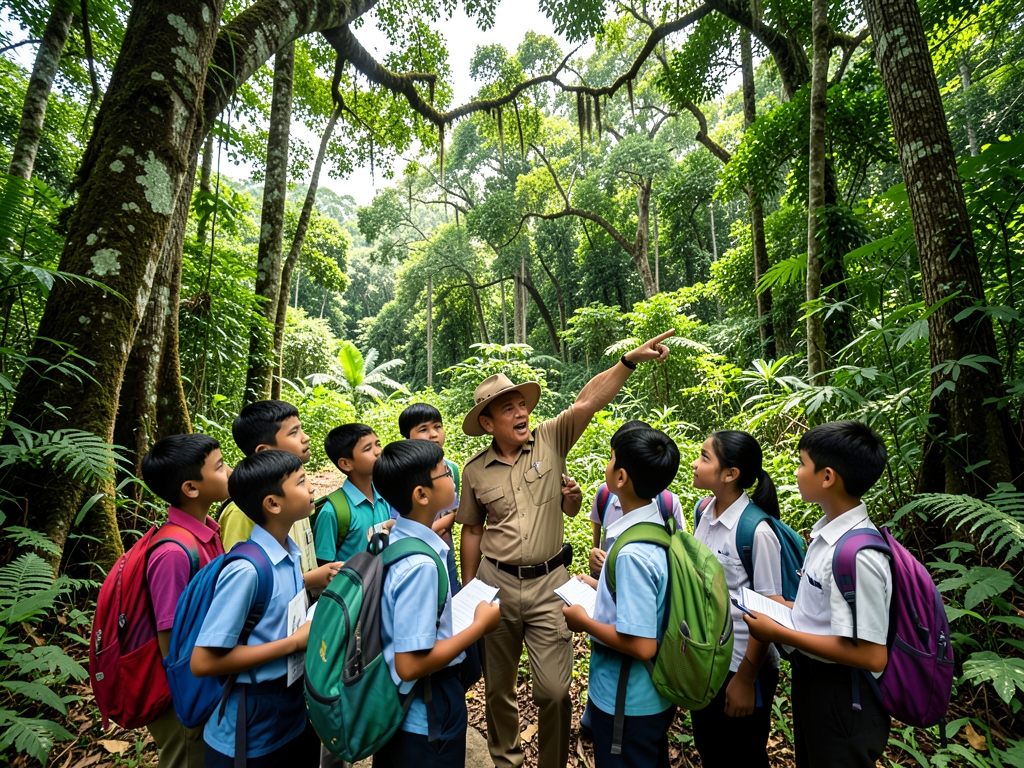
The Assam Forest Department has officially launched an innovative educational initiative known as the 'Nameri Wild Classroom'. Designed to bridge the gap between traditional classroom instruction and experiential environmental science, this program brings school and college students directly into the vibrant ecosystems of Assam's protected forests. By immersing young learners in natural habitats, the initiative aims to foster deep ecological awareness, conservation ethics, and a lifelong appreciation for biodiversity.
Modern educational frameworks increasingly recognize that classroom-bound teaching alone is insufficient to address the complexities of global environmental challenges. Field-based learning offers students a direct encounter with complex ecosystems, allowing them to observe flora and fauna firsthand. The 'Nameri Wild Classroom' initiative leverages the rich natural heritage of Nameri National Park—a renowned biodiversity hotspot situated in the foothills of the Eastern Himalayas—to provide immersive, hands-on educational experiences.
The Vision Behind Nameri Wild Classroom
Conservation efforts succeed when local communities, particularly the younger generation, understand the intrinsic value of their surrounding natural environments. The Assam Forest Department conceptualized this initiative as a proactive measure to cultivate environmental stewardship among students. Instead of relying solely on textbooks, participants engage directly with naturalists, forest guards, and conservation scientists.
During these structured field visits, students learn about wildlife tracking, river ecology, native plant species, and the critical role of forest corridors. These immersive sessions are tailored to different age groups, ensuring that both primary school children and university students gain age-appropriate insights into wildlife management and habitat preservation.
Info! The initiative specifically focuses on experiential learning, encouraging students to ask scientific questions, observe animal behaviors, and understand the delicate balance of forest ecosystems.
Key Components of the Nature-Based Learning Program
The curriculum of the 'Nameri Wild Classroom' is structured around several core environmental pillars designed to provide a comprehensive understanding of tropical forest ecosystems:
- Guided Jungle Treks: Led by experienced forest department personnel, students navigate designated trails to observe wildlife signs, bird species, and diverse vegetation.
- Riverine Ecosystem Studies: Given Nameri's proximity to the Jia Bhoroli River, students explore freshwater ecology, aquatic habitats, and conservation challenges facing riverine species.
- Interactive Conservation Workshops: Evening sessions and interactive lectures cover human-wildlife coexistence, anti-poaching measures, and the importance of forest regeneration.
- Botanical Identification: Students learn to identify medicinal plants, canopy trees, and endemic flora that sustain the local food web.
These activities are meticulously planned to minimize ecological disturbance while maximizing educational engagement. Safety protocols and conservation guidelines are strictly enforced during every session to ensure that wildlife and participants remain protected.
The Importance of Experiential Environmental Education
Environmental education has undergone a paradigm shift over the past decade. Traditional pedagogical approaches often treat nature as an abstract concept found in textbooks rather than a living, dynamic system that directly impacts human survival. By introducing students to real-world conservation challenges, initiatives like the 'Nameri Wild Classroom' help dismantle plant blindness and ecological disconnection.
Connecting young minds directly with wild ecosystems transforms theoretical knowledge into active conservation behavior. Experiential learning creates empathetic citizens who value biodiversity and support sustainable policies.
Research in environmental psychology consistently demonstrates that formative experiences in nature during youth correlate strongly with pro-environmental attitudes in adulthood. When students witness the majesty of undisturbed forests and understand the pressures facing endangered species, they develop a personal stake in environmental protection.
Addressing Regional Conservation Challenges
Assam boasts some of the richest and most diverse wildlife habitats in South Asia, including populations of rhinos, elephants, tigers, and numerous endemic bird species. However, these ecosystems face continuous pressures from habitat fragmentation, climate fluctuations, and human-wildlife interactions.
Educating the next generation is a vital component of long-term mitigation strategies. When local students understand the ecological significance of protected areas, community support for anti-poaching and habitat restoration initiatives strengthens significantly. The forest department views this educational outreach as an investment in community-led conservation.
| Program Element | Primary Objective | Target Audience |
|---|---|---|
| Guided Jungle Treks | Wildlife and flora observation | School and College Students |
| River Ecology Modules | Freshwater habitat understanding | Science Students |
| Conservation Workshops | Coexistence and anti-poaching awareness | All Participating Students |
| Botanical Identification | Endemic plant and tree recognition | Biology and Ecology Groups |
Future Expansion and Scalability
Following the successful rollout of the 'Nameri Wild Classroom', the Assam Forest Department is evaluating frameworks to expand similar nature-based learning models to other protected areas across the state. Potential future phases may include digital outreach programs, teacher-training workshops, and collaborative research projects involving local universities.
By establishing permanent infrastructure and structured curriculum partnerships with educational boards, the initiative aims to reach thousands of students annually. This steady stream of informed participants will undoubtedly strengthen Assam's conservation pipeline for decades to come.
What is the primary objective of the Nameri Wild Classroom initiative?
The initiative aims to connect school and college students directly with nature through immersive field-based learning, fostering ecological awareness and conservation ethics.
Who organizes and manages the Nameri Wild Classroom program?
The program is organized and managed by the Assam Forest Department in collaboration with conservation experts and local naturalists.
What specific activities do students participate in during the program?
Students participate in guided jungle treks, riverine ecosystem studies, botanical identification sessions, and interactive conservation workshops led by forestry professionals.
How does experiential nature education benefit student development?
Experiential learning transforms abstract textbook concepts into real-world understanding, helping students develop empathy for wildlife and a lifelong commitment to environmental protection.
The launch of the 'Nameri Wild Classroom' marks a progressive step in environmental education. By taking students out of traditional classrooms and into the heart of Assam's wilderness, the Assam Forest Department is cultivating a generation equipped with the knowledge, passion, and responsibility needed to safeguard natural ecosystems for the future.
Sources and Further Reading
- Assam Forest Department launches ‘Nameri Wild Classroom’ initiative to connect students with Nature - Revoi.in — Revoi.in (published 2026-10-12 11:57)
- Nameri Wild Classroom: Assam Introduces Nature-Based Learning for School, College Students - Telegraph India — Telegraph India (published 2026-10-12 07:57)
- Assam Forest Department launches ‘Nameri Wild Classroom’ for nature-based learning - Northeast News — Northeast News (published 2026-10-12 06:42)
