

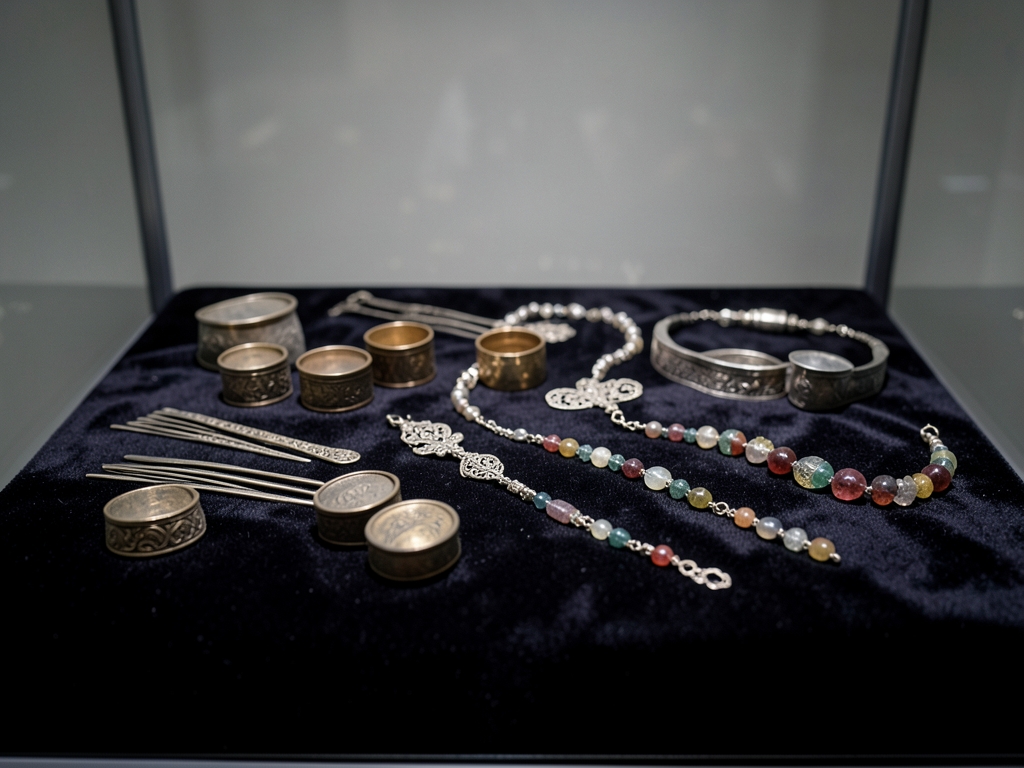
Archaeological excavations often capture public imagination when they unearth massive architectural marvels, royal tombs, or golden treasures belonging to famous monarchs. However, some of the most revealing historical insights emerge from more intimate artifacts left behind by ordinary members of ancient societies. Recent archaeological findings have brought to light a fascinating collection of Byzantine cosmetic tools and delicate jewelry recovered from 1,400-year-old graves associated with the Avar period. These discoveries offer a remarkably detailed window into the daily lives, personal care routines, aesthetic values, and cultural blending that characterized the Early Middle Ages in Central Europe.
Understanding the historical context of these graves requires looking closely at the interactions between the Byzantine Empire and the Avar Khaganate. During the sixth and seventh centuries, the Avars established a powerful nomadic empire in the Carpathian Basin. Their territory served as a dynamic cultural crossroads where nomadic traditions of the Eurasian steppe met the rich, sophisticated material culture of the sedentary Byzantine Empire. Trade, diplomacy, raiding, and gift-exchange networks ensured that luxury goods, specialized crafts, and stylistic influences flowed regularly across geopolitical borders. The presence of Byzantine cosmetic implements and ornaments in Avar women's burial sites illustrates how far-reaching these trade and cultural connections truly were, transcending political rivalries to influence personal grooming and fashion trends.
The Nature of Byzantine Cosmetic Culture in the Early Middle Ages
Cosmetics and personal grooming held immense social and cultural significance across the ancient and medieval Mediterranean worlds. In the Byzantine Empire, skin care, hair styling, and personal adornment were practiced across various social strata, though the quality and material of the tools varied depending on wealth and status. Wealthy urbanites utilized specialized implements crafted from bronze, bone, silver, and glass to apply ointments, kohl for the eyes, and plant-based skin treatments.
The cosmetic tools discovered in the recent Avar graves mirror those used within the heartlands of the Byzantine Empire. These kits typically included miniature spatulas for mixing creams, small probes and spoons for handling fragrant oils, and finely crafted tweezers. Personal hygiene and appearance were closely linked to social identity and health. Avars living on the periphery of the empire eagerly adopted these refined grooming habits, integrating foreign luxury goods into their own indigenous burial customs. When archaeologists analyze these assemblages, they are not merely looking at vanity items; they are examining complex systems of social signaling, cultural exchange, and female autonomy in a frontier society.
Jewelry as a Marker of Status and Cultural Synthesis
Alongside cosmetic instruments, the 1,400-year-old graves yielded remarkable examples of jewelry that demonstrate exceptional metallurgical skill and aesthetic refinement. Ornaments recovered from these burial sites include earrings, beaded necklaces, dress fasteners, and finger rings crafted from bronze, silver, and occasionally gold-plated alloys.
The stylistic design of these jewelry pieces often reveals a fascinating hybridity. While some items were clearly manufactured within Byzantine workshops and imported northward, others were crafted locally by Avar artisans who emulated Byzantine techniques. Filigree work, granulation, and gemstone inlay were hallmark methods of Byzantine goldsmiths that local craftspeople sought to replicate. This stylistic crossover underscores the fluid nature of identity in the Carpathian Basin during the early medieval period. Women buried with these possessions were likely figures of considerable standing within their communities, using foreign luxury items to reinforce their social prestige, wealth, and connections to wider regional trade networks.
Archaeological Methods and Grave Context Analysis
Uncovering fragile artifacts like silver jewelry and thin bronze cosmetic implements requires meticulous archaeological excavation and preservation techniques. Organic materials and delicate metals often suffer from centuries of soil compression, chemical degradation, and agricultural disturbance. Modern bioarchaeological and stratigraphic analyses allow researchers to reconstruct the exact placement of these items within the burial context.
In many of these Avar women's graves, cosmetic tools were placed near the head or within dedicated pouches alongside personal belongings, indicating that these items accompanied the deceased as deeply personal possessions rather than generic grave goods. Osteological analysis further helps researchers estimate the age, health status, and physical labor demands experienced by these individuals during their lifetimes. By combining artifact typology with biological anthropology, modern historians can paint a much more vibrant and humanized picture of women who lived over a millennium ago.
| Artifact Type | Primary Materials | Likely Function | Cultural Origin |
|---|---|---|---|
| Cosmetic Spatula | Bronze / Bone | Mixing and applying skin ointments | Byzantine / Local Adaptation |
| Kohl Applicator | Bronze | Applying eye cosmetics | Imported Byzantine Craft |
| Filigree Earrings | Silver / Gilt Bronze | Facial adornment and status signaling | Avar Workshop (Byzantine Style) |
| Beaded Necklace | Glass / Amber / Stone | Personal decoration and wealth display | Long-Distance Trade Network |
Broader Historical Significance of Frontier Exchanges
The discovery of Byzantine goods in Avar contexts challenges older, rigid historical narratives that portrayed medieval frontiers as impenetrable barriers between hostile civilizations. Instead, archaeological evidence consistently demonstrates that borders were porous zones of intense economic and cultural negotiation. Nomadic elites and settled empires engaged in complex relationships that combined military conflict with lucrative commercial exchanges.
Cosmetic tools and jewelry serve as tangible proof of these peaceful interactions at an individual level. They show that everyday desires for beauty, personal care, and social distinction crossed ethnic and political divides. A woman living within the Avar sphere of influence who owned a Byzantine bronze cosmetic kit participated in a shared Mediterranean and European aesthetic culture, bridging the perceived gap between steppe nomads and imperial citizens.
The study of grave goods reminds us that ancient history is driven not only by grand military campaigns and political treaties, but by the personal choices, daily routines, and aesthetic preferences of ordinary individuals whose lives spanned cross-cultural frontiers.
Info! Archaeological finds from early medieval burial sites are continually re-evaluated as non-destructive imaging technologies and advanced chemical residue analyses provide new insights into the organic compounds once stored in ancient cosmetic containers.
What types of cosmetic tools were found in the 1,400-year-old Avar graves?
The discovered kits primarily included bronze and bone cosmetic spatulas, small ointment spoons, probes, and precision tweezers used for personal grooming and skincare.
How did Byzantine items end up in Avar burial sites?
These luxury goods reached Avar territory through a combination of long-distance trade, diplomatic gift-exchanges, and cross-border commercial networks operating between the Byzantine Empire and the Avar Khaganate.
What materials were used to craft the jewelry recovered from these graves?
The jewelry pieces were crafted from a variety of materials, including bronze, silver, gold-plated alloys, glass beads, amber, and imported semi-precious stones featuring intricate filigree work.
What do these artifacts reveal about Avar society?
They demonstrate that Avar women of high social standing valued personal adornment and grooming, and they highlight the deep cultural blending and active trade connections existing across early medieval European frontiers.
As ongoing archaeological research continues to uncover and analyze artifacts from frontier cemeteries across Central and Eastern Europe, our understanding of the Early Middle Ages grows increasingly nuanced. The merging of nomadic traditions with refined Byzantine material culture underscores a vibrant historical reality where beauty, trade, and personal identity transcended the rigid boundaries of empires.
