

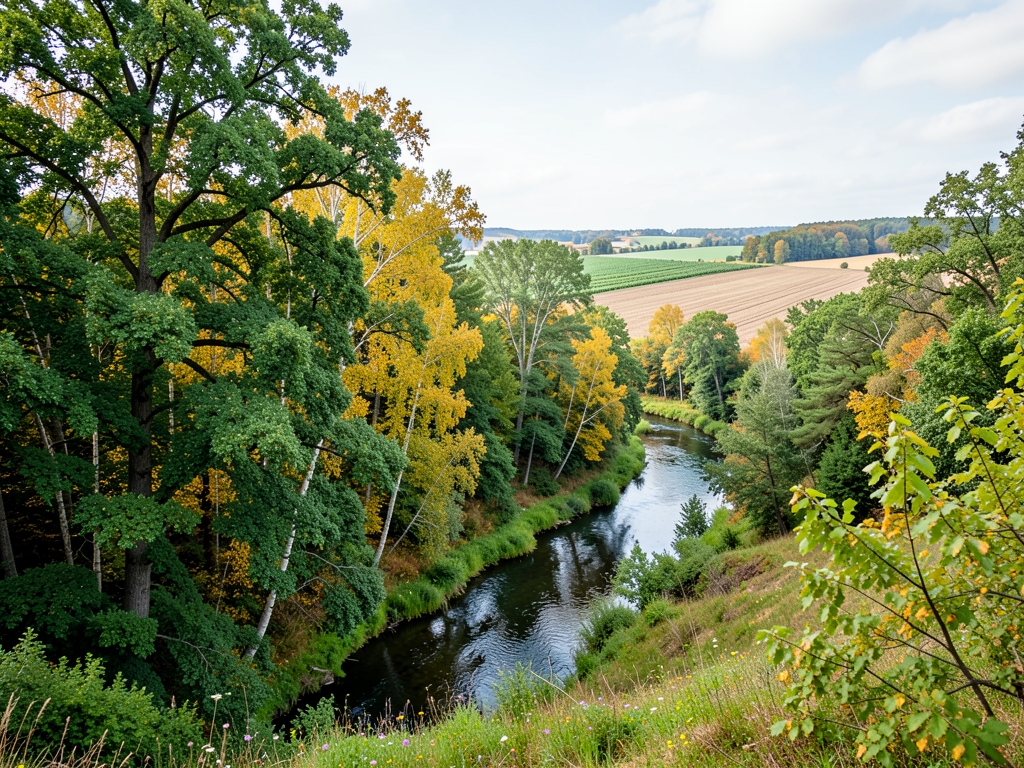
The global architecture of environmental conservation has historically relied on a singular blueprint: the creation of fenced, strictly protected national parks and designated nature reserves. While these legally protected areas remain vital pillars of ecological preservation, conservation scientists and international policymakers increasingly recognize that traditional park models alone cannot halt the accelerating loss of global biodiversity. As governments worldwide strive to meet ambitious international targets—such as the landmark commitment to protect thirty percent of the planet's land and marine areas by the year 2030—attention has shifted toward innovative governance frameworks that extend far beyond conventional park boundaries. Among these frameworks, Other Effective Area-Based Conservation Measures, commonly known as OECMs, have emerged as a transformative mechanism capable of reshaping the future of global conservation.
The concept of OECMs represents a fundamental shift in how humanity values, governs, and manages landscapes and seascapes that sustain rich biodiversity outside traditional protected areas. Unlike conventional national parks, which are established primarily for biodiversity conservation and are often managed with strict access limitations, OECMs are geographically defined spaces governed and managed in ways that achieve positive and sustained long-term outcomes for the in-situ conservation of biodiversity. Crucially, these areas achieve these ecological goals alongside associated ecosystem functions, cultural values, spiritual benefits, and local socio-economic priorities. They include indigenous community-managed lands, sacred natural sites, military training areas with restricted public access, watershed protection forests, and sustainably managed marine zones where human stewardship actively maintains ecological health without formal park designation.
Understanding the Evolution of Global Conservation Frameworks
For decades, international conservation targets measured success almost exclusively by the sheer square kilometers encompassed within government-gazetted national parks and nature reserves. However, this narrow metric frequently overlooked vast tracts of land and water where local communities, indigenous groups, and private landowners practiced effective stewardship without holding official park status. In many cases, these human-managed ecosystems harbored healthier populations of native wildlife and more resilient ecological networks than degraded or underfunded state-run reserves.
Recognizing this disconnect, the parties to the Convention on Biological Diversity formally defined OECMs to capture and credit these diverse, effective conservation efforts. This recognition was not merely administrative; it represented a philosophical evolution acknowledging that human presence and sustainable resource use are not inherently incompatible with biodiversity preservation. By valuing conservation outcomes rather than management intent alone, international frameworks opened the door to inclusive, equitable, and widespread ecological protection that engages millions of people who live alongside nature every day.
Info! OECMs bridge the gap between human livelihoods and environmental protection, proving that effective biodiversity stewardship can occur outside the boundaries of strictly regulated national parks.
Diverse Landscapes and Marine Ecosystems as OECMs
The practical application of the OECM framework spans an extraordinary diversity of terrestrial and aquatic environments. Across the globe, various landscapes function as unrecognized biodiversity strongholds simply because their primary purpose serves another societal need while inadvertently maintaining ecological integrity.
- Indigenous and Community-Managed Territories: Lands traditionally owned, managed, or inhabited by indigenous peoples often exhibit superior biodiversity conservation outcomes compared to state-managed parks, driven by generational ecological knowledge and sustainable management practices.
- Watershed Protection Forests: Forested catchments managed primarily to secure clean municipal drinking water supplies frequently restrict industrial development, logging, and heavy human intrusion, creating pristine habitats for native flora and fauna.
- Sacred Natural Sites: Groves, mountains, lakes, and coastal areas protected by cultural, religious, or spiritual taboos that prohibit destructive exploitation, preserving ancient ecosystems and rare species.
- Military and Defense Lands: Large buffer zones surrounding military installations often experience minimal public disturbance, allowing rare grassland species, nesting birds, and sensitive wildlife populations to thrive undisturbed for decades.
- Sustainably Managed Marine Areas: Coastal waters where local fishing cooperatives enforce traditional catch restrictions and gear limitations, protecting spawning grounds and coral ecosystems without official marine reserve status.
These varied examples demonstrate that conservation success does not depend on a single governance type. Instead, it thrives wherever human activities respect ecological limits and maintain functional habitats.
Overcoming Challenges in Global 30 by 30 Implementation
As nations race to fulfill international biodiversity targets, integrating OECMs into national accounting systems presents both remarkable opportunities and complex administrative challenges. Identifying, documenting, and verifying these areas requires robust scientific criteria, transparent governance assessments, and active collaboration between governments, local communities, and private stakeholders.
One of the primary hurdles involves establishing rigorous baseline data to confirm that an area is indeed delivering sustained, positive biodiversity outcomes. Unlike traditional parks with dedicated rangers and statutory boundaries, OECMs often rely on decentralized governance structures. Ensuring long-term continuity, legal recognition, and protection against future policy shifts or economic pressures demands careful institutional planning and capacity building, particularly in developing regions where resources for environmental monitoring are scarce.
True conservation success requires more than drawing lines on a map; it requires empowering the people whose daily lives and cultural heritage are intertwined with the health of the natural world.
Furthermore, recognizing OECMs necessitates a profound shift in governance culture among national environmental agencies. Moving away from top-down, fortress conservation models toward inclusive, community-centred partnerships requires trust, respect for traditional knowledge, and equitable benefit-sharing mechanisms. When local stewards are recognized as official conservation partners rather than peripheral actors, the resilience of the entire ecosystem is significantly enhanced.
Economic, Social, and Ecological Benefits of OECM Adoption
The widespread adoption of the OECM framework generates profound benefits that extend far beyond simple habitat preservation. Ecologically, these measures maintain biological connectivity across fragmented landscapes, allowing wildlife populations to migrate, adapt to shifting climatic conditions, and maintain genetic diversity. Without connective corridors provided by sustainably managed working lands, traditional parks risk becoming isolated ecological islands vulnerable to localized extinctions.
Socially and economically, OECMs honor and protect the rights of indigenous peoples and local communities who have served as effective stewards of the environment for generations. By securing legal recognition for their traditional management practices, communities gain stronger defenses against external threats such as unauthorized industrial encroachment, land grabbing, and unsustainable resource extraction. This empowerment fosters sustainable local economies rooted in ecotourism, responsible harvesting, and traditional livelihoods, demonstrating that environmental protection can reinforce human well-being rather than restrict it.
What does OECM stand for in environmental conservation?
OECM stands for Other Effective Area-Based Conservation Measure. It refers to a geographically defined space that is governed and managed to achieve positive, long-term outcomes for biodiversity conservation outside of traditional protected areas like national parks.
How do OECMs differ from traditional national parks?
While national parks are established primarily and explicitly for biodiversity conservation with strict access rules, OECMs achieve conservation outcomes as a byproduct of other management goals, such as watershed protection, indigenous stewardship, cultural preservation, or restricted military use.
Why are OECMs important for the global 30 by 30 biodiversity target?
OECMs allow nations to count effective conservation efforts happening on community lands, indigenous territories, and private or restricted areas toward their international goal of protecting thirty percent of the planet's land and sea by 2030, making conservation more inclusive and realistic.
Can marine areas and oceans be designated as OECMs?
Yes, marine and coastal waters managed through sustainable fishing practices, traditional community zoning, or restricted access areas can qualify as OECMs, helping protect vital marine habitats, fish spawning grounds, and coral ecosystems.
Looking ahead, the success of global biodiversity initiatives will depend heavily on our collective willingness to embrace diverse models of environmental stewardship. By moving beyond the confines of traditional parks and empowering the myriad communities, institutions, and landowners who actively protect nature through their daily practices, OECMs offer a realistic, inclusive, and scientifically robust pathway toward a sustainable planetary future.
