

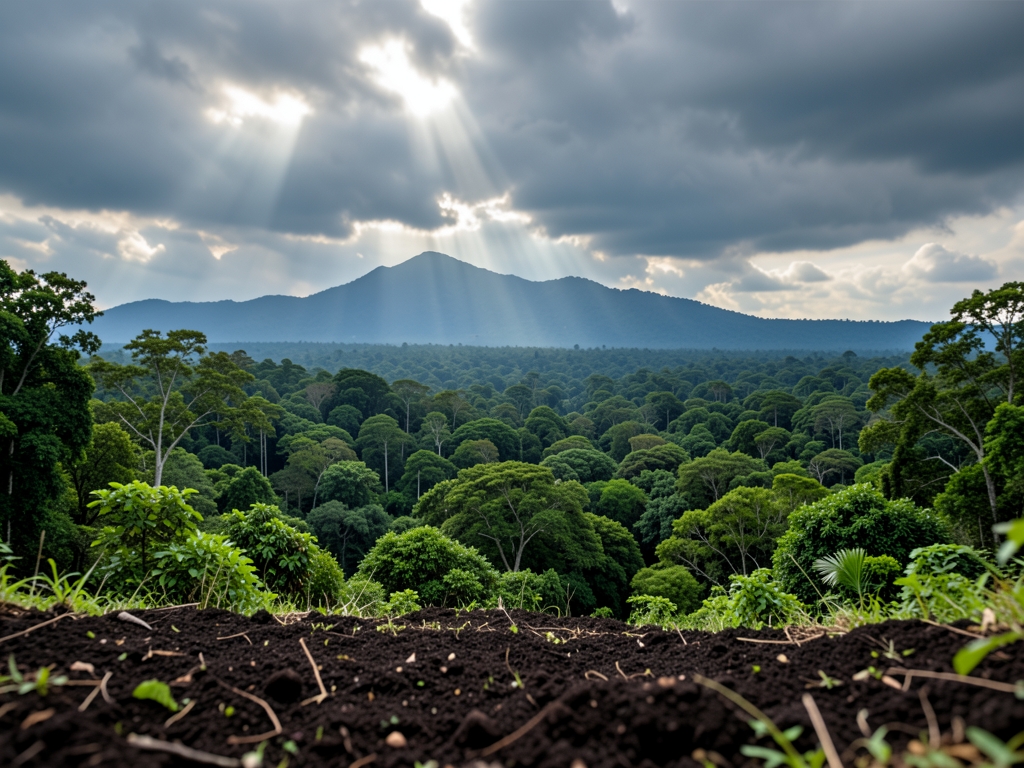
The global scientific community has issued stark warnings regarding the state of our planet's vital ecosystems, signaling that critical environmental boundaries are being pushed to their absolute limits. Recent comprehensive assessments, including the 2026 Planetary Health Check, indicate that Earth's life support systems are flashing red as cumulative pressures from human activity, habitat degradation, and climate disruption accelerate. Understanding these complex environmental indicators is essential for researchers, policymakers, and international communities striving to implement effective conservation strategies before irreversible ecological shifts occur.
Understanding Planetary Boundaries and Environmental Health
To comprehend the gravity of current ecological warnings, we must examine the framework of planetary boundaries. These boundaries define the safe operating space for humanity with respect to Earth's biophysical systems. When these thresholds are crossed, the risk of triggering abrupt or irreversible environmental changes increases significantly. Modern scientific monitoring utilizes advanced satellite telemetry, climate modeling, and terrestrial field surveys to track variables such as greenhouse gas concentrations, biosphere integrity, ocean acidification, and biogeochemical flows.
Recent evaluations highlight that multiple key boundaries have already been breached or are dangerously close to their critical tipping points. The degradation of primary forests, the rapid loss of biodiversity, and the disruption of freshwater cycles form an interconnected web of challenges. When one system falters, it exerts cascading pressures on adjacent environments, compounding the overall vulnerability of global life support mechanisms.
| Planetary System | Current Status | Primary Drivers |
|---|---|---|
| Biosphere Integrity | High Risk | Habitat Loss, Overexploitation |
| Climate Stability | Critical | Emissions, Deforestation |
| Freshwater Change | Moderate to High | Agricultural Use, Extraction |
| Biogeochemical Flows | High Risk | Synthetic Fertilizers, Runoff |
The Interconnected Crisis of Biodiversity and Habitat Loss
At the heart of the planetary health crisis lies the unprecedented decline in global biodiversity. Ecosystems depend on a rich variety of plant, animal, and microbial species to maintain resilience against environmental shocks. However, industrial expansion, urban encroachment, and unsustainable agricultural practices continue to fragment natural habitats across every continent.
In regions ranging from the dense forests of Australia to sensitive wildlife corridors in the Middle East and North America, conservationists report mounting pressures on native species. Invasive predators, changing precipitation patterns, and the relentless conversion of wildlands into commercial acreage threaten the survival of numerous endemic populations. Protecting these habitats requires coordinated international policy frameworks that prioritize ecological restoration over short-term economic gains.
The health of our global environment is not merely an abstract scientific concern; it is the fundamental foundation upon which human civilization, food security, and economic stability depend.
Climate Feedbacks and Global Environmental Resilience
Climate dynamics play a monumental role in amplifying environmental stress. As global temperatures rise due to accumulated greenhouse gas emissions, natural carbon sinks such as tropical rainforests, peatlands, and oceanic phytoplankton absorb less carbon, transforming them from protective buffers into net emitters. This feedback loop accelerates planetary warming and intensifies extreme weather phenomena worldwide.
Info! Scientific monitoring programs rely on decades of empirical data to track atmospheric composition and ocean heat content, providing early warnings for impending ecological tipping points.
Furthermore, marine ecosystems face compounding threats from rising sea temperatures and acidification. Coral reefs, which serve as nurseries for a quarter of all marine life, experience widespread bleaching events with increasing frequency. Preserving these marine habitats is vital not only for aquatic species but also for millions of coastal human communities that rely on fisheries for sustenance and economic livelihood.
Pathways Toward Ecological Recovery and Sustainable Management
Addressing the systemic warnings highlighted by recent environmental assessments demands a multi-pronged global response. Governments, academic institutions, and private sectors must transition toward sustainable resource management, renewable energy adoption, and rigorous conservation mandates. Successful environmental stewardship involves several key strategic actions:
- Expanding protected land and marine areas to safeguard critical biodiversity hotspots and migratory corridors.
- Reforming agricultural subsidies to incentivize regenerative farming practices that restore soil health and reduce chemical runoff.
- Investing in large-scale ecosystem restoration projects, including reforestation and wetland rehabilitation, to enhance natural carbon sequestration.
- Strengthening international environmental treaties and enforcing compliance mechanisms to curb illegal wildlife trade and industrial overexploitation.
By empowering local indigenous communities, who historically manage vast tracts of the world's most biodiverse regions, conservation initiatives gain invaluable traditional knowledge and robust grassroots support. Collaborative governance ensures that environmental policies are both ecologically sound and socially equitable.
What is the Planetary Health Check report?
The Planetary Health Check is a comprehensive scientific assessment that evaluates the current status of Earth's vital life support systems, measuring key environmental boundaries and tracking global progress toward ecological stability.
Which Earth systems are currently under the greatest stress?
Current data indicates that biosphere integrity, climate stability, and biogeochemical flows—particularly nitrogen and phosphorus cycles—are experiencing the most severe pressures and have crossed safe operating thresholds.
How does biodiversity loss impact global environmental health?
Biodiversity loss weakens the resilience of ecosystems, reducing their capacity to withstand climate shocks, purify water, pollinate crops, and maintain stable carbon storage across terrestrial and marine habitats.
What practical steps can be taken to support ecological recovery?
Practical recovery measures include expanding protected natural reserves, adopting regenerative agricultural practices, transitioning rapidly to renewable energy sources, and supporting community-led conservation initiatives.
Conclusion
The mounting evidence from recent scientific assessments leaves little room for complacency. Earth's life support systems are indeed signaling critical distress, but the trajectory is not unchangeable. Through decisive global cooperation, rigorous scientific monitoring, and an unwavering commitment to sustainable resource management, humanity possesses the tools necessary to reverse damaging trends. Protecting our natural world is the single most important investment we can make to secure a stable, thriving future for generations to come.
