

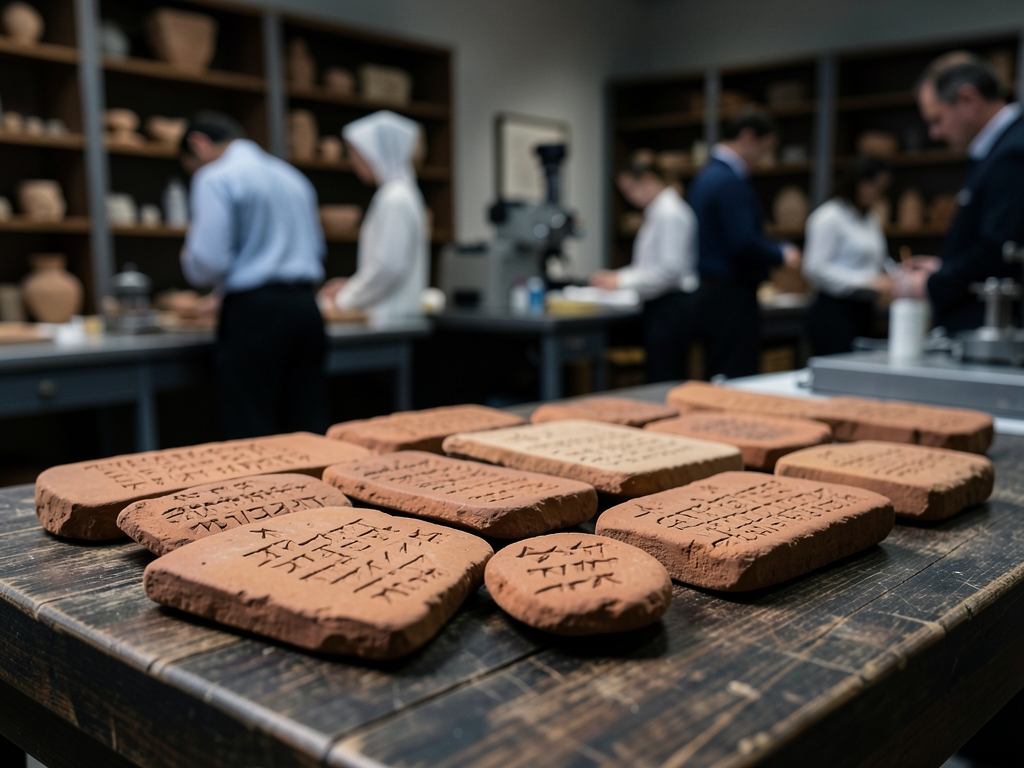
Ancient civilizations often leave behind fragments of their existence in the form of broken pottery, ruined foundations, and scattered metallic trinkets. Yet, the most profound windows into the past are those that record the actual voices, laws, fears, and administrative triumphs of ancient peoples in written form. Among the most remarkable intellectual treasures of the ancient Near East are the royal archives of the Hittite Empire, an ancient Indo-European civilization that flourished in Anatolia—modern-day Turkey—during the Bronze Age. Recent scholarly attention and ongoing epigraphic breakthroughs have brought these cuneiform tablets back into the spotlight, shedding new light on how this formidable imperial power managed its vast territories, navigated diplomatic alliances, and recorded the turbulent events of its society.
Understanding the Hittite civilization requires a journey back more than three millennia, to an era when great powers such as Egypt, Assyria, Babylon, and Hatti competed for dominance across the Eastern Mediterranean and the Levant. Unlike many of their contemporaries who recorded history primarily on papyrus or monumental stone walls, the Hittites utilized clay tablets inscribed with cuneiform script borrowed and adapted from Mesopotamian traditions. These documents, preserved in royal storehouses and temple complexes at the capital city of Hattusa, have provided modern historians with an unprecedented documentary trail. Far from being mere king lists or religious hymns, the archive includes state treaties, land grants, judicial verdicts, diplomatic correspondence, and detailed accounts of military campaigns.
The Discovery and Deciphering of the Hittite Archives
The rediscovery of the Hittite civilization is one of the great triumphs of modern archaeology and linguistics. For centuries, the Hittites were known almost exclusively through brief references in biblical texts and Egyptian annals, leading many 19th-century scholars to question whether such an empire truly existed on the scale described. However, systematic excavations beginning in the late 19th century and accelerating into the 20th century at the site of Boğazkale—ancient Hattusa—revealed massive royal complexes filled with tens of thousands of clay fragments.
Decoding these tablets was an immense intellectual challenge because the texts were written in multiple languages. While the scribes used borrowed Mesopotamian cuneiform signs, the primary language of the empire—known today as Hittite—was an Indo-European tongue whose structure was entirely unknown to early epigraphers. The breakthrough came in the early 20th century when linguists successfully demonstrated that Hittite shared grammatical roots with classical European and Indo-Iranian languages. This opened up the archive, allowing researchers to read the internal administrative records of a state that had been silent for over three thousand years.
Administrative Mastery and Imperial Governance
The survival of thousands of administrative documents provides extraordinary insight into how the Hittite royal administration functioned. The state was heavily centralized around the monarch, who served not only as supreme military commander but also as the chief priest of the storm god. However, maintaining control over a diverse population scattered across rugged Anatolian terrain required sophisticated bureaucratic machinery.
Tablets recovered from Hattusa detail complex legal codes, taxation structures, and land tenure systems. Unlike the draconian punishments found in some other ancient legal codes, Hittite law often emphasized restitution and compensation rather than corporal or capital punishment for property crimes. For example, laws governing agriculture, livestock, and commerce reveal an agrarian society deeply concerned with economic stability, fair pricing, and the regulation of labor.
Furthermore, diplomatic correspondence preserved in the archives demonstrates the sophisticated foreign policy practiced by Hittite kings. Letters exchanged with Egyptian pharaohs, including the famous correspondence surrounding the aftermath of the Battle of Kadesh and the subsequent peace treaty—often hailed as the earliest surviving international peace accord—illustrate a high level of diplomatic etiquette, gift exchange, and treaty enforcement.
Recording Epidemics, Wars, and Social Crises
Recent examinations of newly categorized tablets continue to expand our understanding of how the Hittite Empire responded to systemic crises. Historical chronicles and ritual texts within the archives do not shy away from recording moments of severe vulnerability. Scholars have studied detailed descriptions of devastating regional epidemics that swept through Anatolia, prompting desperate appeals to various deities through elaborate state rituals.
These texts reveal a worldview in which political instability, military defeat, and widespread illness were frequently interpreted as expressions of divine wrath resulting from unfulfilled oaths or ritual impurities. Consequently, the archive contains detailed prescriptive rituals designed to cleanse the palace, the army, and the broader population. By examining these records, modern epidemiologists and historians can piece together the social and demographic pressures that tested the resilience of Bronze Age states.
The Unique Linguistic Tapestry of Hattusa
One of the most fascinating aspects of the Hittite royal archives is their multilingual nature. Scribes at Hattusa did not limit themselves to the Hittite language. The archives contain texts written in several distinct languages spoken within or bordering the empire, including:
- Hittite (Nesili): The primary administrative and official language of the central government.
- Hattic: An older, non-Indo-European indigenous language preserved primarily for religious and ritual contexts.
- Luwian: Another Indo-European language closely related to Hittite, increasingly used in administrative seals and everyday commerce.
- Hurrian: A language originating from northern Mesopotamia and the foothills of the Zagros Mountains, heavily influential in Hittite mythology and cultic practices.
- Akkadian: The international diplomatic lingua franca of the ancient Near East, used for communicating with foreign courts.
This linguistic diversity reflects the multi-ethnic composition of the Hittite state, which integrated various populations under a single imperial umbrella while preserving local cultural and religious traditions.
Preservation, Digital Archives, and Future Research
Today, the preservation and study of Hittite archives have entered a digital era. Many of the fragile clay tablets, housed in museums across Turkey and Europe, are being scanned using high-resolution 3D imaging technology and advanced photogrammetry. These techniques allow epigraphers to examine eroded cuneiform characters that are nearly invisible to the naked eye under traditional lighting.
International collaborations among universities, archaeological institutes, and digital heritage projects are creating comprehensive online corpora. These databases enable researchers worldwide to cross-reference vocabulary, grammatical structures, and historical events across thousands of published and unpublished texts, accelerating the pace of discovery in Near Eastern studies.
What material were Hittite archives written on?
Hittite archives were primarily inscribed on clay tablets using cuneiform script. These tablets were baked in fires—either intentionally or during the destruction of the cities—which helped preserve them for thousands of years.
Where was the primary Hittite royal archive discovered?
The vast majority of the Hittite royal records were discovered at the ancient capital city of Hattusa, located near modern Boğazkale in north-central Turkey.
What languages appear in the Hittite cuneiform collection?
The archives are famously multilingual, containing texts written in Hittite, Luwian, Hattic, Hurrian, Palaic, and Akkadian, reflecting the diverse cultural landscape of the empire.
How are modern scholars preserving these ancient tablets?
Researchers use high-resolution 3D scanning, digital photography, and online epigraphic databases to record, analyze, and share damaged or eroded tablet fragments without risking physical harm to the artifacts.
The ongoing exploration of Hittite archives reminds us of the profound depth of human history and the enduring power of the written word. From international treaties that shaped geopolitics to personal prayers whispered during times of plague, these ancient clay documents continue to bridge the vast expanse of time, giving voice to a civilization that helped shape the ancient world.
