

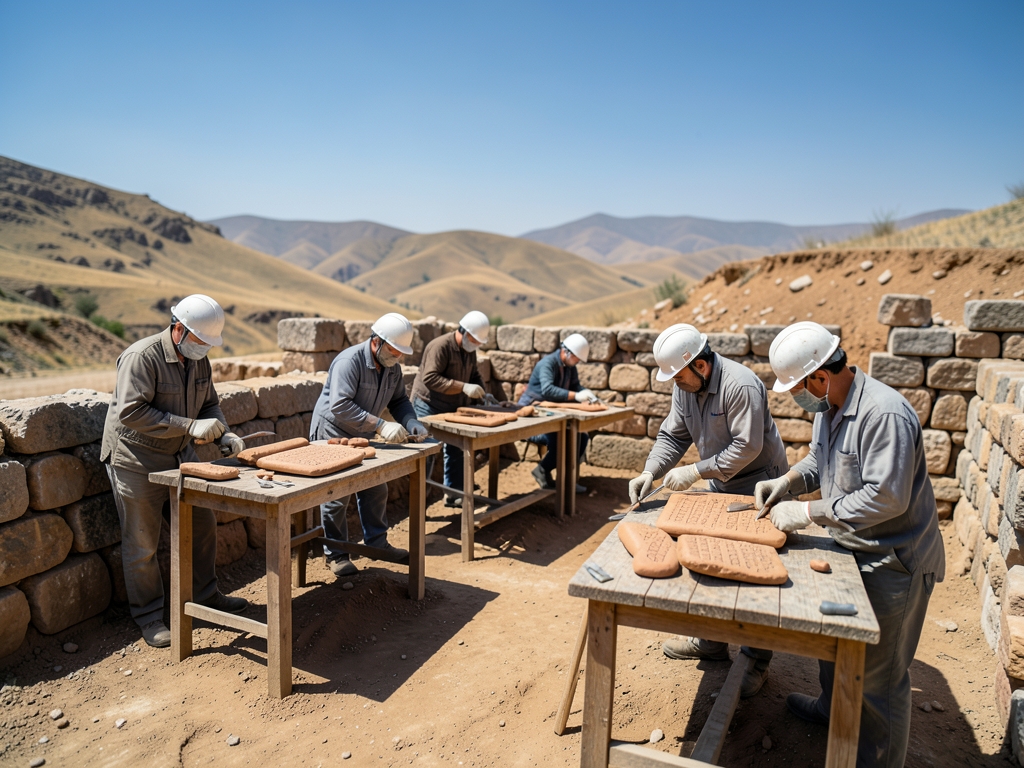
Archaeological discoveries often bridge the vast chasm between modern human existence and the ancient political landscapes that shaped our collective past. Among the most enduring reservoirs of historical knowledge are the administrative centers and royal archives of antiquity, where civilizations inscribed their administrative records, diplomatic correspondences, and private grievances onto durable media. Clay, when fired or baked by ancient fires or environmental conditions, preserves human thought across millennia with astonishing fidelity. Recent revelations from archaeological excavations continue to shed light on these forgotten repositories, offering unprecedented clarity into the daily governance, dynastic struggles, and legal frameworks of ancient empires that once dominated the Near East.
The study of ancient administrative records requires a meticulous combination of epigraphy, linguistics, and stratigraphic excavation. When researchers unearth royal archives, they are not merely collecting ancient curiosities; they are unlocking the administrative operating systems of long-dead states. Every tablet recovered from a palace storeroom or temple repository provides a data point regarding economic production, military campaigns, international treaties, and judicial rulings. Understanding how these archives were organized, maintained, and eventually destroyed or sealed provides deep insight into the resilience and vulnerability of early complex societies.
The Significance of Cuneiform Archives in the Ancient Near East
Cuneiform writing, developed originally by the Sumerians in Mesopotamia, became the universal medium of written communication across the Near East for over three millennia. Empires such as the Assyrians, Babylonians, and Hittites adopted this wedge-shaped script to record languages as diverse as Akkadian, Sumerian, Hurrian, and Nesite. The physical medium—wet clay impressed with a reed stylus—proved remarkably durable, surviving the burning of palaces and the passage of centuries buried beneath earthen mounds known as tells.
Royal archives served as the nerve center of ancient imperial administration. Unlike monumental inscriptions carved on stone temple walls, which were designed primarily for propaganda and posterity, administrative archives were utilitarian. They tracked grain distributions, taxation, temple offerings, diplomatic marriages, and military intelligence. Consequently, reading an unedited palace archive is akin to examining the internal correspondence of a modern government ministry. It reveals the compromises, logistical failures, and administrative challenges that grand historical chronicles frequently gloss over or omit entirely.
Clay tablets preserved in royal archives act as silent witnesses to the administrative mechanics and human dramas of empires that vanished thousands of years ago.
Scholars analyzing these texts look for patterns in orthography, vocabulary, and tablet formatting. Scribes underwent rigorous training in specialized scribal schools, known in Sumerian as edubba, where they mastered hundreds of cuneiform signs and specialized terminology. The survival of these archives allows modern historians to reconstruct not only the political history of rulers and generals but also the socio-economic reality of merchants, artisans, and agricultural laborers whose lives intersected with the imperial bureaucracy.
Excavation Methodologies and Modern Archaeological Preservation
Modern archaeological excavation of ancient archive sites demands extreme precision and patience. Unlike stone architecture or monumental sculpture, clay tablets recovered from destruction layers are frequently fragile, fragmented, and susceptible to rapid deterioration upon exposure to changing humidity and air currents. Field conservators work alongside excavators to stabilize fragile tablets in situ, documenting exact stratigraphic contexts before lifting them for laboratory cleaning and conservation.
Info! Field conservation protocols require immediate humidity control and gentle mechanical cleaning to prevent salt crystallization from fracturing delicate cuneiform surfaces.
Once transported to conservation laboratories, tablets undergo rigorous stabilization processes. Epigraphers then photograph and scan the inscriptions using high-resolution 3D imaging technology, enabling scholars around the world to analyze minute wedge impressions without risking physical damage to the original artifacts. This technological integration has revolutionized the speed and accuracy with which ancient languages are translated and published.
| Excavation Phase | Primary Objective | Key Methods Used |
|---|---|---|
| Stratigraphic Survey | Locate architectural contexts and burn layers | Ground-penetrating radar, test trenches |
| In Situ Extraction | Safely recover fragile organic and ceramic materials | Micro-excavation, plaster jackets, chemical consolidants |
| Laboratory Analysis | Clean, stabilize, and image inscribed surfaces | Photogrammetry, 3D laser scanning, chemical testing |
| Epigraphic Translation | Decipher and contextualize written records | Comparative linguistics, paleographic analysis |
Reconstructing Ancient Political Tragedies and Dynastic Crises
Beyond administrative tallies and economic lists, royal archives occasionally preserve dramatic narratives of palace intrigue, treason, and dynastic tragedy. When a royal court faced existential crises—such as succession disputes, assassinations, or devastating military defeats—scribes recorded royal decrees, witness testimonies, and legal interrogations to legitimize the reigning monarch's authority or justify punitive measures against conspirators.
These texts provide intimate glimpses into the psychological and political pressures experienced by ancient rulers. Royal decrees often detail elaborate curses invoked against anyone who altered or destroyed the archival records, reflecting the ancient belief that the written word possessed magical and binding power. By examining the chronological distribution of texts within an archive, historians can often pinpoint the exact year or decade of a catastrophic fire, siege, or abandonment, aligning archaeological data with historical king lists.
The Broader Impact of Archival Discoveries on Modern Historical Understanding
The systematic recovery and translation of ancient Near Eastern archives over the past two centuries have fundamentally transformed our understanding of human history. They demonstrate that complex legal, economic, and diplomatic systems existed long before the classical eras of Greece and Rome. International diplomacy was conducted through sophisticated treaties, reciprocal gift exchanges, and formal correspondence written in a common diplomatic language, primarily Akkadian.
As ongoing archaeological projects continue to unearth forgotten stones, hidden caches, and buried archives across historical landscapes, our appreciation of the ancient world deepens. Each newly translated tablet adds another brushstroke to a complex, multi-layered portrait of human civilization, proving that even after thousands of years beneath the earth, the voices of ancient scribes and rulers can still be heard clearly across time.
What materials were used to create ancient cuneiform archives?
Ancient scribes primarily used wet clay tablets inscribed with a reed stylus, which were then either sun-dried or permanently baked during accidental palace fires or intentional destruction events.
Why are royal archives important to modern historians?
Royal archives provide firsthand administrative, economic, and political records, offering an unvarnished look at daily governance, international diplomacy, and legal systems rather than just idealized monumental propaganda.
How do modern archaeologists preserve fragile clay tablets after excavation?
Conservators carefully control humidity and temperature during extraction, apply specialized chemical consolidants when necessary, and utilize high-resolution 3D imaging to document and analyze the inscriptions without damaging the original artifacts.
What languages are typically found on cuneiform tablets in Near Eastern archives?
Depending on the region and period, cuneiform archives frequently contain documents written in Sumerian, Akkadian, Hittite, Hurrian, and Luwian, reflecting the multi-ethnic and multilingual nature of ancient empires.
Conclusion
The ongoing unearthing and study of ancient royal archives underscore the enduring value of archaeological research and epigraphic analysis. By preserving, translating, and contextualizing these fragile records of clay, modern scholars ensure that the triumphs, struggles, and administrative intricacies of ancient civilizations are never lost to history.
