

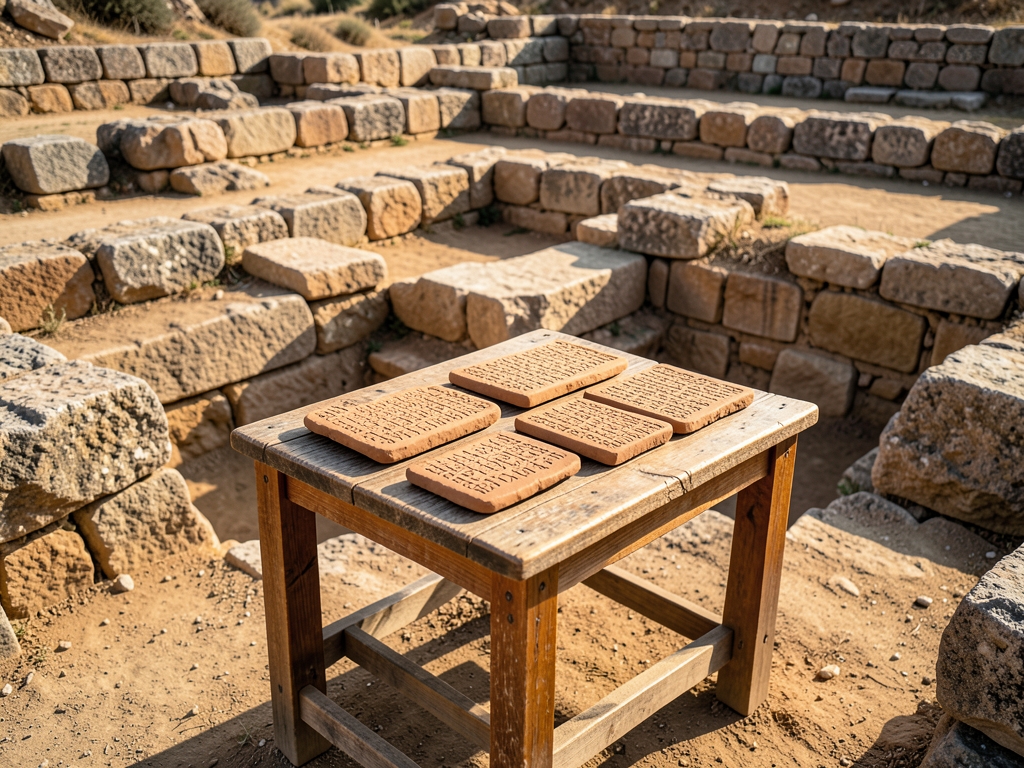
Archaeological discoveries in the heart of Anatolia continue to rewrite our understanding of the ancient Near East, bringing long-forgotten empires back into the light of modern historical research. Recent excavations have brought forth an extraordinary cache of artifacts that provide unprecedented insight into the political turmoil, administrative structures, and personal tragedies of the ancient Hittite Empire. Among these finds, a newly examined collection of cuneiform tablets discovered within a royal archive offers a window into a 3,400-year-old imperial crisis, shedding light on how one of the Bronze Age's dominant superpowers governed its vast territories and navigated internal instability.
The Hittites were contemporaries of ancient Egypt, Assyria, and Mycenaean Greece, yet their language, culture, and administrative sophistication often remained overshadowed in popular imagination by their more frequently cited rivals. However, deciphering the archives left behind in their capital of Hattusa and surrounding administrative centers has revealed a remarkably literate society that meticulously recorded everything from international treaties and land grants to ritual prescriptions and desperate royal correspondence. The latest recovery of nearly two hundred inscribed tablets underscores the sheer volume of bureaucratic output generated by the Hittite state and highlights the vulnerability of imperial centers during times of transition.
The Geographical and Historical Context of Anatolian Archives
To fully appreciate the significance of these cuneiform texts, one must examine the unique geography and geopolitical landscape of ancient Anatolia. Positioned at the crossroads of Europe and Asia, the Anatolian plateau was a challenging terrain that fostered the development of fortified urban centers and highly centralized administrative networks. The Hittites established a formidable empire that dominated the region during the Late Bronze Age, exercising control through a network of vassal states, military garrisons, and royal estates.
Archives in the ancient Near East were not merely libraries for literary entertainment; they served as the vital nervous system of the state. Clay tablets baked in accidental fires or deliberately preserved in institutional storehouses recorded economic transactions, legal disputes, military commands, and religious rituals. When archaeologists uncover an intact royal archive, they gain direct access to the administrative voice of the ancient world, bypassing centuries of later historical distortion or mythmaking. The recent discoveries in Turkey reinforce the idea that even peripheral or specialized archives within the Hittite sphere held crucial documents detailing the daily governance and crisis management of the realm.
Deciphering Cuneiform: From Clay to Historical Narrative
The process of translating Hittite cuneiform is a triumph of modern philology and archaeology. Adopted from the Mesopotamian cuneiform script, the Hittite writing system was used to record not only the native Indo-European Hittite language but also several other languages spoken within the empire's multi-ethnic population, including Luwian, Palaic, and Hattic. This linguistic diversity reflects the cosmopolitan nature of the Hittite state, which routinely incorporated the cultural and religious traditions of conquered or allied peoples.
Scholars examining newly recovered tablets must employ rigorous paleographic and linguistic analysis to date the texts and determine their context. The physical condition of the clay, the specific shape of the cuneiform wedge impressions, and the recurring stylistic formulas used by royal scribes all provide critical clues. When a batch of tablets emerges from a controlled excavation rather than illicit looting, every context layer—known as the stratigraphic provenance—is carefully documented. This ensures that historians can reconstruct the exact room, building, and historical horizon to which the documents belonged, transforming fragmented clay shards into coherent historical narratives.
Unveiling a 3,400-Year-Old Royal Tragedy
The most compelling aspect of the recent Hittite archive discoveries is the intimate glimpse they offer into the personal and political crises of the royal family. While economic lists and legal codes provide structural data, letters and decree drafts reveal the human drama behind imperial governance. The texts recovered from the site detail a profound royal tragedy dating back roughly 3,400 years, a period marked by contested successions, external pressures from neighboring rivals, and severe internal dissent.
Ancient correspondence frequently exposes the anxieties of kings, queens, and high-ranking officials who feared conspiracy, treason, and the collapse of divine favor. In Hittite ideology, the king acted as the chief intermediary between the storm god and the people; any failure of crops, military defeat, or palace intrigue was interpreted as a sign of divine displeasure. The newly translated tablets chronicle specific instances of betrayal within the inner circle, detailing how factions vied for influence during vulnerable moments in the royal lineage. These narratives challenge the idealized propaganda found on monumental stone reliefs, presenting instead a complex, precarious political reality where alliances shifted rapidly and survival required constant vigilance.
| Text Category | Primary Purpose | Historical Value |
|---|---|---|
| Administrative Records | Tracking grain, livestock, and labor | Reconstructing Bronze Age economy |
| Treaties & Diplomatic Pacts | Defining vassal obligations and borders | Mapping geopolitical power structures |
| Royal Correspondence | Conveying secret intelligence and orders | Uncovering palace intrigue and personal motives |
| Ritual Prescriptions | Averting plagues, curses, and divine wrath | Understanding Hittite religious psychology |
The Role of Royal Archives in Bronze Age Statecraft
Administrative efficiency was the cornerstone of Hittite imperial longevity. Without instant communication or rapid transport, the central government relied on a steady flow of written dispatches carried by royal couriers across the network of roads spanning the Anatolian plateau. Provincial governors, military commanders, and temple administrators were required to report back to the capital regarding resource allocation, tax collection, and potential security threats.
The inclusion of numerous administrative dockets in the recent finds demonstrates how deeply institutionalized record-keeping had become by the height of the empire. Scribes underwent rigorous training in scribal schools, mastering multiple languages and complex cuneiform sign lists. Their meticulous work ensured continuity across reigns, allowing incoming monarchs to consult past precedents when settling legal disputes or negotiating international treaties. Consequently, the unearthing of these tablets is not merely an aesthetic or antiquarian event; it is a direct encounter with the operational mechanics of one of history's most sophisticated bureaucracies.
Preservation and Modern Archaeological Challenges
Excavating and preserving ancient clay archives presents formidable challenges for modern archaeologists and conservation specialists. Once buried for millennia in moist earth, freshly exposed clay tablets are extremely fragile and vulnerable to rapid moisture loss, thermal shock, and chemical crystallization. Field conservators must stabilize the material on-site before transporting the fragile pieces to specialized laboratories for cleaning, photographic documentation, and digital scanning.
Furthermore, the acceleration of industrial development and modern infrastructure projects across historic regions often places archaeological heritage at immediate risk. Rescue archaeology—conducted ahead of construction, mining, or agricultural expansion—has become the primary method by which many of these invaluable sites are investigated. The successful recovery of ancient archives under such tight operational timelines highlights the dedication of international archaeological teams working to safeguard humanity's shared historical record before it is permanently disturbed by modern progress.
The recovery of ancient archives bridges the gap between myth and reality, offering unfiltered testimony from the individuals who built, ruled, and ultimately watched the Bronze Age world transform.
Implications for Broader Near Eastern History
The fallout from these textual discoveries extends far beyond the borders of modern Turkey. Because the Hittite Empire interacted extensively with Egypt, Babylonia, Mitanni, and the Aegean civilizations, new details regarding Hittite internal politics frequently illuminate the broader geopolitical dynamics of the Late Bronze Age. For instance, shifts in royal succession or administrative centralization directly impacted trade routes, diplomatic marriages, and military alliances across the entire eastern Mediterranean.
Historians studying the Late Bronze Age collapse—the catastrophic systemic failure that swept across the Near East and Aegean around 1200 BCE—look to archives like these for early indicators of vulnerability. By examining how the Hittite state managed crises, economic stress, and internal dissent centuries prior to its final collapse, researchers can better understand the fragile interdependencies that sustained the ancient world. Each newly read tablet adds another crucial data point to this complex historical puzzle, refining our comprehension of how complex societies rise, adapt, and eventually fall.
Info! Archaeological excavations in Anatolia are ongoing, and researchers anticipate that further conservation and digital translation of the newly recovered cuneiform tablets will yield additional historical publications in the coming years.
What are cuneiform tablets and why are they important to history?
Cuneiform tablets are ancient clay documents inscribed with wedge-shaped characters used throughout the Near East. They are vital to history because they provide direct, unmediated records of laws, economics, politics, and literature from civilizations that existed thousands of years ago.
What period do the newly discovered Hittite tablets date back to?
The newly examined tablets and royal archives date back approximately 3,400 years to the Late Bronze Age, a period when the Hittite Empire was a dominant political and military force in Anatolia.
What kind of information is typically found in royal Hittite archives?
Hittite royal archives contain a wide variety of documents, including international treaties, administrative records, legal codes, religious rituals, and confidential correspondence detailing palace politics and royal tragedies.
How do archaeologists protect freshly excavated clay tablets?
Freshly excavated clay tablets are extremely fragile. Conservators stabilize them on-site to prevent rapid damage from moisture loss and temperature changes before safely transporting them to laboratories for cleaning and translation.
As ongoing epigraphic analysis continues, the secrets locked within these ancient clay tablets will undoubtedly inspire further debate and discovery among historians and archaeologists alike. The ability to listen to the written words of scribes and monarchs who lived over three millennia ago remains one of the most powerful achievements of historical science, ensuring that the human stories of the past are never truly lost to time.
