

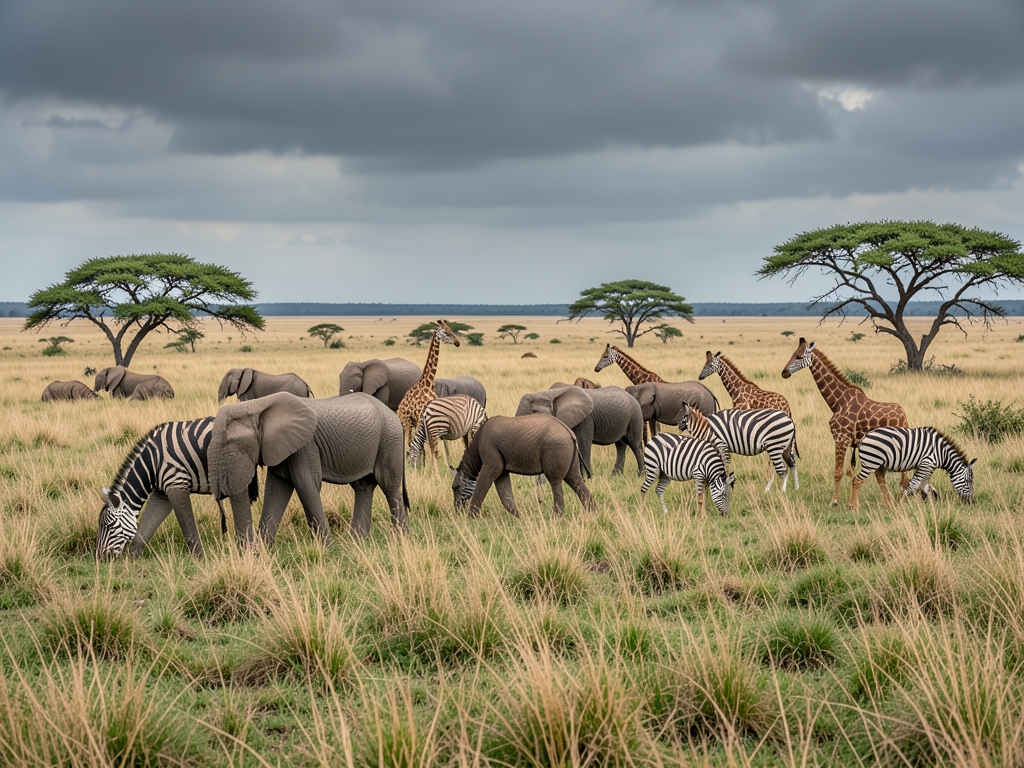
When discussions of climate change mitigation arise, public imagination immediately turns to technological innovations, renewable energy infrastructure, industrial carbon capture facilities, and vast solar arrays. For decades, global policy frameworks have focused overwhelmingly on reducing greenhouse gas emissions through energy transitions and protecting traditional vegetative carbon sinks like tropical rainforests and peatlands. However, recent scientific inquiries have begun expanding the boundaries of carbon accounting to incorporate a living architecture that has often been overlooked in macro-level economic models: large wild animals. Researchers across international academic institutions are increasingly investigating whether the conservation and restoration of megafauna can serve as a viable, nature-based mechanism for capturing and storing atmospheric carbon.
This emerging intersection between wildlife ecology and climate science challenges traditional carbon accounting methods, which have historically treated animals as passive consumers within ecosystems rather than active participants in the global carbon cycle. Large herbivores and apex predators exert profound top-down controls on ecosystem structure, nutrient cycling, and vegetation density. By examining how these biological processes influence soil chemistry, plant growth, and organic matter preservation, scientists are discovering that maintaining robust animal populations may offer quantifiable benefits for planetary health. Yet, translating these ecological interactions into standardized carbon credits or official climate policy remains complex, contested, and fraught with methodological challenges.
The Biological Mechanics of Animal Carbon Storage
To understand how large animals function as living carbon stores, scientists analyze multiple interconnected biological pathways. At the most fundamental level, the bodies of large vertebrates store significant quantities of carbon within their biomass, including muscle, bone, fat, and skin. When a wild animal lives within an ecosystem, it represents a temporary reservoir of organic carbon. However, the sheer physical mass of living animals accounts for only a fraction of their total climate impact. The primary carbon-storing power of megafauna lies not in their static body mass, but in their dynamic interactions with the landscapes they inhabit.
Large herbivores such as elephants, bison, wildebeests, and rhinos act as landscape engineers. Through continuous grazing, browsing, and trampling, these animals shape plant communities in ways that directly alter soil carbon dynamics. Grazing stimulates plant root growth, encouraging vegetation to pump more carbon deep into the soil profile rather than storing it solely in surface tissues. Furthermore, animal movements facilitate seed dispersal across vast distances, enabling the proliferation of deep-rooted, slow-growing tree species that sequester carbon far more effectively than fast-growing brush or grasses. When these animals traverse landscapes, their heavy footfalls also promote nutrient mixing and soil aeration, influencing microbial communities that govern long-term organic matter decomposition.
Info! Megafauna influence global carbon storage primarily by modifying vegetation structures, accelerating nutrient cycling, and enhancing soil organic matter accumulation rather than merely storing carbon within their physical biomass.
Nutrient Cycling and Soil Enhancement
One of the most powerful mechanisms by which large animals affect carbon storage is through nutrient distribution and enrichment. In many natural ecosystems, nutrients are locked away in vegetation or concentrated in specific geographic zones. Mobile herbivores consume vast quantities of biomass across broad ranges and redistribute essential elements such as nitrogen, phosphorus, and potassium through their waste products. This natural fertilization process enhances plant productivity, which in turn accelerates photosynthetic carbon uptake from the atmosphere.
In marine ecosystems, similar dynamics occur with large marine vertebrates. Whales, for instance, dive deep into the ocean to feed and return to the surface to release nutrient-rich fecal plumes. This biological pump stimulates the growth of phytoplankton, microscopic marine organisms responsible for capturing massive amounts of carbon dioxide. When these phytoplankton die, a portion of their carbon sinks to the deep ocean floor, sequestering it away from the atmosphere for centuries. Protecting whale populations, therefore, represents an indirect yet potent form of marine carbon management that links animal conservation directly to oceanic carbon sinks.
The Complexities of Quantifying Wildlife Carbon Credits
Despite the compelling ecological arguments linking megafauna to carbon storage, translating these natural processes into market-ready carbon credits introduces substantial scientific and economic hurdles. Traditional carbon offset markets rely on strict additionality, permanence, and measurable verification metrics. Calculating the precise amount of carbon sequestered or protected by maintaining a specific population of elephants or wild horses is vastly more complex than measuring the output of a solar farm or the acreage of a replanted forest.
Ecological systems are inherently variable. Wildlife populations fluctuate in response to disease, weather extremes, poaching pressures, and habitat fragmentation. If a protected herd of herbivores migrates outside a designated conservation boundary, or if a drought decimates local vegetation and triggers a release of soil carbon, the permanence of the carbon storage becomes uncertain. Consequently, environmental economists and conservation scientists caution against treating wildlife conservation as a direct substitute for industrial emissions reductions. Instead, many researchers advocate for viewing animal-driven carbon storage as an invaluable co-benefit of biodiversity conservation rather than a standalone financial commodity.
| Mechanism | Primary Ecological Actor | Impact on Carbon Cycle |
|---|---|---|
| Biomass Storage | Elephants, Whales, Bison | Stores organic carbon directly within living tissue |
| Landscape Engineering | Herbivores, Megaherbivores | Promotes deep root growth and soil aeration |
| Nutrient Redistribution | Migratory Herds, Seabirds | Accelerates plant productivity and organic uptake |
| Marine Phytoplankton Stimulation | Large Whales | Enhances deep-ocean carbon export via fecal iron |
Ecosystem Integrity Versus Single-Metric Conservation
Focusing excessively on carbon storage as the sole justification for wildlife conservation carries inherent risks. Critics within the scientific community argue that reducing complex, multi-faceted ecosystems to a single carbon metric can sideline other vital ecological functions, such as water purification, cultural heritage preservation, and species resilience. When conservation funding is tied strictly to carbon markets, species that do not fit neatly into carbon-sequestering equations risk being undervalued by policymakers and investors.
Furthermore, protecting large animals requires vast spatial footprints and active management of human-wildlife conflicts. As agricultural expansion and infrastructure development continue to encroach on natural habitats, maintaining migratory corridors for species like wildebeests or large carnivores demands coordinated international cooperation. Conservation frameworks that integrate climate goals with local community livelihoods stand a much higher chance of long-term success than top-down carbon schemes that ignore socio-economic realities on the ground.
The integration of wildlife conservation into climate strategies offers an unprecedented opportunity to unify biodiversity protection with planetary health, provided that scientific rigor guides every step of policy implementation.
Future Directions in Climate and Biodiversity Policy
As international climate negotiations increasingly acknowledge the interconnected nature of the biodiversity and climate crises, the role of living carbon stores is gaining traction among researchers and intergovernmental organizations. Future conservation frameworks will likely rely on integrated ecological models that account for the synergistic effects of species restoration on ecosystem resilience. Recognizing large animals as active participants in Earth's carbon cycle reinforces the fundamental truth that healthy, functioning ecosystems are inherently more effective at regulating the global climate than degraded landscapes.
Ultimately, while saving large animals may not serve as a magic bullet to neutralize industrial emissions, it remains an indispensable component of comprehensive environmental stewardship. By preserving the intricate webs of life that sustain megafauna, humanity safeguards not only Earth's biological heritage but also the complex natural mechanisms that stabilize our shared climate.
Do large animals actually store significant amounts of carbon?
Yes, large animals store carbon directly within their physical biomass, but their most significant climate impact comes from how they modify ecosystems. Through grazing, nutrient redistribution, and landscape engineering, megafauna enhance plant growth, root depth, and soil carbon sequestration.
Can wildlife conservation generate tradeable carbon credits?
While some researchers and startups are exploring ways to quantify wildlife-driven carbon benefits, doing so is extremely complex. Verifying permanence, additionality, and fluctuating animal populations makes standardizing wildlife carbon credits much harder than measuring industrial or forestry offsets.
How do marine animals contribute to the global carbon cycle?
Large marine vertebrates, particularly whales, cycle essential nutrients through the water column via their waste products. This process stimulates phytoplankton blooms, which capture atmospheric carbon dioxide and export carbon to the deep ocean floor when they die.
Should wildlife conservation be funded solely through climate mechanisms?
Most conservation scientists advise against tying wildlife protection exclusively to carbon metrics. Doing so can undervalue species that do not fit carbon models and overlooks critical ecological functions like water cycling, cultural values, and overall biodiversity resilience.
Protecting the planet's remaining megafauna requires a holistic approach that balances ecological research with practical conservation policy. As scientific understanding of living carbon stores deepens, humanity has a clearer roadmap for uniting biodiversity protection with global climate action.
