

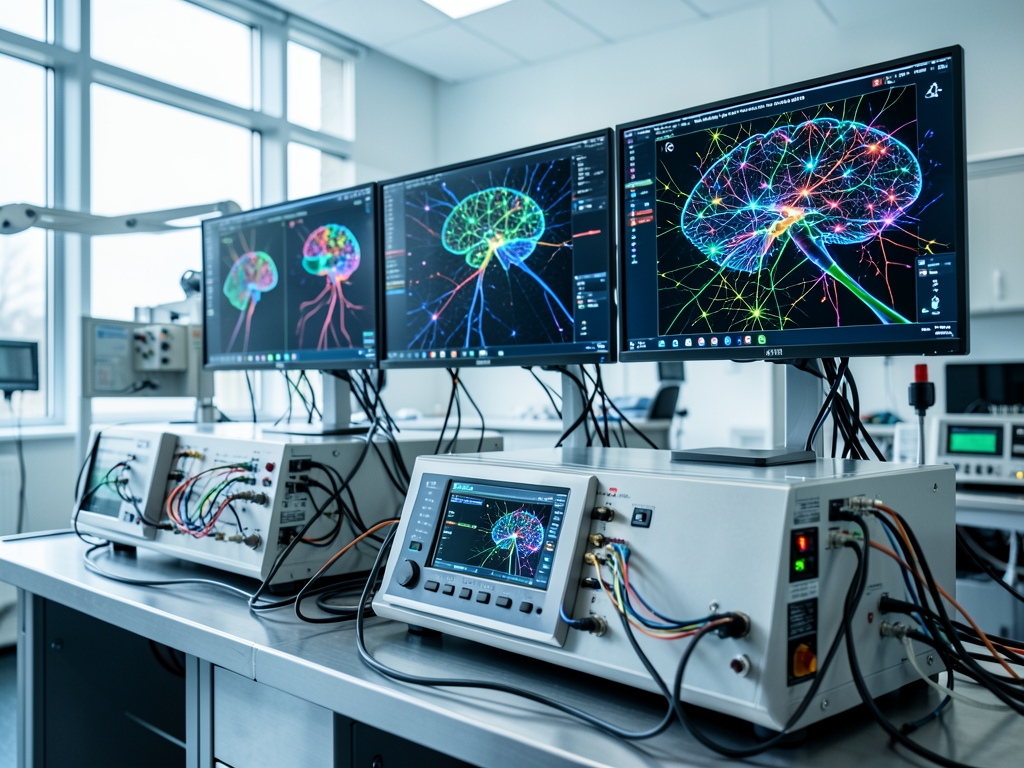
Neurobiologists at UC San Diego have achieved a groundbreaking milestone in understanding how the brain stores and executes physical actions, successfully triggering learned motor movements by activating a remarkably small subset of just 20 brain cells. This discovery sheds new light on the precision of neural circuits and opens up innovative avenues for studying motor control, neurological rehabilitation, and brain-computer interface technologies.
For decades, neuroscientists have debated how complex physical behaviors are encoded across neural networks. Traditional models often assumed that vast populations of thousands or even millions of interconnected neurons were required to initiate and coordinate even the simplest voluntary movements. However, this recent experimental finding demonstrates that the brain possesses highly specialized, ultra-sparse coding mechanisms capable of orchestrating sophisticated motor sequences from a handful of targeted cellular triggers.
The Mechanics of Sparse Neural Coding
To understand the significance of this research, it helps to examine how the central nervous system processes movement. When an animal or human learns a new physical skill—such as playing an instrument, typing on a keyboard, or navigating a complex environment—the brain undergoes structural and functional neuroplasticity. Synapses strengthen, and specific pathways are forged to make the movement efficient and repeatable.
Researchers have long sought to isolate the exact causal units responsible for these learned behaviors. By utilizing advanced optogenetic tools—a technique that allows scientists to control cellular activity using light with millisecond precision—the research team was able to pinpoint and stimulate specific neuronal assemblies in animal models that had been trained to perform distinct motor tasks.
By focusing precisely on the functional nodes within the motor cortex, investigators discovered that activating merely 20 specific neurons was sufficient to reliably elicit the exact learned movement pattern without requiring broader cortical stimulation.
This level of precision indicates that motor memory is not merely distributed diffusely across the brain tissue in an indistinct blur, but is anchored by tightly organized functional ensembles. These microscopic sub-networks act like cryptographic keys, where turning a tiny tumbler unlocks a complex, pre-programmed behavioral sequence.
Implications for Neurological Rehabilitation and Medicine
The ability to elicit complex learned movements by targeting such a minuscule number of neurons holds profound implications for clinical medicine. Conditions such as stroke, Parkinson's disease, traumatic brain injury, and spinal cord damage frequently disrupt the communication pathways between the brain and the body's musculoskeletal system.
If neurotherapeutics can eventually harness sparse coding principles, future neuroprosthetics and brain-computer interfaces might not need to decode or stimulate millions of individual channels to restore movement. Instead, precision neurostimulation could target these highly concentrated micro-circuits, effectively bypassing damaged pathways by directly activating the downstream motor programs stored within the cortex.
Info! Optogenetics utilizes genetically modified light-sensitive proteins expressed in specific cell types, allowing researchers to activate or silence targeted neurons with unprecedented spatial and temporal resolution.
Furthermore, this research advances our theoretical understanding of memory consolidation. It supports the cell-assembly theory first proposed by Donald Hebb in 1949, which posited that interconnected groups of neurons form the physical basis of memory and learning. Observing that such a small assembly can drive an entire behavioral output provides empirical validation for decades of computational neuroscience models.
Experimental Precision and Technological Challenges
Achieving this level of control required overcoming significant technical hurdles. The human and mammalian brains are among the most complex biological structures in the known universe, containing billions of neurons linked by trillions of synaptic connections. Isolating 20 functionally relevant cells out of a vast sea of active tissue is akin to finding a specific grain of sand on a sprawling beach.
To accomplish this, the research team employed high-density calcium imaging and advanced statistical algorithms to monitor real-time neural activity during motor tasks. By identifying which neurons fired consistently during specific phases of the learned movement, the researchers created a high-resolution functional map before applying targeted optical stimulation.
| Research Aspect | Traditional View | New Findings |
|---|---|---|
| Neuron Population | Thousands to millions | As few as 20 targeted cells |
| Coding Mechanism | Diffuse population coding | Ultra-sparse ensemble triggers |
| Causal Control | Difficult to isolate units | Precise optogenetic activation |
| Implications | General cortical mapping | Targeted neuroprosthetic design |
Despite these successes, researchers emphasize that translating these findings from animal models to human clinical applications will require extensive further study. Human brains possess vastly more complex anatomical architectures, and non-invasive or minimally invasive technologies must improve significantly before they can target individual cellular ensembles with comparable precision.
Future Directions in Cognitive and Motor Research
As neurobiology continues to intersect with advanced engineering, machine learning, and photonics, the pace of discovery in brain science is accelerating rapidly. Future studies will likely investigate whether similar sparse coding principles govern other cognitive functions, such as decision-making, emotional regulation, and abstract thought processes.
Understanding whether memory retrieval and cognitive processing rely on similarly compact cellular assemblies could completely redefine our approach to treating psychiatric and neurodegenerative disorders. By uncovering the fundamental language of the brain at the single-cell level, science moves ever closer to unlocking the full mysteries of human consciousness and motor control.
How many brain cells were activated to trigger the learned movement?
Researchers successfully triggered learned motor movements by activating just 20 specific brain cells using advanced optogenetic stimulation techniques.
What technology made this precise cellular activation possible?
The experiment relied on optogenetics, which uses light-sensitive proteins to control targeted neural activity with millisecond precision, combined with high-density calcium imaging.
What are the potential medical applications of this research?
This discovery could eventually improve brain-computer interfaces and neuroprosthetics, helping restore movement in patients with neurological injuries, strokes, or degenerative conditions.
Does this mean all memories are stored in small cell groups?
While motor skills can be triggered by sparse cellular assemblies, memory storage across the entire brain involves complex distributed networks and remains an active area of neurobiological study.
In conclusion, the discovery that microscopic assemblies of just 20 neurons can initiate complex learned motor programs represents a monumental step forward in neurobiology. By illuminating the exquisite precision of neural circuits, this research bridges the gap between theoretical neuroscience and practical medical innovation, paving the way for advanced therapies that could one day restore lost motor functions in patients worldwide.
