

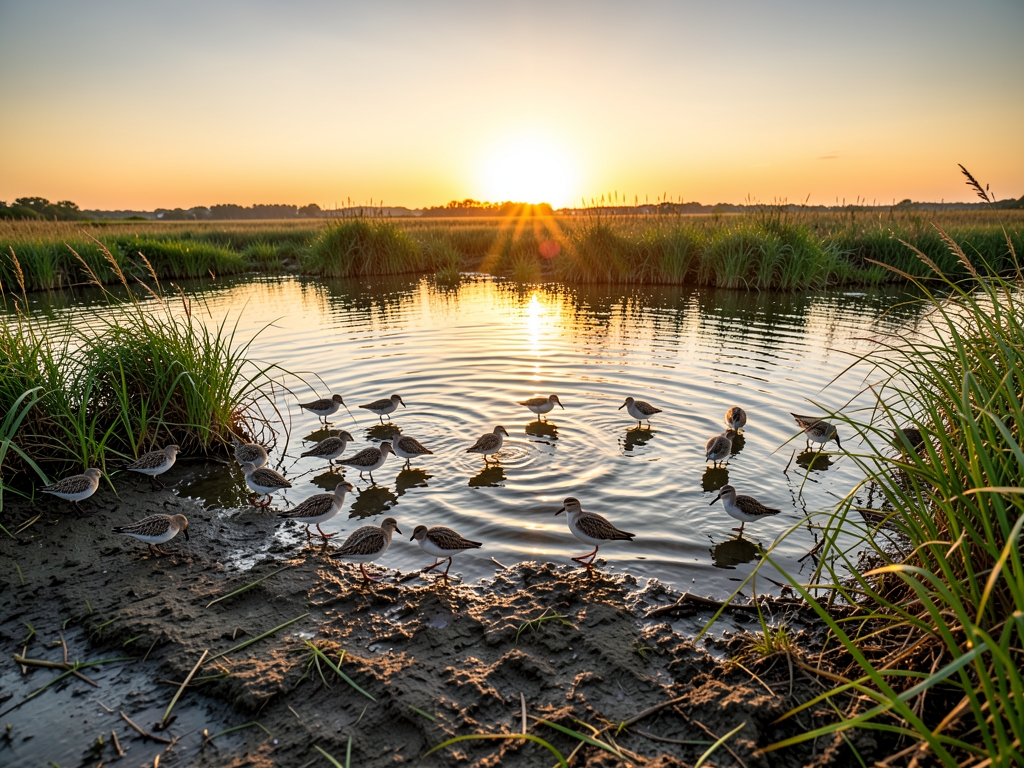
Wetlands serve as the vital arteries of our planet's ecological network, acting as natural water purifiers, flood buffers, and extraordinarily productive biological habitats. Among these, Ramsar-designated wetlands hold a special status under international treaty law, recognizing sites of paramount global importance for biodiversity conservation. Recent developments surrounding Ramsar wetland expansions have brought renewed attention to the plight of vulnerable shorebirds that depend on these specialized ecosystems during their grueling transcontinental migrations. Understanding the complex relationship between wetland preservation and avian survival illuminates why targeted conservation efforts are more critical today than ever before.
Migratory shorebirds undertake some of the most astonishing journeys in the natural world. Species such as sandpipers, plovers, curlews, and godwits routinely fly tens of thousands of kilometers each year, traversing entire hemispheres between their high-latitude Arctic breeding grounds and temperate or tropical non-breeding areas. These incredible flights require immense caloric intake, forcing birds to rely heavily on specific staging sites along established flyways. Ramsar wetlands function as essential refueling stations where mudflats, salt marshes, and shallow estuaries teem with benthic invertebrates, crabs, and marine worms. Without secure access to these nutrient-rich zones, migrating flocks face severe energetic deficits that directly impact survival rates and reproductive success.
The Ecological Mechanics of Wetland Ecosystems
To fully appreciate why wetland expansion directly benefits vulnerable wildlife, one must examine the intricate trophic dynamics operating within these habitats. Wetlands exist at the dynamic interface between terrestrial land and aquatic systems. This constant flux of water, nutrients, and sediment creates highly dynamic conditions that support an abundance of primary producers, ranging from microscopic phytoplankton to expansive salt marsh grasses. These plants fuel a detrital food web that ultimately supports massive populations of macroinvertebrates living in the sediment.
Shorebirds have evolved specialized anatomical adaptations specifically tailored to exploit these sediment-dwelling organisms. Different species possess varying bill lengths, shapes, and sensory pits that allow them to probe mud at different depths without direct competition. For instance, short-billed plovers snap up surface-dwelling prey, while long-billed curlews reach deep into burrows for ghost crabs and lugworms. When a wetland is degraded, polluted, or fragmented by human encroachment, the invertebrate community collapses or shifts dramatically, leaving migrating birds without adequate food sources during their critical stopover windows.
Wetlands are not merely flooded lands; they are complex, high-energy ecological engines that power the survival of migratory species across entire continents.
Threats Facing Global Shorebird Populations
Despite their ecological significance, shorebirds represent one of the most rapidly declining avian groups globally. Environmental pressures stemming from anthropogenic activity continue to erode the ecological integrity of vital coastal and inland habitats. Key drivers of this decline include:
- Coastal Reclamation and Urbanization: Dredging and filling tidal flats for real estate, ports, and industrial infrastructure permanently destroys critical feeding grounds.
- Hydrological Alteration: Upstream dam construction, water diversion projects, and dyke building disrupt natural seasonal flooding regimes, starving downstream wetlands of essential sediment and fresh water.
- Climate Change and Sea-Level Rise: Rapidly rising oceans squeeze coastal wetlands against fixed human infrastructure—a phenomenon known as coastal squeeze—drastically reducing the total surface area of available mudflats.
- Pollution and Chemical Runoff: Agricultural fertilizers, heavy metals, and industrial effluents accumulate in wetland sediments, poisoning benthic organisms and bioaccumulating in foraging birds.
These cumulative stressors create severe bottlenecks along major migratory flyways, including the East Asian-Australasian Flyway and the Atlantic Flyway. Expanding protected wetland zones through international frameworks provides a crucial mechanism to reverse these downward population trends by securing legal protection and active management for critical habitats.
The Role of Ramsar Designations in Conservation
The Convention on Wetlands, signed in the Iranian city of Ramsar in 1971, provides the foundational intergovernmental treaty framework for national action and international cooperation regarding the conservation and wise use of wetland resources. Designating a site as a Ramsar Wetland of International Importance carries profound practical implications:
Info! Ramsar designation does not automatically create a strict nature reserve, but it obligates national governments to formulate and implement planning that promotes the conservation of the site and the wise use of its catchment area.
When governments commit to expanding Ramsar boundaries, they officially recognize previously unprotected or buffer areas as integral components of a larger ecological network. This formal recognition unlocks targeted conservation funding, engages local communities in participatory management, and introduces regulatory oversight that restricts damaging activities such as unregulated coastal development, intensive aquaculture, and destructive resource extraction.
Restoration Strategies for Expanded Wetland Zones
Simply drawing new boundaries on a map is insufficient to restore degraded ecosystems. Modern conservation science emphasizes active ecological restoration to ensure that expanded Ramsar sites achieve their full biological potential. Effective restoration projects typically incorporate several key methodologies:
- Hydrological Reconnection: Removing obsolete dykes, sluice gates, and artificial levees to allow natural tidal flows and freshwater inundation to resume across historical floodplains.
- Sediment Replenishment: Utilizing dredged material strategically to rebuild eroded mudflats and low-lying islands that serve as safe high-tide roosting sites for resting flocks.
- Invasive Species Eradication: Controlling aggressive non-native plant species, such as smooth cordgrass or phragmites, which outcompete native vegetation and degrade open mudflat foraging areas.
- Community-Led Stewardship: Involving local indigenous communities, fishers, and landowners in monitoring wildlife populations and enforcing sustainable resource use practices.
These hands-on interventions accelerate ecological recovery, transforming degraded or artificial landscapes back into thriving, resilient ecosystems capable of supporting dense congregations of waterbirds.
Economic and Societal Co-Benefits of Wetland Conservation
While protecting shorebirds remains a primary driver for wetland expansion, the societal advantages extend far beyond ornithology. Healthy, expanded wetlands provide immense ecosystem services that directly benefit human communities living near coastal and riverine zones:
- Natural Storm Surge Mitigation: Expansive coastal marshes absorb the energy of incoming cyclonic storm surges and high waves, protecting inland infrastructure and residential properties from catastrophic flooding.
- Water Quality Enhancement: Wetland vegetation and microbial communities filter excess nitrogen, phosphorus, and agricultural runoff, significantly improving water quality before it reaches rivers and oceans.
- Blue Carbon Sequestration: Coastal wetlands, including mangroves, salt marshes, and seagrass meadows, sequester carbon dioxide at rates up to ten times higher than tropical rainforests, playing a vital role in global climate mitigation strategies.
- Sustainable Ecotourism: Birdwatching, wildlife photography, and nature-based tourism generate substantial sustainable revenue for regional economies, aligning financial incentives with long-term conservation goals.
| Ecosystem Service | Primary Mechanism | Human and Ecological Benefit |
|---|---|---|
| Flood Mitigation | Wave energy absorption and water storage | Protects coastal communities and infrastructure |
| Water Filtration | Sediment trapping and nutrient uptake | Improves water quality in estuaries and bays |
| Carbon Sequestration | Rapid burial in anaerobic organic soils | Mitigates atmospheric greenhouse gas accumulation |
| Biodiversity Support | Abundant benthic invertebrate production | Sustains millions of migratory shorebirds |
International Collaboration Along Global Flyways
Because migratory birds ignore geopolitical borders, protecting them requires unprecedented international cooperation. A Ramsar wetland expansion in one country can be entirely undermined if stopover sites further along the flyway are destroyed. Consequently, conservation organizations, governments, and scientific institutions increasingly utilize flyway-scale conservation agreements.
These partnerships facilitate the sharing of telemetry data, satellite tracking insights, and best practices in wetland management. When nations coordinate their habitat protection strategies, they create an unbroken chain of safe havens that dramatically increases the probability of successful migration cycles for vulnerable avian species.
What is a Ramsar wetland and why is it important?
A Ramsar wetland is a wetland site designated of international importance under the Ramsar Convention, an intergovernmental treaty signed in 1971. These sites are important because they protect unique ecosystems that support global biological diversity, regulate water resources, and provide critical habitats for migratory wildlife.
How do wetland expansions directly help vulnerable shorebirds?
Expanding Ramsar wetlands increases the total surface area of protected mudflats, estuaries, and salt marshes. This expansion provides migratory shorebirds with secure feeding and resting grounds rich in benthic invertebrates, which are essential for refueling during long-distance flights.
What are the primary threats currently facing migratory shorebird populations?
Major threats include coastal reclamation, urban development, hydrological alterations from dams, chemical pollution runoff, and coastal squeeze caused by sea-level rise, all of which destroy or degrade essential stopover habitats along major flyways.
Do wetland conservation efforts offer benefits to human communities?
Yes. Healthy, expanded wetlands provide critical societal co-benefits, including natural storm surge protection, water purification through nutrient filtration, high-capacity carbon sequestration to combat climate change, and economic opportunities via sustainable ecotourism.
The ongoing expansion and active management of Ramsar wetlands represent a beacon of hope in global conservation efforts. By safeguarding these delicate ecological crossroads, humanity can ensure that future generations continue to witness the breathtaking spectacle of shorebirds completing their epic migrations across the globe. Protecting wetlands is not merely an act of wildlife preservation; it is a fundamental investment in the planetary life-support systems upon which both nature and human civilization ultimately depend.
