

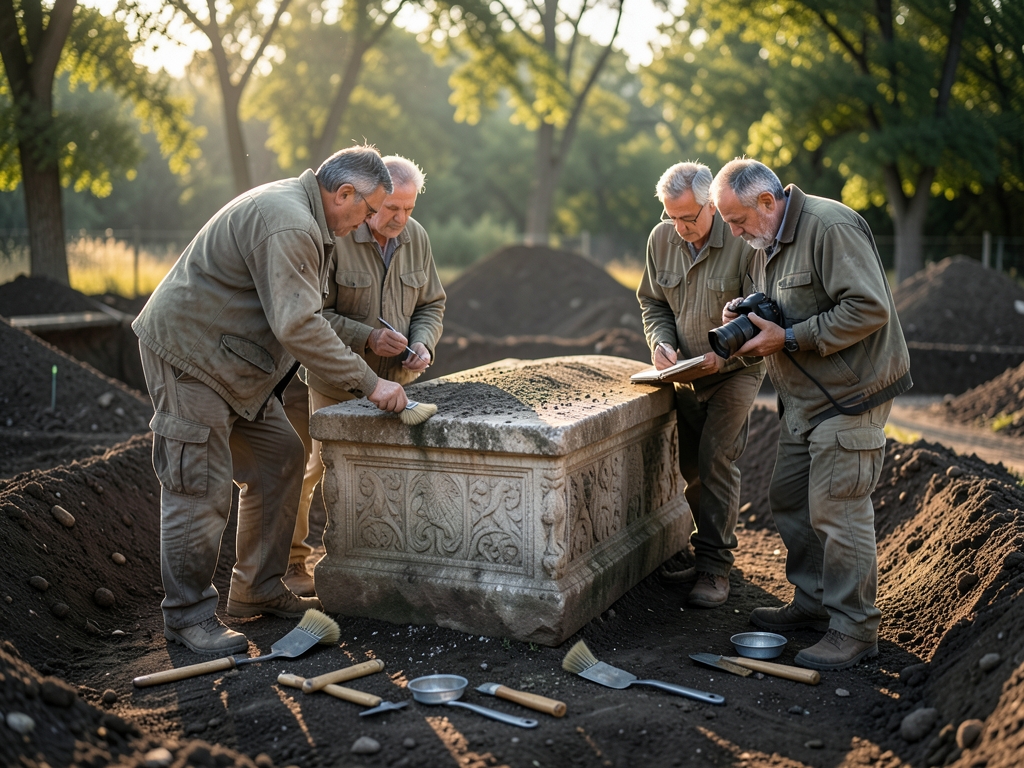
Archaeological discoveries often offer profound windows into the daily lives, beliefs, and emotional worlds of ancient civilizations. Among the most evocative finds are those connected to familial grief and the sacred rituals surrounding death in the ancient world. Recent excavations in the coastal city of Constanța, Romania, have brought to light a remarkably rare and intact Roman-era child's sarcophagus. This exceptional find provides contemporary historians and archaeologists with unprecedented material evidence regarding funerary art, social status, and pediatric burial customs in the ancient province of Scythia Minor during the Roman period.
The Historical Context of Ancient Tombs in Tomis
Modern-day Constanța rests upon the foundations of ancient Tomis, a thriving Greek and later Roman port city on the western shore of the Black Sea. Founded in the sixth century BCE, Tomis grew into a major urban and commercial hub. Following the Roman conquest of the region in the first century CE, the city was incorporated into the province of Moesia Inferior and later became the capital of Scythia Minor. During these centuries of imperial integration, Tomis flourished culturally and economically, attracting diverse populations of merchants, soldiers, administrators, and local elites who adopted Roman civic and cultural practices.
Funerary practices in Roman Tomis were complex and varied, reflecting the multicultural nature of the port city. Citizens buried their dead in extensive necropolises located outside the city walls, adhering to Roman laws that prohibited burials within urban limits for sanitary and religious reasons. While many common individuals were interred in simple tile graves or wooden coffins, wealthy families commissioned elaborate stone monuments, mausoleums, and carved sarcophagi. The discovery of an intact child's sarcophagus offers rare insight into how elite or affluent families mourned and commemorated their youngest members, whose graves seldom survive intact due to centuries of subsequent urban development and grave robbing.
Unearthing the Constanța Sarcophagus: Discovery and Initial Findings
The discovery in Constanța unfolded during routine urban construction and preventive archaeological evaluations conducted by local specialists. Preventive archaeology is a crucial safeguard in historical regions like Dobruja, where modern infrastructure projects frequently intersect with deeply stratified ancient ruins. As teams cleared topsoil and surveyed subsurface layers, they uncovered the heavy stone lid of a subterranean burial chamber protecting the artifact.
Unlike many previously excavated tombs that suffered from ancient pillaging or medieval quarrying, this sarcophagus was found completely sealed and structurally intact. The preservation of the limestone container and its undisturbed contents allowed researchers to document the deposition environment precisely. Inside the stone chest, fragile organic remains and grave goods survived in remarkable condition, shielded from moisture and mechanical disturbance for nearly two millennia.
| Archaeological Element | Description | Historical Significance |
|---|---|---|
| Container Material | Locally quarried high-grade limestone | Indicates local craftsmanship and access to regional stone workshops |
| Lid Construction | Gabled roof design with corner acroteria | Mimics miniature domestic architecture, common in Roman funerary symbolism |
| Grave Goods | Personal ornaments, ceramic vessels, and coins | Reflects contemporary beliefs regarding the journey to the afterlife |
| Preservation State | Unopened and structurally intact | Provides uncontaminated context for anthropological and chemical analysis |
Examining Roman Childhood and Pediatric Mortuary Customs
Childhood in the Roman Empire was fraught with peril. High infant and child mortality rates meant that families faced the loss of offspring with agonizing frequency, despite societal expectations and emotional bonds that matched modern parental grief. Historical texts often provide idealized or elite perspectives on children, making physical archaeological evidence from graves indispensable for understanding the reality of youth in antiquity.
The scale, decoration, and contents of the Constanța child's sarcophagus suggest that the deceased belonged to a family of considerable social standing. In Roman society, the investment in an expensive stone sarcophagus for a child—rather than a simple cremation urn or plain inhumation—was a deliberate public statement of grief, wealth, and family lineage. The meticulous carving of the stone and the inclusion of cherished personal items demonstrate that young children were mourned deeply and afforded full funerary rites.
Grave Goods and Symbolic Offerings in Roman Tombs
The interior of the sarcophagus yielded a collection of carefully placed grave goods that illuminate Roman funerary rituals and religious beliefs. Among the objects recovered were small terra-cotta figurines, miniature glass unguentaria (perfume flasks), and personal jewelry items fashioned from bone and bronze. Each artifact serves a specific functional and symbolic role within the funerary context.
Glass unguentaria frequently contained scented oils or balms used to anoint the body before burial, a practice intended to honor the deceased and mask the odors of decomposition. Meanwhile, small coins placed within or near the remains often served as the symbolic fare for Charon, the mythical ferryman of the underworld in Greco-Roman mythology. The inclusion of toys and miniature items highlights the age of the child and provides touching testimony to the personal grief experienced by the parents.
The discovery of an intact Roman child's sarcophagus opens a rare window into the emotional landscape and mortuary art of ancient Tomis, reminding us that parental grief transcended the centuries.
Conservation Challenges and Scientific Analysis
The removal and conservation of an ancient stone artifact of this magnitude require rigorous interdisciplinary collaboration. Once exposed to modern atmospheric conditions, ancient organic materials and porous limestone can degrade rapidly if humidity and temperature are not strictly controlled. Conservators at the museum in Constanța immediately initiated specialized stabilization protocols to protect the stone and its delicate contents.
Advanced scientific techniques now play a vital role in extracting maximum historical data from such excavations. Anthropologists and osteologists examine the skeletal remains to determine the exact age at death, nutritional status, and potential pathological markers that might reveal the cause of mortality or chronic childhood illnesses. Concurrently, isotopic analysis of tooth enamel and bone collagen can provide clues regarding the geographic origins and diet of the child, shedding light on migration patterns within the Roman Black Sea provinces.
Info! Preventive archaeological protocols in Romania ensure that accidental discoveries during construction projects are immediately handled by certified specialists, safeguarding national heritage.
Broader Archaeological Context within Scythia Minor
The Constanța sarcophagus does not exist in isolation; it forms part of a rich tapestry of Roman provincial archaeology along the western Black Sea coast. Recent years have seen numerous significant discoveries across the region, ranging from rural agricultural villas and military outposts to urban temples and extensive necropolises. These finds collectively challenge older historical narratives that viewed the Danubian limes merely as a militarized frontier zone.
Instead, archaeological evidence reveals a vibrant, interconnected provincial society where Graeco-Roman civic culture blended with local Thracian and Getic traditions. The artistry visible in the carving of the Constanța sarcophagus illustrates the presence of skilled local stone-masonry workshops that adapted Mediterranean artistic canons to local tastes and material availability.
Preserving and Displaying Ancient Heritage for the Public
Following the completion of comprehensive laboratory conservation and detailed academic study, cultural heritage authorities plan to integrate the sarcophagus into the permanent exhibition of the National Museum of History and Archaeology in Constanța. Museums play a vital role in translating complex archaeological research into engaging public narratives, allowing visitors to connect directly with the material culture of antiquity.
Exhibiting such fragile artifacts requires state-of-the-art climate-controlled vitrines and secure display environments. By presenting the sarcophagus alongside its recovered grave goods and interpretive educational panels, curators aim to foster a deeper appreciation for the ancient history of Dobruja and the universal human experiences of family, loss, and memory.
Where was the Roman child's sarcophagus discovered?
The artifact was unearthed in Constanța, Romania, which sits on the site of the ancient Greek and Roman port city of Tomis along the Black Sea coast.
Why is this archaeological discovery considered rare?
Most ancient graves and stone sarcophagi in urban areas were looted or damaged over the centuries. Finding a child's sarcophagus completely intact and sealed provides pristine scientific context.
What types of grave goods were found inside the sarcophagus?
Researchers recovered personal ornaments, miniature glass perfume flasks, terra-cotta figurines, and coins, which reflect Roman mortuary customs and beliefs regarding the afterlife.
What historical period does the artifact belong to?
The sarcophagus dates back to the Roman era, specifically during the period when Tomis served as a thriving provincial capital within the Roman Empire's Black Sea territories.
Conclusion
The discovery of the intact Roman-era child's sarcophagus in Constanța stands as a remarkable achievement for modern archaeology. Beyond its aesthetic and material value, the artifact bridges the vast temporal gap between antiquity and the present day. It reminds us of the universal nature of parental grief and the enduring human impulse to honor and remember those who passed away too soon. As ongoing laboratory analyses and conservation efforts unfold, this ancient stone chest will undoubtedly continue to yield valuable historical insights into the complex, rich fabric of Roman provincial life.
