

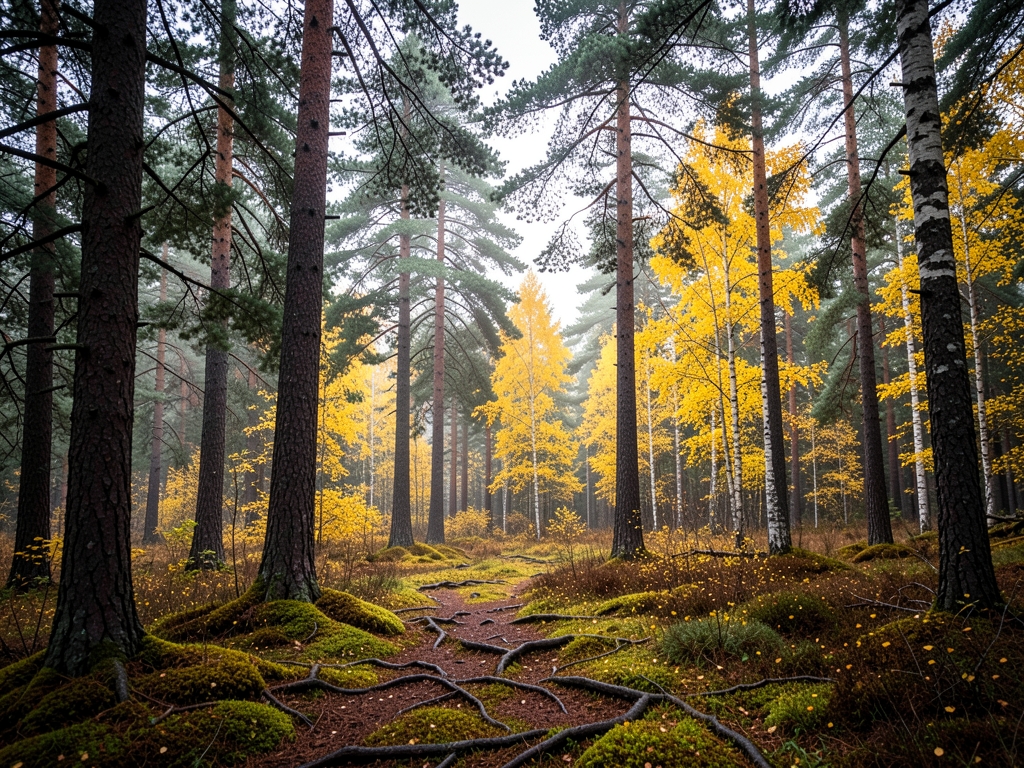
Boreal forests wrap around the northern hemisphere in a magnificent, continuous green crown, spanning across North America, Europe, and Asia. As the earth's second-largest terrestrial biome, these vast subarctic ecosystems store immense quantities of carbon within their living biomass and, most importantly, deep within their organic soils. Recent scientific investigations published over the past several months have shed new light on the delicate balance governing boreal forest carbon dynamics, revealing complex interactions between soil microbial communities, rising ambient temperatures, and the stability of ancient permafrost layers. Understanding these mechanisms is crucial for climatologists and ecologists as they model future climate trajectories and assess the resilience of northern ecosystems under rapid global environmental shifts.
The Critical Role of Boreal Ecosystems in the Global Carbon Budget
For centuries, northern taiga regions have functioned as reliable global carbon sinks, pulling carbon dioxide out of the atmosphere through photosynthesis and locking it away in slow-decaying organic matter. Because northern climates feature long, freezing winters and short, cool summers, plant debris and leaf litter decompose at an extraordinarily sluggish pace. Over thousands of years, this dynamic has resulted in the accumulation of thick layers of peat and organic-rich soil horizons that hold more carbon than all temperate and tropical forests combined. However, this foundational ecological dynamic is currently experiencing unprecedented stress due to amplified warming at high latitudes.
Recent field studies conducted across Scandinavian and North American taiga zones have deployed advanced subterranean sensor arrays to monitor soil respiration rates in real time. The data confirms that as winter temperatures rise and the frost-free season expands, microbial respiration in the soil increases significantly. Microorganisms that were previously dormant for up to eight months out of the year are now metabolizing organic matter during extended autumn periods. This shift threatens to convert traditional carbon sinks into net carbon sources, releasing ancient stored carbon back into the atmosphere and potentially accelerating global warming through a powerful positive feedback loop.
Info! Boreal forests cover approximately seventeen percent of the global land surface area while holding nearly a third of all terrestrial carbon reserves, making them primary regulators of atmospheric chemistry.
Microbial Communities and Soil Enzyme Activity Under Thermal Stress
Beneath the emerald canopy of the taiga lies a bustling, microscopic universe that dictates whether carbon remains locked in the earth or escapes into the sky. Recent peer-reviewed research focusing on soil enzymology has demonstrated that certain bacterial and fungal taxa are shifting their metabolic output in response to sustained soil warming. Enzymes responsible for breaking down complex lignin and cellulose molecules are exhibiting heightened activity levels even in soils subjected to moderate warming experiments.
Researchers have identified specific fungal groups within the phylum Basidiomycota that thrive under these warmer, drier conditions. As these fungi proliferate, they accelerate the breakdown of recalcitrant organic matter—material that was previously thought to be chemically protected from microbial attack. This laboratory and field evidence indicates that soil microbial communities do not merely adapt to climate change passively; their active responses can fundamentally alter the chemical composition and retention capacity of subarctic soils.
Symbiotic Relationships and Tree Root Adaptations
Trees in boreal environments rely heavily on underground fungal networks to acquire essential nutrients such as nitrogen and phosphorus in nutrient-poor soils. Mycorrhizal fungi form intimate associations with tree root tips, trading mineral nutrients for photosynthetically derived sugars. Recent botanical surveys indicate that rising temperatures are altering these symbiotic partnerships. In some monitored plots, shifts in fungal composition have led to reduced carbon transfer efficiency, forcing trees to allocate a larger share of their energy reserves simply to maintain root health and nutrient uptake.
Furthermore, increased thermal stress induces moisture deficits during mid-summer months. Even though northern regions receive adequate annual precipitation, higher evaporation rates and rapid snowmelt cause seasonal drought stress. Conifers such as black spruce and Scots pine respond by closing their stomata to conserve water, which simultaneously suppresses photosynthetic carbon assimilation. This dual pressure—reduced carbon intake combined with elevated soil respiration—narrows the net carbon surplus that boreal forests can maintain each year.
Permafrost Thaw and Hydrological Shifts in Subarctic Landscapes
One of the most dramatic developments in northern ecosystem research involves the accelerating thaw of discontinuous and continuous permafrost. As frozen ground thaws, the physical structure of the landscape collapses, creating thermokarst formations—irregular depressions, water-logged hollows, and newly formed wetland complexes. These hydrological changes radically alter local biogeochemistry, transforming dry, stable forest floors into saturated bogs and fens.
The creation of these wetlands introduces a critical chemical trade-off regarding greenhouse gas emissions. While saturated, oxygen-depleted soils slow down the aerobic decomposition of carbon, they simultaneously create ideal anaerobic conditions for methanogenic archaea. These specialized microorganisms produce methane, a greenhouse gas with a global warming potential significantly higher than carbon dioxide over a twenty-year timescale. Recent satellite observations combined with ground-based flux towers have quantified significant spikes in methane emissions from newly thawed thermokarst lakes across Siberia and northern Canada.
| Ecosystem Component | Primary Function | Observed Climate Impact |
|---|---|---|
| Soil Organic Layer | Long-term carbon storage | Accelerated decomposition due to warmer winters |
| Mycorrhizal Networks | Nutrient and sugar exchange | Reduced transfer efficiency under drought stress |
| Permafrost Substrata | Structural stability and freezing | Thermokarst collapse and methane release |
| Canopy Conifers | Photosynthetic carbon uptake | Stomatal closure during summer moisture deficits |
Conservation Strategies and Management Implications
Protecting the integrity of boreal ecosystems requires moving beyond traditional conservation models that focus solely on above-ground timber volumes. Modern ecological management now emphasizes the preservation of intact soil profiles, ancient peatlands, and unbroken hydrological networks. When large-scale wildfires sweep through taiga regions—events that have increased in frequency and intensity over recent seasons—they burn not only the tree canopy but often consume the upper organic soil layers down to the mineral earth, releasing centuries of accumulated carbon in a matter of hours.
International research collaborations are currently mapping high-vulnerability zones where permafrost thaw is most rapid, enabling conservationists to prioritize monitoring and policy protections. Reforestation efforts in harvested or burned areas are also evolving. Planting diverse mixtures of native deciduous and coniferous species rather than monoculture stands has been shown to enhance soil microbial resilience, improve moisture retention, and mitigate the severity of subsequent pest outbreaks and wildfire propagation.
Warning! Unregulated industrial development, road construction, and resource extraction in subarctic regions can fracture permafrost integrity, triggering localized soil erosion and massive subterranean carbon releases that are virtually impossible to reverse.
- Identify high-risk permafrost thaw zones using satellite thermal imaging and ground-truthing sensors.
- Implement sustainable forestry practices that protect the underlying organic soil horizons from severe mechanical disruption.
- Monitor soil microbial respiration and methane flux continuously to track shifts in regional carbon budgets.
- Encourage diverse native tree species regeneration to bolster overall ecosystem resistance against climate-driven stressors.
Ultimately, the future of the world's boreal forests depends heavily on global greenhouse gas emission trajectories. While these resilient ecosystems possess remarkable natural adaptive capacities, the velocity of current climatic shifts challenges their traditional buffering mechanisms. Continued interdisciplinary research remains essential for guiding effective environmental policy and safeguarding these irreplaceable northern carbon reservoirs for generations to come.
Why are boreal forests considered crucial for global climate regulation?
Boreal forests store immense amounts of carbon in both their living vegetation and their thick, organic-rich soils, functioning as a primary terrestrial carbon sink that helps regulate global atmospheric carbon dioxide levels.
How does permafrost thaw affect greenhouse gas emissions in northern ecosystems?
When permafrost thaws, it creates saturated wetlands and thermokarst formations that accelerate the microbial production and release of both carbon dioxide and methane into the atmosphere.
What role do soil microbes play in boreal carbon cycling?
Soil microbes decompose organic matter and plant litter; rising temperatures stimulate their metabolic activity, leading to faster breakdown of stored carbon and increased soil respiration rates.
How do modern conservation strategies protect subarctic forest soils?
Modern conservation focuses on preserving intact organic soil layers, monitoring vulnerable permafrost zones, preventing severe industrial disturbance, and promoting diverse native tree species regeneration.
As ongoing scientific studies continue to unravel the complexities of subarctic ecology, maintaining rigorous global observation networks remains our best tool for anticipating environmental tipping points and preserving the health of the planet's northern green belt.
