

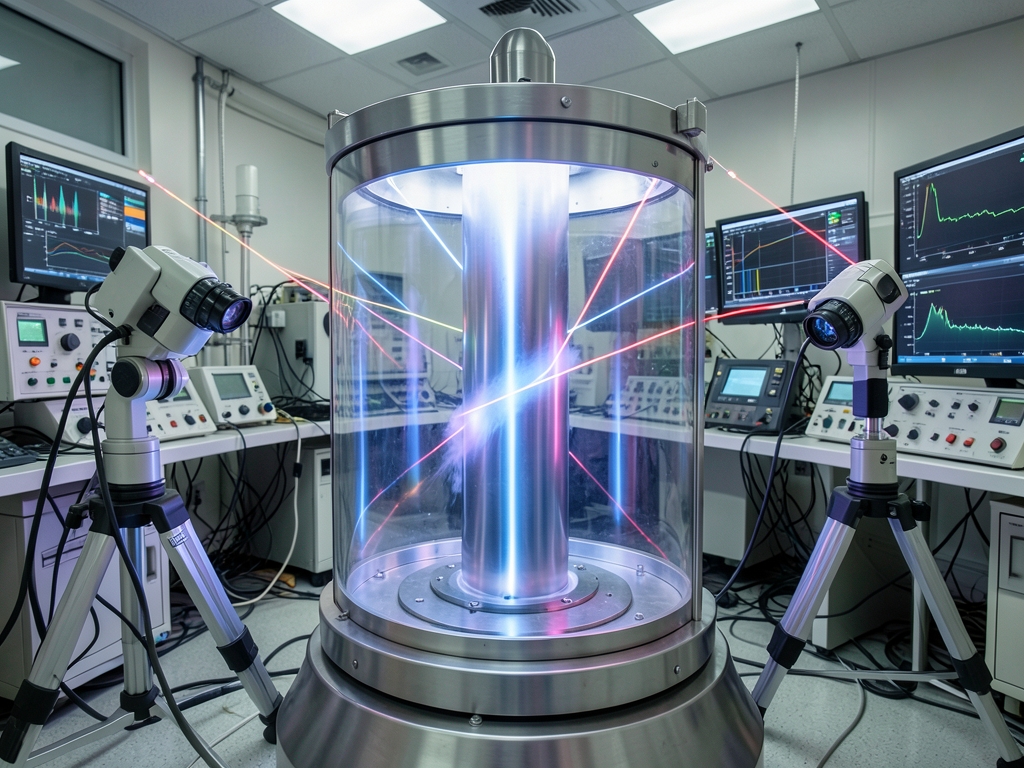
Recent advances in magnetohydrodynamic (MHD) power generation research are breathing new life into a technology that has fascinated physicists and engineers for decades. While traditional electrical generation relies on solid turbines spun by steam, gas, or water to cut magnetic lines of force, magnetohydrodynamic systems bypass moving mechanical parts entirely. Instead, they harness a high-velocity stream of electrically conducting fluid—typically hot ionized gas or plasma—moving through a powerful magnetic field to directly generate electricity. Recent experimental data from plasma physics laboratories highlight significant breakthroughs in thermal efficiency, electrode durability, and plasma stability, paving the way for advanced energy conversion systems that could eventually complement next-generation high-temperature nuclear reactors and clean combustion technologies.
The fundamental principle governing magnetohydrodynamic power generation is rooted in Faraday's law of electromagnetic induction. When an electrically conductive fluid flows perpendicularly through a magnetic field, an electric field is induced within the fluid. By placing electrodes along the channel walls, this induced current can be extracted directly as electrical power. Despite its elegant theoretical foundation, practical implementation has historically faced formidable challenges. Extreme operational temperatures, rapid material degradation, and the inherent instability of high-speed plasmas have kept MHD systems confined primarily to specialized defense applications and auxiliary peaking units rather than mainstream commercial power generation. However, modern computational fluid dynamics, advanced ceramic composites, and improved superconducting magnet designs are actively overcoming these historical hurdles.
Understanding the Physics of Magnetohydrodynamic Flow
At the heart of any MHD generator is the interaction between fluid dynamics and electromagnetic fields, a complex multidisciplinary field known as magnetohydrodynamics. Achieving efficient energy conversion requires maintaining a sufficiently high electrical conductivity within the working fluid. At standard temperatures, gases are excellent insulators. To render a gas conductive, it must be heated to extreme temperatures—often exceeding 2,500 degrees Celsius—to induce thermal ionization. Alternatively, seed materials with low ionization potentials, such as potassium or cesium salts, are introduced into the gas stream to enhance free electron density without requiring insurmountable thermal inputs.
Recent research published by energy research groups focuses heavily on optimizing the channel geometry and managing boundary layer phenomena. As the hot plasma flows through the channel, cooler boundary layers form near the walls, increasing electrical resistance and reducing overall power extraction efficiency. Advanced active cooling techniques, coupled with novel segmented electrode designs, have demonstrated significant reductions in voltage losses across these critical boundary layers. By maintaining uniform current distribution, modern experimental rigs achieve higher specific power outputs than older prototypes built during the mid-20th-century development waves.
Material Science Breakthroughs for Extreme Environments
One of the most persistent bottlenecks in MHD development has been the lack of materials capable of withstanding the punishing environment inside the generator channel. The combination of hyper-velocity corrosive seed materials, intense thermal loads, and strong magnetic forces rapidly erodes conventional metallic structures. Recent material science investigations have shifted focus toward ultra-high-temperature ceramics (UHTCs), advanced silicon carbides, and specialized zirconia-based composites.
Info! Modern ceramic matrix composites exhibit exceptional resistance to thermal shock and chemical corrosion at temperatures exceeding 3,000 Kelvin, making them prime candidates for long-duration MHD channel walls.
Furthermore, the development of high-temperature superconducting (HTS) magnets has revolutionized the magnetic confinement aspect of MHD systems. Older designs required massive copper electromagnets that consumed a significant fraction of the generated electricity just to maintain the required magnetic field strength. Modern HTS coils operate with near-zero electrical resistance, producing intense magnetic fields with minimal parasitic power losses. This technological shift drastically improves the net thermal efficiency of the entire power generation cycle.
Integration with Advanced Nuclear and Fossil Systems
Magnetohydrodynamic generators are rarely viewed as standalone power plants. Instead, current systems engineering models emphasize their role as high-temperature topping cycles in combined-cycle power generation. In a typical conceptual layout, an MHD generator is placed at the front end of a thermal power plant, operating at temperatures far too high for conventional gas or steam turbines.
| Power Generation Technology | Operating Temperature | Primary Efficiency Limiting Factor | MHD Integration Benefit |
|---|---|---|---|
| Conventional Steam Turbine | 540°C - 600°C | Material creep limits | Acts as bottoming cycle |
| Advanced Gas Turbine | 1,400°C - 1,600°C | Blade cooling requirements | Takes waste heat for further extraction |
| Magnetohydrodynamic Topping | 2,000°C - 3,000°C+ | Plasma stability and erosion | Direct conversion without moving parts |
By extracting electricity directly from the ultra-hot exhaust of an advanced high-temperature gas reactor or a clean-burning hydrogen combustion chamber, the MHD topper captures energy before the gas cools down. The exhaust gas exiting the MHD channel remains hot enough to drive standard gas and steam turbines in a secondary bottoming cycle. Theoretical thermodynamic models indicate that such combined cycles could push overall plant efficiency past the 60 percent threshold, substantially reducing fuel consumption and greenhouse gas emissions per megawatt-hour produced.
Recent Experimental Milestones and Research Directions
Recent scientific literature highlights several key experimental milestones achieved by international research consortia. Investigators utilizing shock tubes and continuous-wave plasma wind tunnels have successfully sustained stable, non-equilibrium ionization in noble gas working fluids seeded with alkali metals. Non-equilibrium ionization allows the electron temperature to significantly exceed the gas temperature, lowering the thermal requirements needed to achieve high electrical conductivity.
Additionally, researchers are exploring pulsed MHD generators for specialized applications. Unlike steady-state systems, pulsed generators utilize intermittent shock waves or explosive plasma bursts to generate massive amounts of electrical power over very short durations. These systems offer unique advantages in geophysical exploration, plasma thruster testing, and emergency pulsed power research, where high power density is prioritized over continuous operation.
The elimination of mechanical turbine blades removes the primary rotational speed and centrifugal stress limitations that cap the operational ceiling of traditional turbomachinery.
Engineering Challenges and Future Outlook
Despite these encouraging research findings, significant engineering hurdles remain before magnetohydrodynamic generation can transition from laboratory-scale experiments to commercial reality. Scaling up channel lengths while maintaining uniform plasma flow and preventing destructive arcing across electrodes requires unprecedented manufacturing precision. Furthermore, long-term durability testing under continuous multi-megawatt operational loads is still in its infancy.
Warning! Premature scaling without adequate long-term materials testing can lead to catastrophic electrode degradation and structural failure caused by severe magneto-fluid dynamic instabilities.
Economic viability will ultimately dictate the pace of commercial adoption. While the thermodynamic advantages are clear, capital costs associated with advanced superconducting magnets, specialized ceramic fabrication, and complex seed-recovery systems are currently high. Research funding continues to target cost reduction through modular design and automated manufacturing of ceramic composite components.
What is a magnetohydrodynamic generator?
A magnetohydrodynamic generator is an advanced energy conversion device that produces electricity by passing a high-velocity, electrically conductive fluid or plasma through a magnetic field, directly inducing an electric current without any moving mechanical parts.
Why are magnetohydrodynamic systems difficult to build?
Building efficient MHD systems is challenging due to the extreme operating temperatures required to ionize gases, severe material erosion caused by hot corrosive plasmas, and complex fluid instabilities within the generation channel.
How do superconducting magnets improve MHD efficiency?
High-temperature superconducting magnets generate intense magnetic fields with near-zero electrical resistance, eliminating the heavy parasitic power losses associated with traditional copper electromagnets and improving overall net plant efficiency.
What is the role of MHD in combined-cycle power plants?
MHD generators act as high-temperature topping cycles, extracting electrical energy from ultra-hot exhaust gases before the thermal energy is passed down to conventional gas and steam turbines in a bottoming cycle to maximize total efficiency.
Conclusion
Recent research in magnetohydrodynamic power generation demonstrates that advanced plasma physics and modern materials science can breathe new life into classical energy concepts. By tackling historical issues related to thermal degradation, boundary layer losses, and magnetic field maintenance, contemporary scientists are pushing the boundaries of direct energy conversion. While commercial deployment will require continued investment in materials durability and system scaling, MHD technology holds genuine promise as a high-efficiency topping cycle for future clean energy infrastructure.
