

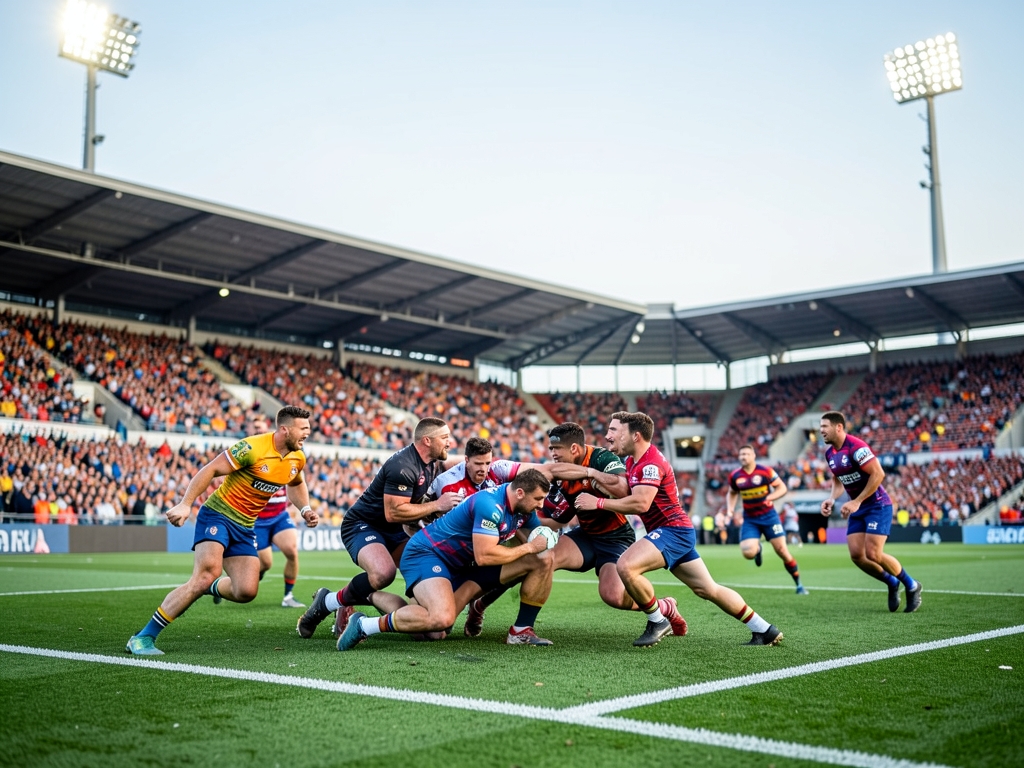
The Rugby League World Cup 2026 stands as one of the most anticipated international sporting events on the global calendar, bringing together elite national teams from across the globe to compete for ultimate supremacy. As the premier competition in international rugby league, the tournament showcases the peak of athletic conditioning, tactical ingenuity, and fierce national pride. Fans across Europe, the United States, and beyond turn their attention toward the carefully structured fixtures, state-of-the-art venues, and the unfolding drama of group-stage battles and knockout rounds. Understanding the tournament schedule, format, and competing nations offers supporters a comprehensive perspective on how this massive international festival of sport operates.
International rugby league has experienced remarkable growth over recent cycles, with developing nations closing the competitive gap against traditional powerhouses. The 2026 edition of the World Cup is designed to capitalize on this momentum, featuring expanded qualification pathways and streamlined tournament structures across multiple divisions. Whether following the men's, women's, or wheelchair competitions, enthusiasts are treated to a feast of high-intensity action that tests physical endurance and tactical discipline to their absolute limits.
Tournament Format and Qualification Structure
The structure of the Rugby League World Cup 2026 has been meticulously designed to ensure maximum competitive balance while providing fans with high-stakes fixtures from the opening whistle. The tournament format incorporates a round-robin group stage followed by high-intensity single-elimination knockout rounds, culminating in the grand finals.
Teams are divided into multiple groups based on a seeding system that reflects recent international rankings, continental qualification results, and historical tournament performances. During the group phase, every nation plays each of its group opponents once. Victory awards crucial league points, setting the stage for qualification into the quarter-finals and semi-finals. Tie-breaking criteria rely heavily on point differentials, tries scored, and head-to-head records, ensuring that every single possession during the group stage carries immense weight.
Info! The inclusion of simultaneous men's, women's, and wheelchair tournaments highlights the inclusive nature of the 2026 championship, providing equal prominence and broadcast visibility across all competitive categories.
Men's, Women's, and Wheelchair Competitions
A defining characteristic of the modern Rugby League World Cup is its multi-faceted structure, which elevates three distinct competitive disciplines under a single unified banner. The men's tournament continues to feature the sport's heavyweight nations, renowned for brutal physical encounters, blistering speed on the flanks, and precise kicking games. Tactical sophistication has reached unprecedented levels, with coaching staffs utilizing advanced performance analytics to optimize player rotations and defensive line speed.
Simultaneously, the women's tournament has witnessed exponential growth in talent pool depth, technical skill, and global following. Matches in the women's division are characterized by relentless defensive commitment and dynamic attacking structures that stretch opposing defensive lines to breaking point. The rapid professionalization of domestic leagues in Europe and the Southern Hemisphere has directly elevated the standard of international play.
The wheelchair rugby league tournament remains one of the most exhilarating and inclusive sports spectacles in the world. Requiring elite hand-eye coordination, supreme spatial awareness, and fearless contact, the wheelchair competition captivates audiences by mirroring the exact rules, intensity, and passion of the running game. Its inclusion ensures that the 2026 World Cup serves as a truly holistic celebration of rugby league culture.
Match Schedule, Key Dates and Fixture Management
Navigating an international tournament of this magnitude requires careful planning from organizers, teams, and traveling supporters alike. The schedule is meticulously spaced to afford competing squads adequate recovery windows between grueling physical fixtures, maintaining high performance standards throughout the tournament lifecycle.
| Tournament Stage | Key Window | Focus Areas & Deliverables |
|---|---|---|
| Group Stage Kick-Off | Opening Weekend | Round-robin fixtures across multiple host cities, setting early group standings. |
| Mid-Tournament Battles | Week 2 | Crucial cross-group matches determining quarter-final qualification spots. |
| Knockout Phase | Quarter-Finals & Semi-Finals | High-stakes elimination matches where losing teams exit the championship. |
| Championship Finals | Closing Weekend | Men's, Women's, and Wheelchair Grand Finals crowning world champions. |
Fans eager to follow the action live must pay close attention to kick-off times and broadcast time zones. With matches hosted across various regional venues, international audiences rely heavily on official broadcaster schedules and streaming platforms to catch every try, conversion, and tactical substitution.
Venues and Infrastructure
Selecting world-class venues is crucial for delivering a memorable Rugby League World Cup. The 2026 tournament utilizes state-of-the-art stadiums equipped with modern pitch technology, extensive media facilities, and high-capacity seating to accommodate passionate local and international fans.
Host venues are chosen not only for their seating capacity and infrastructural excellence but also for their accessibility and rich sporting heritage. These stadiums provide an electric atmosphere, amplifying the physical impact of tackles and the collective roar of supporters. Grounds staff work tirelessly to maintain pristine playing surfaces capable of withstanding the rigorous demands of elite rugby league matches played in rapid succession.
Tactical Evolution in Modern Rugby League
The tactical landscape of international rugby league has evolved dramatically. Coaches no longer rely solely on brute force up the middle; instead, modern play demands sophisticated attacking shapes, rapid play-the-balls, and highly coordinated defensive line speed.
Key tactical elements defining the 2026 tournament include:
- Advanced Defensive Systems: Teams utilize compressed sliding defenses and aggressive marker play to shut down opposition second-row runners and creative halfbacks.
- Kicking Strategy: Precise territorial kicking, repeat sets earned via forced drop-outs, and tactical bombs under the high ball are essential tools for winning the battle for field position.
- Interchange Utilization: Strategic use of the interchange bench allows coaches to maintain high-intensity aerobic output and inject explosive power into the game during critical closing minutes.
These tactical layers ensure that matches are decided by narrow margins of execution, discipline, and mental resilience under pressure.
International rugby league in 2026 represents the pinnacle of human athletic endeavor, tactical mastery, and the unifying power of sport across diverse global communities.
Broadcasting and Global Accessibility
For international fans unable to attend matches in person, comprehensive broadcast coverage ensures that every moment of the Rugby League World Cup 2026 is accessible. Major television networks and dedicated digital streaming services hold exclusive rights to broadcast fixtures live across Europe, North America, the Pacific, and beyond.
Modern sports broadcasting has transformed the viewing experience, offering multi-camera angles, real-time performance analytics, expert punditry, and immersive audio feeds. Viewers can track individual player statistics, completion rates, and defensive workload metrics instantly, enhancing their appreciation of the complex strategies unfolding on the field.
What tournaments are included in the Rugby League World Cup 2026?
The 2026 championship features three simultaneous tournaments: the men's tournament, the women's tournament, and the wheelchair rugby league tournament.
How do teams qualify for the knockout stages?
Teams compete in a round-robin group phase where victories earn league points. The top-performing nations from each group advance to the quarter-finals and subsequent single-elimination knockout rounds.
Where can international fans watch the matches live?
Matches are broadcast globally through official television partners and licensed streaming platforms covering Europe, North America, and other participating regions.
What makes the wheelchair rugby league competition unique?
The wheelchair tournament mirrors the exact rules, physicality, and high-speed action of traditional running rugby league, providing an elite, highly inclusive competitive spectacle.
Conclusion
The Rugby League World Cup 2026 serves as a monumental celebration of athletic excellence, national pride, and global sportsmanship. By uniting men's, women's, and wheelchair divisions under one premier umbrella, the tournament showcases the inclusive and dynamic nature of modern rugby league. With meticulously organized schedules, world-class host venues, and elite tactical battles on display, supporters are treated to an unforgettable sporting spectacle that cements the sport's growing international footprint.
