

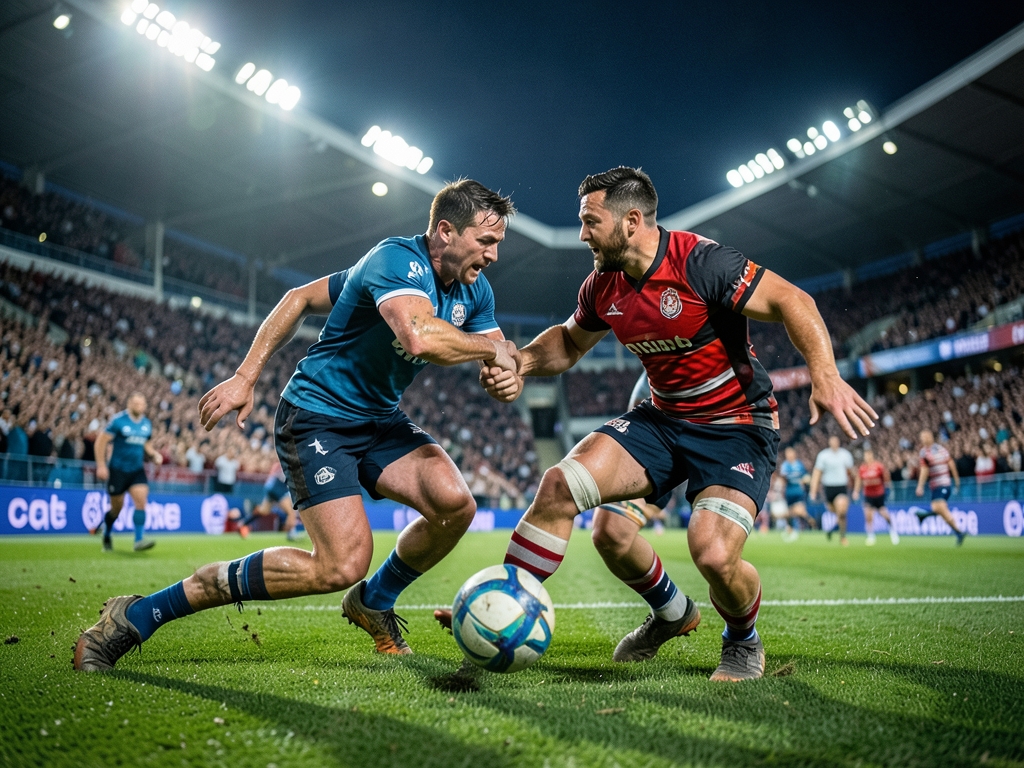
The international sporting calendar features many prestigious competitions, but few tournaments match the physical intensity, national pride, and global reach of the Rugby League World Cup. As fans and analysts look ahead to the 2026 edition, anticipation continues to build regarding the official match schedule, tournament formats, host venues, and competing nations. This comprehensive guide examines everything spectators need to know about the upcoming global showcase, including the structural format across men's, women's, and wheelchair tournaments, key dates, and how international fans can follow every fixture.
International rugby league has experienced remarkable growth over recent cycles, expanding its footprint beyond traditional heartlands. The 2026 tournament represents a watershed moment for the sport, bringing together elite athletes from across the globe to compete for the ultimate prize in rugby league. Understanding the mechanics of the schedule, qualification pathways, and group stage groupings is essential for any sports enthusiast eager to track the action.
Tournament Structure and Division Formats
The Rugby League World Cup 2026 is designed to showcase the absolute pinnacle of the sport by simultaneously staging multiple elite competitions. Governing bodies have structured the event to include distinct tournaments for men's, women's, and wheelchair rugby league athletes. This multi-division approach ensures unprecedented visibility and equality across all facets of the sport, giving every competing nation a major platform on the international stage.
Each tournament division follows a rigorous group stage followed by high-stakes knockout rounds. Teams are placed into pools based on international rankings and qualification tournament results. In the group stage, every nation plays a round-robin schedule within its pool. Victory awards two competition points, while draws contribute a single point, keeping standings tight and increasing the importance of every single try scored.
Info! The multi-division format ensures that fans experience continuous action across all categories, with men's, women's, and wheelchair fixtures running in parallel throughout the tournament window.
Following the conclusion of the pool matches, the top-performing teams advance to the quarter-finals or semi-finals depending on the specific division. Knockout matches leave no room for error, as sudden-death rugby demands peak physical conditioning, tactical discipline, and mental resilience from every squad member.
Key Dates and Match Schedule Milestones
Planning for an international tournament of this magnitude requires precise scheduling. The 2026 schedule is mapped out to ensure adequate recovery days for players while maintaining a fast-paced, exciting tempo for television broadcasters and live stadium audiences. The tournament kicks off with a high-profile opening ceremony and inaugural match, setting the tone for weeks of elite athletic competition.
The group stage matches occupy the opening fortnight of the tournament, featuring double-headers and packed matchdays across multiple host cities. As the tournament progresses into the second half of the schedule, the intensity ramps up significantly with the knockout phases. The grand finals for the wheelchair, women's, and men's tournaments form a spectacular climax, drawing millions of viewers worldwide.
| Tournament Stage | Estimated Window | Key Focus |
|---|---|---|
| Group Stage | Opening Fortnight | Round-robin fixtures within pools |
| Quarter-Finals | Week Three | Top eight playoff elimination |
| Semi-Finals | Penultimate Weekend | Battle for the championship matches |
| Grand Finals | Concluding Weekend | Crowning the world champions |
Competing Nations and Qualification Pathways
The road to the Rugby League World Cup is fiercely contested. Nations from Europe, the Asia-Pacific region, the Americas, and Africa battle through regional qualifiers and direct entry allocations to secure their place in the 2026 lineup. Traditional powerhouses such as Australia, England, New Zealand, and Tonga are automatically joined by rising rugby league nations that have demonstrated rapid development in domestic programs and international test matches.
The inclusion of diverse developing nations highlights the global appeal of rugby league. Programs in North America and emerging European countries have invested heavily in grassroots pathways, youth leagues, and professional coaching structures. This investment has successfully narrowed the competitive gap between established tier-one nations and ambitious challengers, resulting in more unpredictable and thrilling matches on the international stage.
Venues and Infrastructure
Hosting a global tournament of this scale demands world-class stadium infrastructure capable of supporting large crowds, advanced broadcast technology, and optimal playing surfaces. The 2026 venues have been carefully selected to maximize accessibility for traveling supporters while showcasing state-of-the-art sporting facilities.
From historic rugby league strongholds featuring atmospheric terraces to ultra-modern multi-purpose stadiums equipped with retractable roofs and premium hospitality suites, the chosen venues offer an unforgettable matchday experience. Grounds operations teams work tirelessly to ensure pitch conditions remain pristine throughout the grueling tournament schedule, minimizing injury risks and facilitating fast, expansive ball-in-hand rugby.
Tactical Evolution in Modern Rugby League
The tactical landscape of international rugby league has evolved dramatically in recent years. Coaches now rely on advanced data analytics, GPS player-tracking metrics, and specialized conditioning programs to optimize team performance. The modern game demands extraordinary aerobic capacity from forwards and exceptional lateral speed and skill execution from outside backs.
Defensive structures have also become exceptionally sophisticated. Teams employ compressed goal-line defenses and synchronized line-speed tactics to suffocate opposition attack. Consequently, winning teams require elite playmakers who can manipulate defensive reads through subtle deception, pinpoint kicking games, and rapid shift plays.
International rugby league at the elite level requires a perfect balance of brutal physical confrontation and high-speed tactical precision. The 2026 tournament will showcase athletes who redefine what is possible on a rugby field.
Broadcast, Media Coverage and Global Viewing Options
For international fans unable to attend matches in person, comprehensive broadcast coverage ensures that every tackle, try, and conversion is beamed directly to living rooms and mobile devices across the globe. Major sports networks, free-to-air broadcasters, and digital streaming platforms have secured rights to deliver live coverage, expert analysis, and on-demand replays.
Digital integration allows fans to follow real-time match statistics, tactical heatmaps, and social media commentary. Official tournament apps provide instant score updates, lineup announcements, and exclusive behind-the-scenes content, ensuring that supporters remain deeply engaged with the tournament regardless of their physical location.
When does the Rugby League World Cup 2026 take place?
The tournament is scheduled across specific weeks in the international sporting calendar, featuring structured group fixtures leading up to the grand finals.
Which divisions are included in the 2026 tournament?
The competition features parallel elite tournaments for men's, women's, and wheelchair rugby league athletes.
How do teams qualify for the Rugby League World Cup?
Nations qualify through a combination of automatic entry based on previous tournament performance and intense regional qualifying matches held worldwide.
Where can international fans watch the matches live?
Matches are broadcast globally through official television partners, national sports networks, and dedicated digital streaming platforms.
Conclusion
The Rugby League World Cup 2026 stands as a monumental celebration of athletic excellence, international camaraderie, and sporting passion. With an expanded global footprint, highly competitive group fixtures across men's, women's, and wheelchair divisions, and state-of-the-art venues, the tournament promises unforgettable moments for players and fans alike. As the official dates approach, supporters around the world eagerly prepare to witness history unfold on the greatest stage in international rugby league.
