

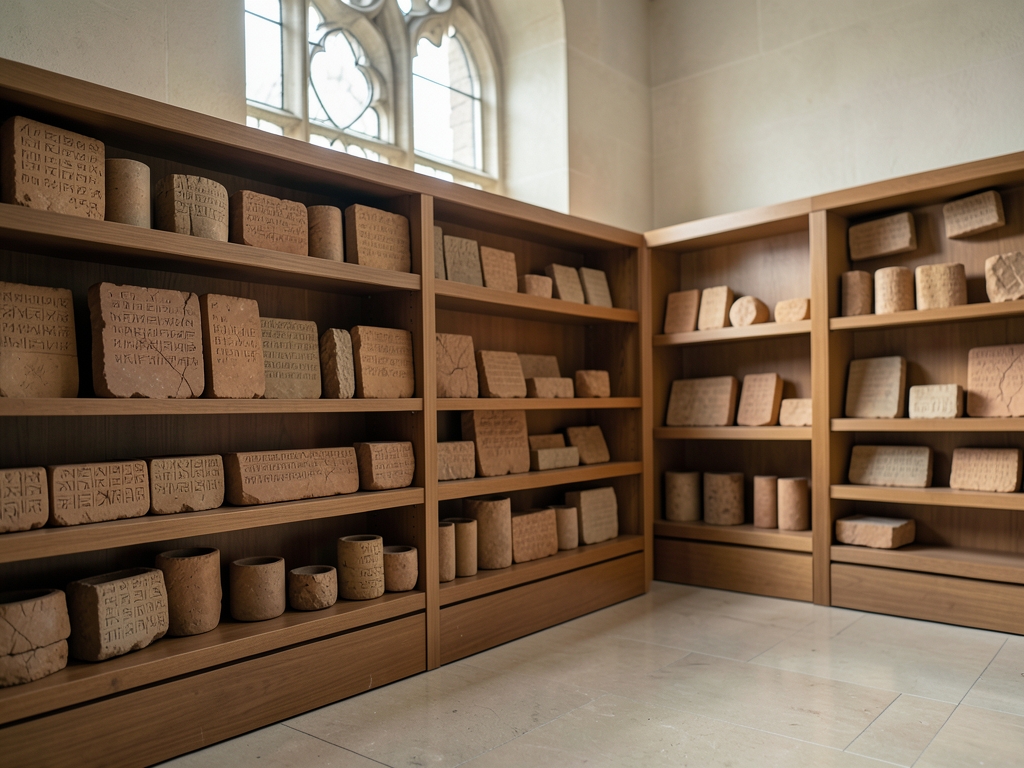
The study of ancient civilizations has long relied on the preservation of written records, yet few collections match the historical depth and administrative precision of the ancient texts discovered in Anatolia. For historians and archaeologists studying the Bronze Age, the royal archives unearthed from the ancient capital of the Hittite Empire offer an extraordinary window into a world of diplomacy, legal codes, religious rituals, and imperial expansion. These cuneiform tablets, inscribed by expert scribes over three millennia ago, continue to reshape our understanding of the ancient Near East, providing direct testimony from kings, diplomats, and ordinary citizens who lived along the frontiers of one of antiquity's most formidable empires.
Unlike transient oral traditions or isolated monumental inscriptions, institutional archives provide systematic documentation of everyday governance, military campaigns, treaty negotiations, and economic transactions. The excavation of these administrative centers has yielded tens of thousands of clay fragments, each bearing the distinct wedge-shaped impressions of cuneiform writing. By examining these texts, modern researchers can reconstruct the complex geopolitical landscape of the ancient Mediterranean and Middle Eastern worlds, tracing alliances and conflicts that defined an era of profound cultural exchange.
The Rediscovery and Excavation of Hattusa
The story of the Hittite archives begins with the monumental rediscovery of Hattusa, the imperial capital located near modern-day Boğazkale in north-central Turkey. Long forgotten by history, the vast ruins of the ancient city emerged from obscurity through the dedicated efforts of nineteenth and twentieth-century explorers and archaeologists. Initial surface surveys hinted at a massive urban center fortified by stone walls, gates adorned with sculpted lions and sphinxes, and extensive palace complexes that spanned multiple hills.
Systematic excavations soon revealed thousands of baked and unbaked clay tablets scattered across various archival rooms within the citadel. These rooms served as the central nervous system of the Hittite state, housing diplomatic correspondence, state treaties, land grants, and ritual prescriptions. The discovery of multiple languages among the tablets—including Hittite, Hattic, Luwian, Hurrian, and Akkadian—demonstrated that the capital was a major multilingual hub where diverse cultural traditions converged under imperial administration.
Diplomacy, Treaties, and International Relations
One of the most valuable contributions of the royal archives is the extensive documentation of international diplomacy. The Hittites maintained active diplomatic relations with other major Bronze Age powers, including Egypt, Assyria, Babylonia, and the kingdoms of the Levant. State treaties preserved within the archives provide detailed insights into the legal and ceremonial obligations binding sovereign states together.
Among the most famous diplomatic artifacts recovered from these excavations are the records related to relations with Egypt, including correspondence that reflects both fierce military competition and pragmatic diplomatic accommodation. These texts complement monumental Egyptian inscriptions, offering a balanced perspective on geopolitical events such as the famous Battle of Kadesh. Rather than relying solely on victorious royal propaganda from a single side, historians can cross-reference Hittite administrative records with foreign archives to construct a more accurate chronology of international affairs.
The clay archives of Hattusa preserve the actual voices of Bronze Age diplomats, detailing the precise terms of alliances, trade agreements, and territorial disputes that shaped the ancient world.
Daily Life, Law, and Social Structure
Beyond high-level politics and military campaigns, the archives provide a remarkably detailed picture of internal Hittite society. The legal codes preserved in these texts reveal a sophisticated judicial system that evolved away from harsh retributive justice toward compensation and fines for various offenses. These laws address property rights, marriage contracts, inheritance disputes, and the regulation of commerce, offering a glimpse into the everyday concerns of inhabitants.
Economic records—such as inventories of agricultural produce, textile production tallies, and metalwork distributions—illustrate the centralized redistributive economy managed by the palace. Scribes meticulously recorded the movement of goods between regional administrative centers and the capital, ensuring that tribute, taxation, and temple offerings were properly accounted for. These administrative lists allow economic historians to study ancient trade networks, commodity pricing, and labor organization with impressive granularity.
Religion, Rituals, and Mythology
Religion permeated every aspect of Hittite public and private life, a reality thoroughly documented in the archive collections. The Hittites were famously known as the "thousand gods" civilization, as they systematically incorporated the deities of conquered or allied peoples into their own pantheon. Archival texts preserve complex ritual prescriptions, festival calendars, and mythological narratives that explain the proper procedures for appeasing divine forces.
Many ritual texts were composed to address specific crises, such as prolonged droughts, epidemics, or military defeats, which were interpreted as signs of divine displeasure. Scribes recorded detailed instructions for purification ceremonies, animal sacrifices, and magical incantations performed by priests and royal family members. These documents not only illuminate ancient religious beliefs but also preserve fragments of endangered linguistic traditions and indigenous folklore from various regions of Anatolia.
Preservation Challenges and Modern Digital Epigraphy
The preservation and study of thousands of fragile clay fragments present ongoing challenges for modern epigraphers and conservators. Many tablets were broken when the palace buildings burned during the collapse of the empire around 1200 BCE, leaving behind scattered shards that require meticulous physical reconstruction. Epigraphers must piece together damaged lines of text while mastering multiple dead languages and complex cuneiform writing systems.
In recent decades, digital technologies have revolutionized how researchers document and analyze these ancient artifacts. High-resolution 3D scanning, photographic enhancement techniques, and online epigraphic databases allow scholars around the world to examine tablet surfaces with unprecedented clarity. These technological advancements ensure that fragile texts are preserved digitally for future generations while accelerating the translation and publication of previously unstudied fragments.
Info! Ongoing archaeological research in Anatolia continues to unearth new archival deposits, expanding our understanding of regional administration beyond the imperial capital.
What languages were found in the Hittite royal archives?
The archives contained tablets written in several languages, including Hittite (the primary administrative language), Hattic (an older indigenous language), Luwian, Hurrian, and Akkadian, which served as the diplomatic lingua franca of the ancient Near East.
Where was the major concentration of Hittite cuneiform tablets discovered?
The largest concentration of tablets was discovered at Hattusa, the ancient imperial capital located near modern-day Boğazkale in north-central Turkey, particularly within its citadel and palace archives.
What types of historical documents are preserved in these archives?
The archives preserve a wide variety of documents, including state treaties, international correspondence, legal codes, economic inventories, religious rituals, festival calendars, and mythological texts.
How do modern researchers preserve and study fragile cuneiform tablets?
Researchers use advanced conservation techniques alongside digital tools such as high-resolution 3D laser scanning, photographic enhancement, and online epigraphic databases to analyze and share damaged or fragmented texts securely.
Conclusion
The royal archives of the ancient Hittite Empire remain an irreplaceable treasure trove for historians, archaeologists, and linguists alike. By documenting everything from international peace treaties to local legal disputes and intricate religious rituals, these cuneiform tablets bridge the vast chronological gulf between the Bronze Age and the modern world. As ongoing excavations and digital epigraphic methods continue to unlock new secrets from fragmented clay, our appreciation of ancient Anatolian civilization deepens, offering enduring lessons in statecraft, cultural synthesis, and human resilience.
