

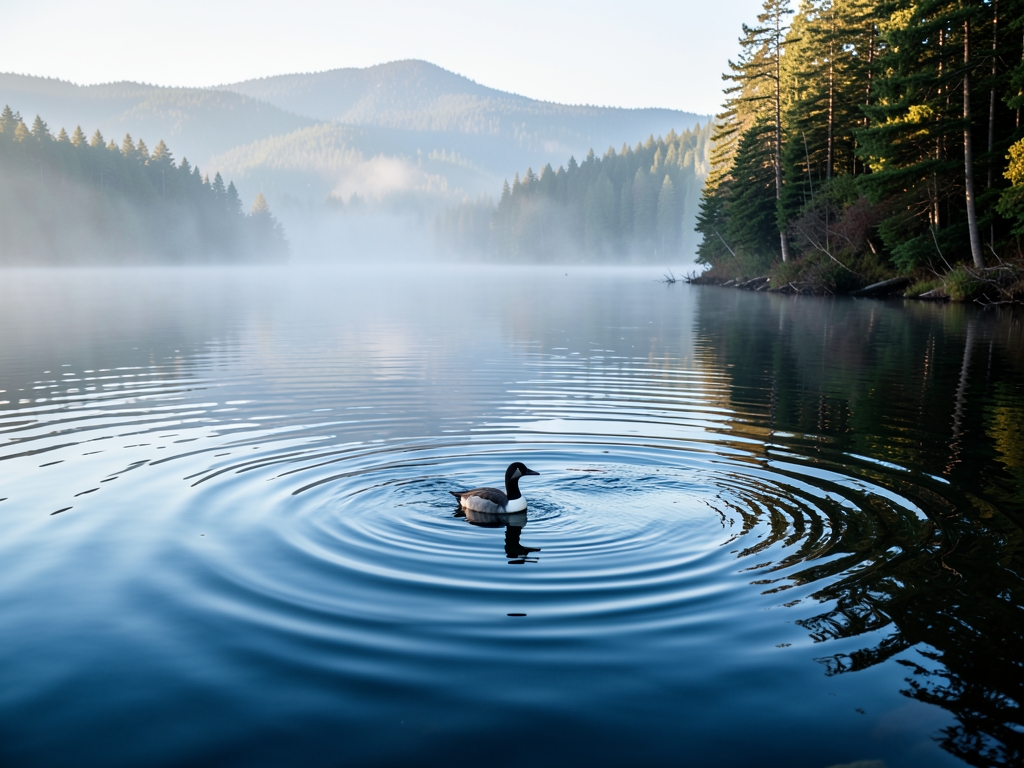
The serene waters of the Adirondack lakes have long echoed with the haunting, beautiful calls of the common loon, a species that serves as an essential ecological indicator of freshwater health across the northeastern United States. For generations, these striking waterbirds have defined the wilderness character of the region, drawing wildlife enthusiasts, conservationists, and summer visitors to the shimmering shorelines. However, recent field research and long-term population monitoring have brought to light a troubling ecological dynamic across these northern aquatic ecosystems. While adult loons continue to populate the lakes in steady numbers, fewer chicks are successfully hatching and surviving to replace them, raising critical questions about the long-term viability of these regional populations.
Understanding this demographic shift requires a detailed look at the complex interplay between avian biology, shifting environmental conditions, and human pressures on freshwater habitats. Biologists and field researchers studying avian populations in the northeastern United States have tracked these trends through rigorous summer surveys, nest monitoring programs, and banding initiatives. The findings point toward a growing disconnect between the presence of healthy adult breeding pairs and their actual reproductive success, signaling that local lakes may be facing hidden ecological stresses that are not immediately visible to casual observers.
The Ecological Role of Common Loons in Freshwater Ecosystems
As apex avian predators in aquatic food webs, common loons play a vital role in maintaining the ecological balance of freshwater lakes. Their diet consists primarily of fish, supplemented by crustaceans, amphibians, and aquatic insects, which helps regulate prey populations and supports nutrient cycling within aquatic habitats. Because loons occupy a high trophic level, they are exceptionally sensitive to environmental contaminants, habitat degradation, and shoreline disruptions. When loon populations thrive, it generally indicates a healthy, functioning aquatic ecosystem with good water clarity and sufficient fish stocks.
Conversely, declines in reproductive success act as an early warning system for broader ecological troubles. Loons require large, undisturbed water bodies with stable water levels during their breeding season, which typically spans from May through August. They construct their nests very close to the water's edge to facilitate easy entry and exit, making them exceptionally vulnerable to rapid water fluctuations, shoreline erosion, and human-induced disturbances. When environmental pressures disrupt this delicate reproductive window, the entire local population feels the impact over time.
Key Findings from Recent Field Studies
Recent scientific assessments conducted across Adirondack waterways have revealed a persistent reproductive deficit. While adult mortality rates remain relatively stable and adult birds return to their traditional nesting territories year after year, productivity ratios—measured as the number of surviving chicks per territorial pair—have fallen short of the thresholds required for sustainable population maintenance. Researchers emphasize that while adult loons are remarkably long-lived birds capable of surviving for decades, every generation requires a consistent influx of new juveniles to offset natural mortality and environmental hazards.
Field biologists monitoring these remote lakes have identified several recurring factors contributing to the decline in chick survival. Among the most prominent challenges are nest predation, human recreational interference, fluctuating water levels during the spring thaw and summer storms, and elevated levels of environmental stressors. Each of these elements interacts with local habitat conditions in ways that severely diminish the chances of vulnerable chicks reaching maturity.
- Nest Predation: Natural predators such as raccoons, gulls, and avian raptors frequently target loon eggs, particularly when human activity flushes an adult off its nest, leaving the eggs exposed.
- Water Level Fluctuations: Sudden rises or drops in lake levels can either swamp low-lying nests or leave them stranded too far from the water, forcing abandonment.
- Recreational Disturbance: High volumes of motorized watercraft, jet skis, and shoreline development generate excessive wake action and noise, disrupting nesting behaviors and separating young chicks from protective parents.
- Environmental Contaminants: Historical accumulation of heavy metals and pollutants in aquatic food chains continues to impact avian health and reproductive success.
Human Impact and Recreational Pressures on Adirondack Waterways
The Adirondack Park encompasses millions of acres of protected public lands interspersed with private property, making it one of the most popular recreational destinations in the eastern United States. Every summer, thousands of visitors flock to the region for boating, kayaking, fishing, and camping. While ecotourism fosters a strong appreciation for nature, the intense concentration of human activity on popular lakes often coincides directly with the loon breeding season.
When fast-moving boats create large wakes near shallow bays, the resulting waves can wash over low-profile loon nests, destroying eggs. Furthermore, well-meaning photographers and boaters who approach too closely cause adult loons to flush from their nests, exposing delicate eggs to chilling temperatures or opportunistic predators. Educational initiatives led by conservation groups have worked tirelessly to establish buffer zones, promote slow-no-wake rules in sensitive bays, and raise public awareness about ethical wildlife viewing, yet enforcement across vast, remote lake systems remains a persistent challenge.
Protecting regional wildlife populations requires balancing recreational access with rigorous conservation stewardship, ensuring that the natural habitats supporting sensitive species like the common loon are safeguarded against cumulative human pressures.
Broader Environmental Shifts and Climate Influences
Beyond immediate localized disturbances, broader environmental changes driven by shifting climate patterns are increasingly impacting aquatic habitats in the Northeast. Milder winters, altered precipitation cycles, and heavier, more frequent severe weather events during the spring and summer months introduce unprecedented volatility to lake hydrology. Sudden torrential downpours can cause rapid surges in lake water levels that overwhelm nesting sites just as incubation reaches its critical final stages.
Furthermore, rising water temperatures can influence fish community structures, altering the availability and nutritional quality of prey species during the vital chick-rearing period. While adult loons are resilient and capable of foraging across diverse conditions, newly hatched chicks have high metabolic demands and depend entirely on small, easily digestible fish provided by their parents. Any mismatch between peak chick nutritional requirements and prey availability can significantly lower survival rates during the first crucial weeks of life.
Conservation Strategies and Future Outlook
Addressing the reproductive challenges facing Adirondack loons requires a multi-faceted conservation approach involving state agencies, non-profit research organizations, local communities, and lake associations. Ongoing efforts focus on deploying artificial nesting platforms in water bodies with severe water-level fluctuations, establishing seasonal protection zones around active nests, and expanding volunteer-based monitoring networks to track chick survival rates in real time.
Info! Conservation programs rely heavily on citizen science volunteers who contribute crucial observational data from remote lakes that would otherwise be difficult for professional biologists to monitor consistently.
Public education remains one of the most effective tools for mitigating human-induced threats. By encouraging responsible boating practices, promoting catch-and-release fishing gear that minimizes tackle loss, and establishing respectful viewing distances, communities can drastically reduce avoidable nest failures and chick mortalities. Ensuring that these iconic birds continue to thrive across northern watersheds is not only a victory for avian conservation but a testament to the health of the entire freshwater ecosystem.
Why are common loon populations facing difficulties in the Adirondacks despite healthy adult numbers?
While adult loons are long-lived and return to their territories consistently, regional studies show that fewer chicks are surviving to maturity due to factors like nest predation, human recreational disturbance, and water level fluctuations.
What are the primary environmental threats to loon nests during the summer breeding season?
The main threats include severe water level fluctuations that flood or strand nests, wakes from motorized watercraft, increased human presence causing nest abandonment, and natural predation by raccoons and gulls.
How do human recreational activities impact loon chick survival?
High volumes of boats and jet skis generate disruptive wakes that can wash away nests, while close approaches by humans often flush adult birds away, leaving eggs and young chicks vulnerable to predators and environmental exposure.
What conservation measures are being implemented to protect regional loon populations?
Conservationists utilize artificial nesting platforms, establish seasonal protective buffer zones around active nests, promote slow-no-wake boating rules in sensitive bays, and engage citizen science volunteers in monitoring chick productivity.
The ongoing monitoring of Adirondack loon populations underscores the delicate balance required to maintain biodiversity in heavily utilized natural landscapes. As researchers continue to gather data on reproductive success and environmental pressures, the collective commitment of conservationists, policymakers, and lakefront communities will remain essential in preserving the natural heritage of the region for future generations.
