

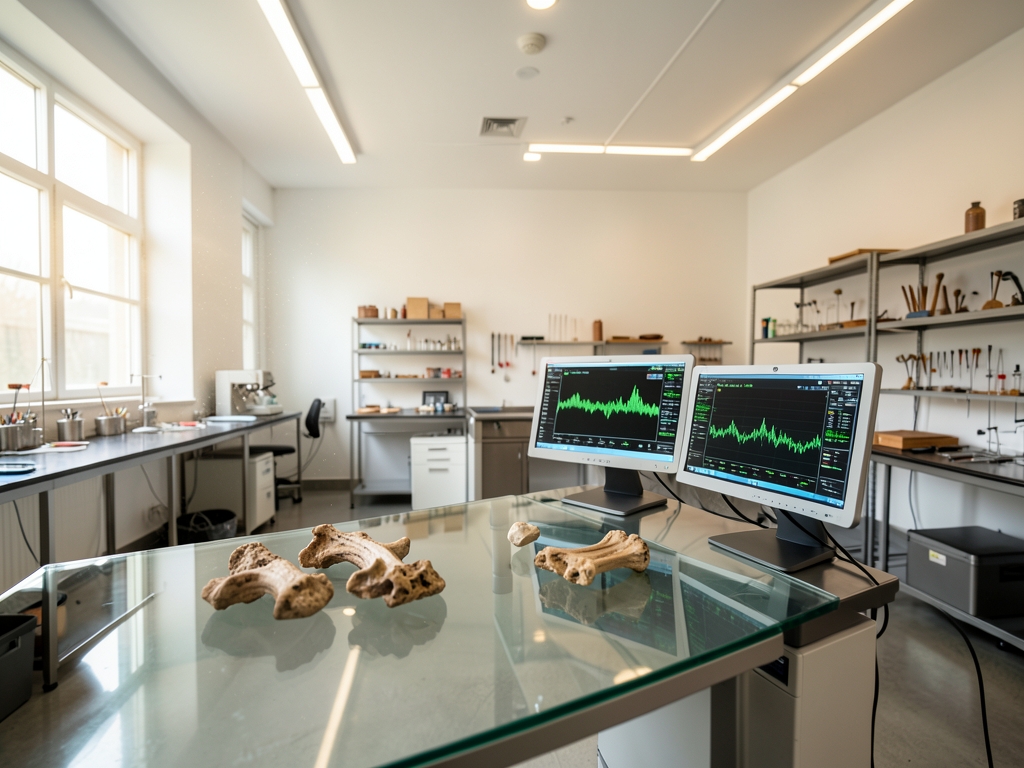
Recent breakthroughs in paleogenomics are reshaping our understanding of human history, offering powerful new tools to trace not only the physical migrations of our ancestors but also the evolution and spread of human culture and communication. For generations, linguists and historians relied heavily on comparative grammar, historical texts, and archaeological artifacts to piece together how modern language families emerged across Europe and Eurasia. While these traditional methodologies provided a robust framework, they frequently left critical gaps regarding the exact timelines, geographic pathways, and demographic shifts driving major linguistic transformations.
Today, the integration of ancient DNA analysis with historical linguistics has opened an unprecedented window into the past. By sequencing genomes extracted from archaeological remains dating back thousands of years, scientists can track the genetic lineages of past populations with remarkable precision. When these genetic profiles are correlated with the geographical distribution of ancient artifacts and established language families, researchers can reconstruct how specific dialects took root, diverged, and eventually spread across vast territories. A recent body of research highlights how ancient genetic data is providing vital new clues regarding the origins of major linguistic branches, including Germanic and Celtic tongues.
The Intersection of Genetics and Historical Linguistics
The relationship between human genes and spoken language has long been a subject of intense academic debate. Historically, scholars debated whether the spread of language families was primarily driven by the large-scale migration of people carrying those languages or by the cultural diffusion of ideas and vocabulary among existing populations. Modern archaeogenetic studies demonstrate that both mechanisms occurred, but migration often played a far more dominant role during major prehistoric transition periods than previously assumed.
As ancient human remains are excavated from well-preserved burial sites across Europe and the Eurasian steppe, researchers extract viable DNA from dense bones and teeth. Advanced laboratory techniques allow scientists to decode entire ancient genomes even when samples are severely degraded or contaminated. By mapping these genetic markers across thousands of individuals, population geneticists can identify distinct ancestral components that arrived in specific regions during pivotal historical epochs, such as the Bronze Age.
When these genetic migration maps are overlaid with historical linguistic trees, compelling correlations emerge. Language families such as Indo-European, which encompasses a vast array of modern European and South Asian tongues, left genetic footprints that allow researchers to test long-standing hypotheses about where and when distinct linguistic branches began to split from a common ancestral root.
Tracing the Roots of Germanic and Celtic Branches
Among the most complex challenges in historical linguistics has been determining the exact geographic origins and divergence timelines of the Germanic and Celtic language branches. Both groups belong to the broader Indo-European family, yet their specific developmental pathways prior to the written record have remained shrouded in mystery due to sparse early epigraphic evidence.
Recent genetic and archaeological investigations suggest that the formation of these linguistic groups was deeply intertwined with the complex demographic shifts that occurred across central and western Europe during the late Neolithic and early Bronze Age. As pastoralist communities from the eastern plains migrated westward, they interacted with established indigenous European farming populations. This widespread cultural and genetic amalgamation created regional populations that developed distinct cultural identities, material traditions, and ultimately, distinct linguistic dialects.
By analyzing ancient DNA from targeted archaeological sites associated with these transitional cultures, researchers can identify the genetic input contributed by incoming pastoralists versus local populations. This granular data helps narrow down the timeframes during which ancestral Germanic and Celtic speech communities likely began to diverge into mutually unintelligible tongues, providing a chronological anchor that complements traditional linguistic reconstruction.
Methodological Advances in Ancient DNA Extraction
The success of modern paleogenomics rests on continuous technological advancements in laboratory protocols and computational biology. Extracting endogenous DNA from ancient biological material is notoriously difficult because organic molecules degrade over thousands of years, and samples are frequently contaminated by microbial activity and modern human handling in the field.
To overcome these hurdles, contemporary geneticists utilize clean-room environments and specialized enzymatic treatments designed to isolate authentic ancient DNA fragments. Next-generation sequencing platforms then process these minute genetic libraries, allowing researchers to read millions of base pairs simultaneously. Computational algorithms subsequently filter out environmental contamination and assemble reliable consensus genomes.
Info! Modern ancient DNA research relies on strict contamination controls and statistical validation to ensure that genetic profiles accurately reflect prehistoric populations rather than modern handling artifacts.
Furthermore, improvements in radiocarbon dating techniques applied directly to the sampled bones ensure precise chronological placement. This temporal accuracy is essential when attempting to correlate genetic shifts with rapid linguistic divergences or archaeological culture changes.
Challenging Traditional Archaeological Models
The integration of ancient DNA findings has not merely confirmed existing historical theories; it has frequently challenged long-held assumptions within archaeology and linguistics. For decades, many scholars favored models that minimized population movement, arguing instead for the gradual spread of cultural practices through trade and social interaction.
However, high-resolution genomic maps consistently reveal instances of rapid demographic replacement or substantial genetic admixture during critical historical windows. For example, the rapid spread of specific Bronze Age cultural complexes across Europe was accompanied by massive demographic shifts that fundamentally altered the genetic landscape of the continent. These biological realities provide a plausible mechanism for the rapid expansion and consolidation of major language groups across wide geographic zones.
By grounding linguistic hypotheses in hard biological and chronological data, scientists are moving closer to a unified narrative of European prehistory. While ancient DNA cannot tell us the exact vocabulary or grammatical structure spoken by prehistoric individuals, it illuminates the human networks, migrations, and demographic pressures that made those languages possible.
How does ancient DNA help researchers study prehistoric languages?
Ancient DNA allows scientists to track population migrations and demographic shifts over millennia. By correlating these genetic migration maps with established language family trees, researchers can test hypotheses about where and when different linguistic groups interacted, split, or expanded.
Can genetic analysis determine exactly what ancient people spoke?
No, DNA cannot directly encode or reveal spoken vocabulary, grammar, or specific dialects. Instead, it provides the demographic framework, migration timelines, and population interaction histories that help linguists contextualize how and where language families evolved.
What challenges do scientists face when extracting DNA from ancient remains?
Ancient biological samples are often severely degraded and frequently contaminated by microbial activity or modern human handling. Researchers must use specialized clean-room protocols, enzymatic treatments, and advanced computational filtering to recover and verify authentic ancient genetic sequences.
Why are Germanic and Celtic language origins difficult to trace?
Both language branches developed during prehistoric periods with sparse written records. Scholars must rely heavily on archaeological correlations, comparative linguistics, and newly available archaeogenetic data to piece together their early geographical origins and divergence timelines.
As paleogenomic research continues to expand globally, the synergy between genetics, archaeology, and linguistics will only deepen. Future studies promise even greater resolution into the ancestral ties that connect modern populations to their prehistoric forebears, ultimately enriching our appreciation of human history and cultural heritage.
