

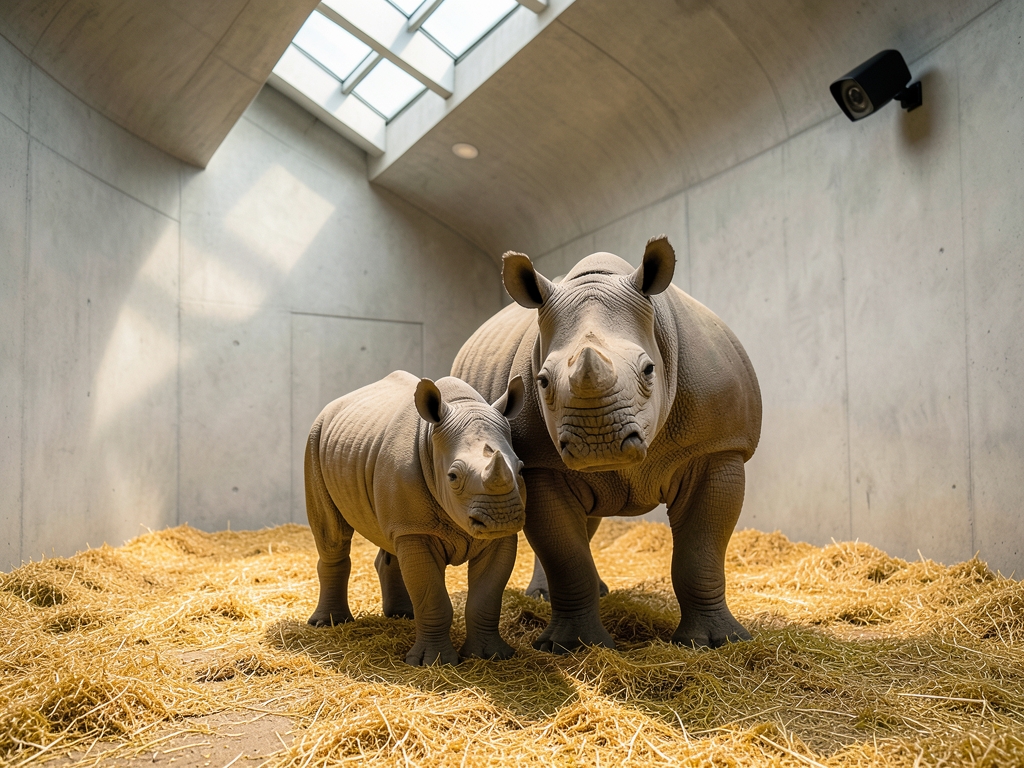
Wildlife conservation has reached another remarkable milestone as a rare rhino birth was successfully captured on closed-circuit television (CCTV) cameras at Chester Zoo. The arrival of this new calf offers an incredible glimpse into the private moments of endangered species management, providing researchers and animal caretakers with unprecedented observation capabilities while ensuring that the mother and newborn remain completely undisturbed during their crucial bonding period. In an era where many large mammal populations face severe ecological pressures, habitat fragmentation, and poaching threats, captive breeding programs operating within accredited zoological institutions play an essential role in safeguarding genetic diversity and educating the global public about the fragile state of our natural world.
The Significance of Captive Breeding for Endangered Rhinoceros Species
Rhinoceros populations across the globe have experienced dramatic declines over the past several decades, driven primarily by illegal poaching for horns and the rapid loss of their native grassland and forest habitats. Conservation organizations and specialized breeding centers shoulder a massive responsibility in maintaining healthy, genetically diverse insurance populations. These populations act as a crucial safety net against extinction in the wild, offering a biological safeguard while field conservationists work tirelessly to protect natural habitats and combat trafficking networks.
The birth at Chester Zoo represents years of careful monitoring, precise dietary management, and behavioral analysis conducted by expert zoologists and veterinary teams. Large herbivores like rhinos require specific environmental conditions, specialized nutrition, and low-stress surroundings to successfully reproduce under human care. When a birth occurs, the initial days are particularly delicate. Understanding the intricate physiological and behavioral cues of mother and calf helps animal management teams refine conservation protocols that can be shared with global partners working to protect wild populations in Asia and Africa.
Modern zoological facilities utilize advanced remote monitoring technologies to protect newborn animals, ensuring undisturbed maternal bonding while gathering invaluable behavioral data for global conservation science.
How CCTV Technology Transforms Modern Wildlife Management
The integration of high-definition CCTV systems within modern zoological facilities has revolutionized how caretakers monitor animal health and welfare. Historically, staff had to rely on physical room checks, which could inadvertently introduce stress to animals during sensitive phases like parturition and early nursing. Today, silent, low-light infrared cameras allow veterinary teams to observe every movement from a centralized control room without altering the natural environment or interrupting the profound maternal instincts of the mother.
This technological advancement provides several distinct operational advantages for large mammal conservation:
- Non-Invasive Observation: Staff can monitor vital signs, nursing frequency, and mobility without entering the enclosure, reducing human-animal conflict risk.
- Early Intervention: Immediate visual alerts allow veterinarians to spot potential complications during birth or early nursing stages instantly.
- Behavioral Research: Continuous recording provides ethologists with massive datasets to study postpartum maternal care and infant development dynamics.
- Public Engagement: Selected footage offers educational glimpses that foster deep empathy and support for global conservation initiatives among international audiences.
Info! Continuous remote observation systems have significantly improved infant survival rates across numerous endangered species breeding programs worldwide.
Understanding the Broader Ecological Challenges Facing Rhinos
While successful births in controlled environments offer moments of celebration, they also highlight the urgent need to address the systemic threats facing rhinos in their native habitats. Habitat destruction caused by agricultural expansion, infrastructure development, and climate-induced environmental shifts continues to restrict the roaming ranges of wild herbivores. Furthermore, sophisticated poaching syndicates persist in targeting these animals for their horns, fueled by illegal international trade networks.
Conservation strategies must therefore extend far beyond zoo boundaries. Effective protection requires robust anti-poaching patrols, community-based conservation education, habitat restoration initiatives, and stringent enforcement of international wildlife trade laws. By linking captive breeding achievements with active field conservation, the global scientific community strives to build a sustainable future where rhinos can eventually thrive safely in protected natural reserves.
For readers in Europe, North America, and beyond, supporting wildlife conservation often begins with awareness and responsible tourism. Visiting accredited facilities that participate in international species survival plans directly funds field research, anti-poaching units, and habitat protection projects across the globe. Every successful birth recorded on camera serves as a powerful reminder of what dedicated scientific stewardship can achieve.
What species of rhino was born at Chester Zoo?
The recent birth at Chester Zoo involved a rare rhinoceros species, adding a vital new member to the global insurance population managed under international conservation breeding programs.
Why is CCTV technology important for newborn animal care?
CCTV systems allow veterinary teams and keepers to monitor the mother and newborn continuously without human intrusion, ensuring uninterrupted bonding while enabling instant medical intervention if complications arise.
How do captive breeding programs help wild rhinoceros populations?
Captive breeding programs maintain healthy, genetically diverse insurance populations that protect against extinction, while also funding field conservation, anti-poaching efforts, and habitat restoration projects.
What are the primary threats facing wild rhinos today?
Wild rhinos face severe threats primarily driven by illegal poaching for horn trade, alongside habitat loss from agricultural expansion and human encroachment.
As conservation science continues to evolve, the combination of advanced monitoring technology, rigorous genetic management, and passionate public support remains our strongest defense against biodiversity loss. The miraculous CCTV footage from Chester Zoo is not merely a heartwarming viral moment; it is a testament to the dedication required to protect Earth's most vulnerable creatures for future generations.
