

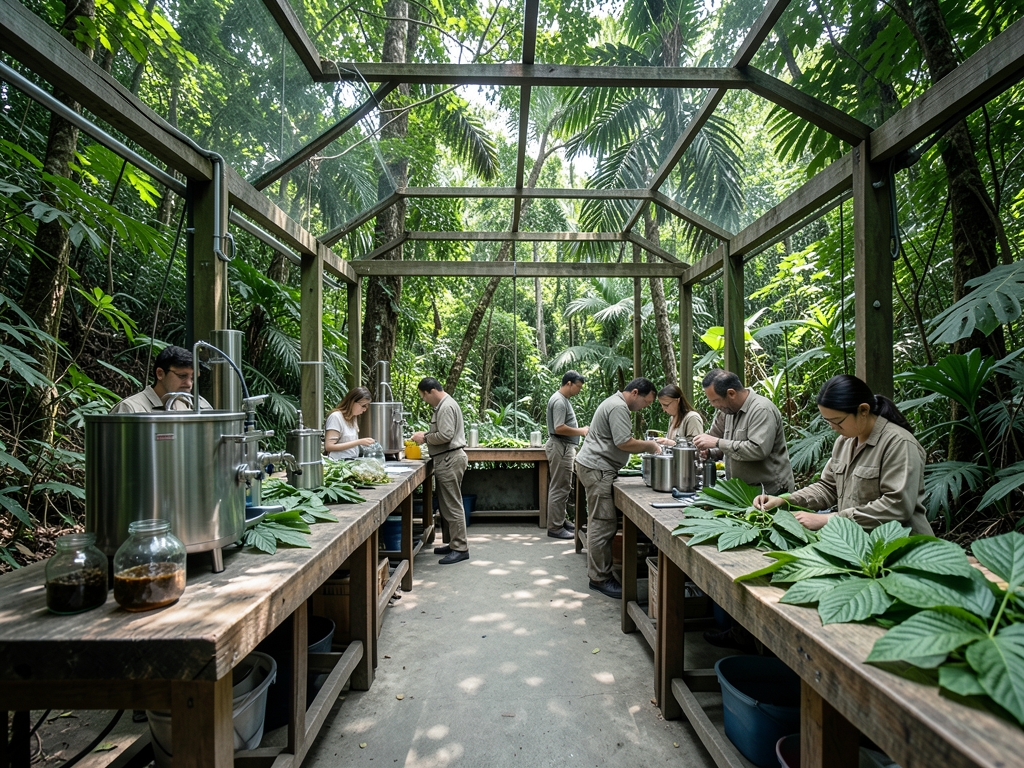
The global scientific and fragrance sectors have reached a significant milestone with the official opening of the first dedicated forest laboratory in Brazil's biologically diverse Atlantic Forest. Established by International Flavors & Fragrances (IFF), this new research facility marks a strategic shift in how scent profiles, botanical extracts, and natural raw materials are discovered, studied, and integrated into consumer products. Rather than relying solely on traditional laboratory synthesis or distant botanical gardens, the initiative places scientists, ecologists, and local experts directly inside one of the planet's most threatened and biodiverse ecosystems.
The Atlantic Forest—known locally as the Mata Atlântica—stretches along the Brazilian coast and extends inland into Paraguay and Argentina. Despite severe historical deforestation driven by urban expansion and agriculture, the remaining fragments of this biome harbor an astonishing concentration of endemic flora and fauna. By embedding a permanent research presence within this environment, the new facility aims to unlock novel aromatic compounds while simultaneously advancing rigorous ecological conservation frameworks.
The Strategic Importance of In-Situ Botanical Research
Traditional fragrance creation has long relied on harvested plant materials shipped to central laboratories far from their native habitats. While effective for mass production, this distant model often detaches product developers from the ecological realities of the plants they study. The new forest laboratory in Brazil changes this paradigm by enabling real-time, in-situ analysis of living flora.
Researchers stationed at the facility utilize advanced headspace technology and non-destructive extraction methods to capture the authentic scents of blooming flowers, damp forest floors, and rare canopy resins without damaging the host plants. This technique preserves the delicate integrity of volatile aromatic compounds that often degrade during traditional harvesting, transportation, and drying processes. Consequently, perfumers gain access to exceptionally accurate, vibrant natural notes that faithfully replicate the living environment.
Info! Non-destructive headspace analysis allows scientists to capture complex aromatic profiles from rare botanical species directly in their natural habitat without harvesting or harming the plants.
Balancing Innovation with Biodiversity Conservation
Operating a high-tech research facility within a fragile ecosystem requires strict adherence to environmental protection and ethical sourcing principles. The establishment of the lab aligns closely with international biodiversity targets and emerging regulatory standards regarding genetic resource sharing and fair compensation for local communities.
The project incorporates several core sustainability mechanisms:
- Non-Destructive Sampling: Prioritizing techniques that leave native flora completely unharmed, safeguarding local populations of endangered or sensitive plant species.
- Local Community Collaboration: Partnering with indigenous and rural communities in Brazil to document traditional ecological knowledge and ensure equitable benefit-sharing arrangements.
- Habitat Regeneration Support: Allocating a significant portion of research resources and operational funding toward active reforestation and corridor restoration projects within the Atlantic Forest.
- Scientific Transparency: Publishing ecological and botanical findings to contribute to broader global databases tracking tropical forest health and climate resilience.
By tying commercial fragrance innovation directly to forest preservation, the initiative demonstrates that corporate stakeholders can play a constructive role in environmental stewardship. Protecting the Atlantic Forest is no longer viewed merely as an act of philanthropy, but as an operational necessity for securing sustainable, high-quality botanical resources over the long term.
Advanced Technological Infrastructure in a Tropical Setting
Establishing a cutting-edge research hub deep within a tropical forest presents unique engineering and logistical challenges. The facility is equipped with state-of-the-art analytical chemistry tools scaled for field deployment, including portable gas chromatography-mass spectrometry (GC-MS) units, micro-extraction apparatuses, and specialized climate monitoring arrays.
These instruments enable researchers to immediately sequence and categorize chemical compounds on-site. Furthermore, the laboratory integrates advanced digital monitoring tools to track microclimatic shifts, humidity levels, and temperature variations across different strata of the forest canopy. This data provides vital insights into how local plant communities respond to changing environmental conditions, offering a dual benefit for both commercial product development and academic climate science.
Placing advanced analytical laboratories directly inside the rainforest transforms how we understand botanical chemistry, bridging the gap between high-end product innovation and rigorous ecological preservation.
Implications for the Global Beauty and Fragrance Market
The opening of the Brazilian forest lab reflects a broader industry trend toward radical transparency and verifiable sustainability. Consumers in Europe, the United States, and international markets increasingly demand proof that the ingredients in their perfumes, cosmetics, and personal care items do not contribute to deforestation, habitat degradation, or biodiversity loss.
Industry analysts note that sourcing transparency is rapidly evolving from a marketing differentiator into a core regulatory requirement. Regulatory bodies in multiple jurisdictions are tightening rules regarding supply chain traceability, particularly concerning commodities and extracts originating from tropical biomes. By establishing a localized, fully traceable sourcing and research pipeline in Brazil, stakeholders can guarantee compliance while offering consumers unique, authentic regional stories behind their favorite fragrances.
Future Outlook for Ecosystem-Integrated Research
The success of the new facility in the Atlantic Forest is likely to serve as a blueprint for future investments in other critical biodiversity hotspots around the globe, such as the Amazon basin, Southeast Asian rainforests, and African floral kingdoms. As climate pressures mount and consumer expectations shift toward regenerative business models, the integration of high-tech research facilities within natural ecosystems represents a forward-thinking model for modern industry.
Ultimately, the initiative proves that scientific curiosity and commercial enterprise can coexist harmoniously with environmental conservation. By listening closely to the living forest, researchers are not only discovering the next generation of sophisticated fragrances but are also helping to secure the long-term survival of the ecosystems that make them possible.
What is the primary purpose of the new IFF forest lab in Brazil?
The primary purpose is to conduct in-situ botanical research, capture authentic scent profiles using non-destructive methods, and advance sustainable fragrance innovation while supporting local biodiversity conservation within the Atlantic Forest.
Where is the research facility located?
The laboratory is situated directly within Brazil's Atlantic Forest (Mata Atlântica), an internationally recognized biodiversity hotspot known for its high concentration of endemic flora and fauna.
How does non-destructive headspace analysis work?
Non-destructive headspace analysis allows scientists to capture the volatile aromatic compounds given off by living plants and flowers in their natural habitat without harvesting, damaging, or removing the plant itself.
How does the laboratory support local communities and conservation?
The facility collaborates with local and indigenous communities to respect traditional knowledge, implement fair benefit-sharing agreements, and fund active reforestation and habitat corridor restoration projects in the region.
As this pioneering facility expands its research operations, it sets a high standard for corporate responsibility and ecological integration. By maintaining a permanent presence in the field, researchers ensure that future aromatic discoveries are achieved through collaboration, scientific rigor, and deep respect for the natural world.
