

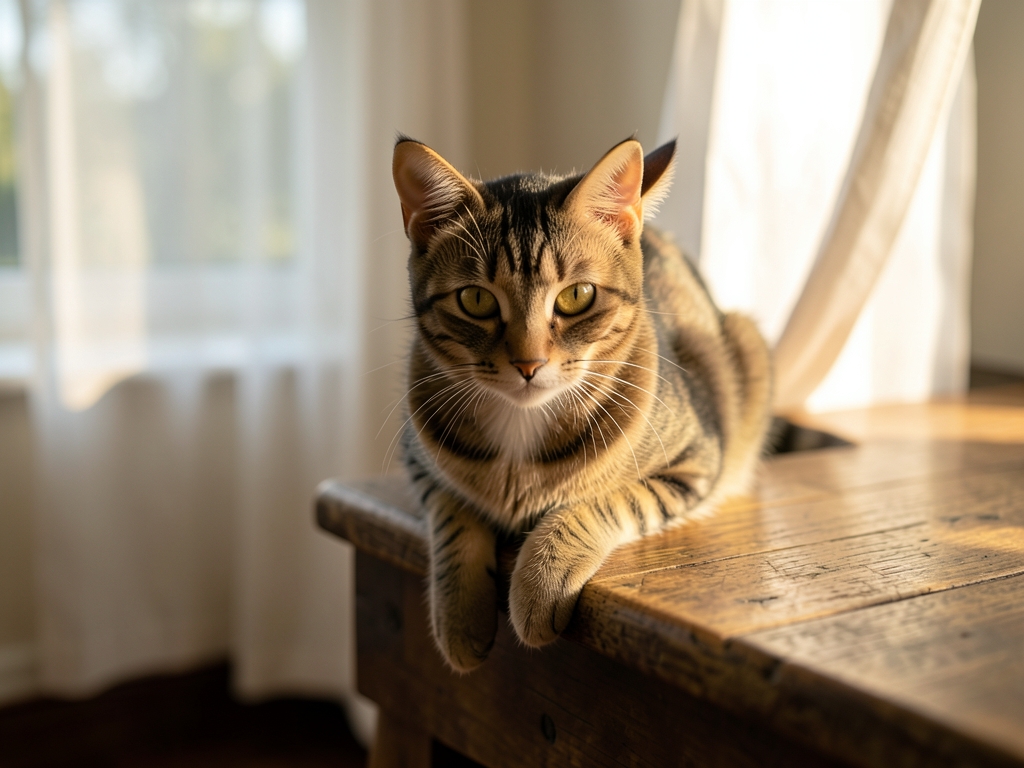
Domestic felines have shared our homes for thousands of years, yet their complex psychological profiles continue to surprise ethologists, behavioral scientists, and pet owners alike. Recent scientific investigations into feline temperament have brought to light a fascinating behavioral crossover: researchers have identified patterns of infant-like shyness in domestic cats that mirror the delicate interplay between fear and exploratory curiosity observed in human toddlers. This emerging research not only deepens our understanding of animal psychology but also provides practical guidance for how humans can better interact with sensitive feline companions.
The Intersection of Fear and Curiosity in Feline Development
Animal behaviorists have long understood that survival in the natural world requires a careful balance between caution and exploration. When faced with novel stimuli, new environments, or unfamiliar humans, domestic cats must quickly assess potential risks. Recent studies focusing on behavioral expressions in felines have mapped how individual cats process this dichotomy. Rather than exhibiting purely defensive withdrawal or unbridled boldness, a significant subset of cats displays an infant-like shyness.
This particular behavioral phenotype is characterized by a simultaneous pull toward and away from novel objects or strangers. A cat exhibiting infant-like shyness will often approach an unfamiliar stimulus with ears forward and pupils dilated—classic markers of intense curiosity—only to startle, retreat behind furniture, or adopt a defensive posture at the slightest movement or sound. Once a safe distance is established, however, the curiosity re-emerges, drawing the animal back toward the point of interest.
Understanding the delicate balance between feline caution and exploration helps animal behaviorists decode the subtle emotional states of domestic pets.
Scientists note that this behavioral oscillation closely resembles the developmental stages seen in human infants and young children when encountering strangers or unfamiliar settings. In developmental psychology, this phenomenon is often referred to as behavioral inhibition. Translating these concepts into feline ethology allows researchers to categorize temperaments with greater precision, moving beyond simplistic labels of friendly versus aggressive.
How Researchers Evaluated Feline Temperament
To arrive at these findings, behavioral research teams established controlled observational environments designed to test feline responses to standardized novel situations. These tests typically involve introducing unfamiliar objects, strange sounds, or unknown human observers into a familiar testing space while recording physiological and behavioral markers.
Info! Controlled observational studies rely on non-invasive monitoring to ensure that test subjects experience minimal stress during behavioral evaluations.
During these trials, researchers tracked specific indicators:
- Initial approach latency, measuring how long a cat hesitates before investigating a novel object.
- Postural shifts, noting transitions between stretched exploratory postures and crouched defensive stances.
- Vocalization patterns, distinguishing exploratory chirps from distress-related meows or hisses.
- Recovery time, measuring how rapidly an animal returns to a baseline state of calm after a startle event.
The data revealed that cats displaying infant-like shyness possess highly sensitive nervous systems. While their drive to explore and understand their environment remains robust, their threshold for sensory overload is significantly lower than that of bolder counterparts. This dual activation of the amygdala and related neural circuits explains why these animals appear caught in a perpetual loop of wanting to investigate while simultaneously needing to protect themselves.
Implications for Domestic Cat Welfare and Human-Animal Bonds
Recognizing that a cat's timid behavior stems from an infant-like interplay of fear and curiosity rather than stubbornness or anti-social tendencies has profound implications for pet care. Traditional approaches to socializing shy cats often involved forced exposure—a method that frequently backfires by reinforcing the animal's perception of threat.
Modern feline welfare advocates recommend a consent-based approach to interaction. By allowing shy cats to dictate the pace of engagement, owners can build trust more effectively. When a cat is permitted to retreat, assess, and approach on its own terms, the underlying curiosity is allowed to resolve the internal conflict naturally without triggering chronic stress.
| Behavioral Phase | Observed Feline Action | Recommended Human Response |
|---|---|---|
| Approach | Ears forward, slow steps toward a novel object | Remain still; avoid sudden movements or direct eye contact |
| Startle | Sudden retreat, crouching, or tail twitching | Give the cat space; do not pursue or force physical contact |
| Re-engagement | Returning to investigate from an increased distance | Allow the animal to approach; offer calm, low-profile reassurance |
| Habituation | Relaxed posture, sniffing without alarm | Gently reward calm behavior with praise or approved treats |
Furthermore, understanding these temperamental traits helps veterinary professionals design stress-reduced clinic environments. Clinics that incorporate species-specific handling techniques and minimize sudden loud noises can dramatically improve medical outcomes for sensitive felines, reducing the trauma associated with routine health check-ups.
Future Directions in Feline Behavioral Research
As ethologists continue to analyze the genetic and environmental factors contributing to these distinct personality traits, future studies aim to explore how early kittenhood socialization programs can support naturally timid animals. Researchers are also investigating whether specific dietary or environmental enrichments can modulate stress responses in cats with high behavioral inhibition.
What remains clear is that domestic cats are far more emotionally nuanced than historical stereotypes suggested. By respecting the intricate balance between their innate curiosity and their infant-like shyness, cat owners and researchers can foster environments where even the most cautious felines can thrive.
What is infant-like shyness in domestic cats?
Infant-like shyness refers to a behavioral state where a cat experiences a simultaneous pull of intense curiosity and fear when encountering novel stimuli, mirroring the behavioral inhibition seen in human toddlers.
How do researchers study feline fear and curiosity?
Researchers use controlled observational settings to introduce unfamiliar objects, sounds, or people while monitoring approach times, postural shifts, vocalizations, and recovery periods.
How should owners interact with a shy cat?
Owners should use a consent-based approach, giving the cat physical space to retreat and letting the animal initiate contact at its own pace without forced exposure.
Why do shy cats approach objects only to immediately retreat?
This oscillation occurs because their internal drive to explore is active, but their neurological threshold for sensory overload is low, causing them to balance curiosity with immediate self-preservation.
Ultimately, acknowledging these behavioral realities helps bridge the gap between human expectations and feline instincts. As science continues to uncover the depths of animal cognition, our capacity to share our homes with them grows richer and more empathetic.
