

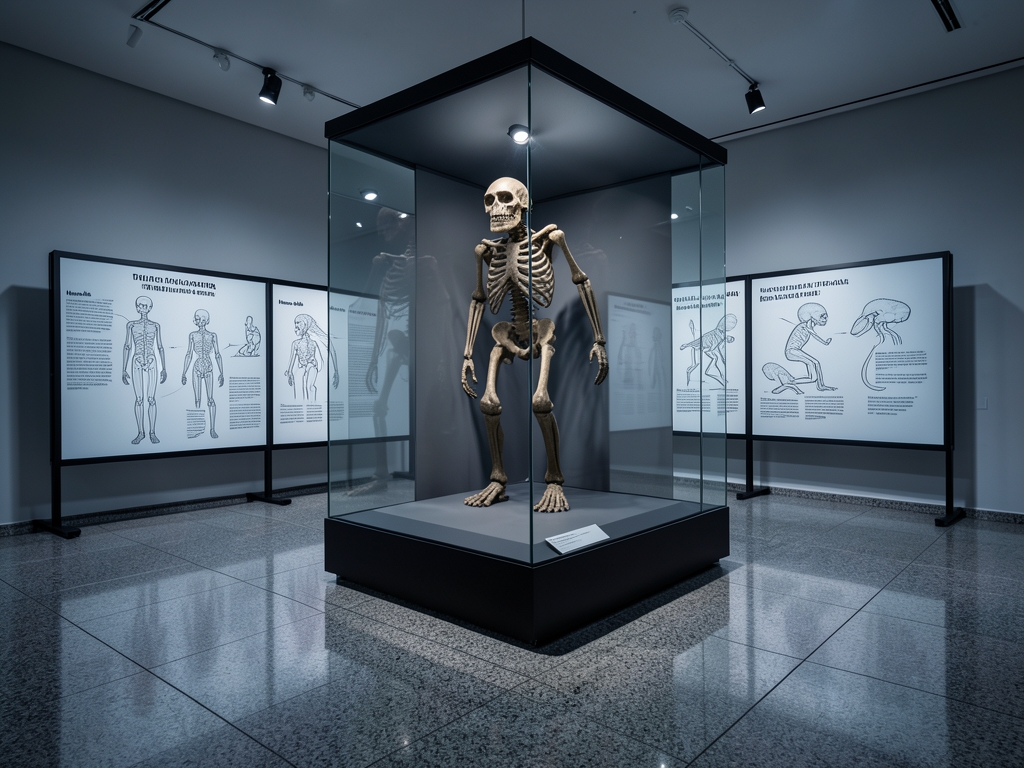
The announcement by Kenyan leadership regarding the public exhibition of the original Turkana Boy remains marks a watershed moment in the fields of paleoanthropology, museum curation, and international education. Discovered west of Lake Turkana in Kenya in 1984 by a field team led by renowned paleoanthropologist Richard Leakey and notably uncovered by fossil collector Kamoya Kimeu, the skeleton represents one of the most complete early human fossils ever found. For decades, the fragile and irreplaceable original bones of Homo ergaster (often classified as early African Homo erectus) have been safely housed within secure vaults at the National Museums of Kenya in Nairobi, with researchers primarily studying high-precision casts. Bringing the pristine, original fossil out for public view introduces a rare educational opportunity for students, historians, and visitors from across the globe, bridging the gap between academic research and public accessibility.
Understanding the historical weight of this upcoming exhibition requires examining why the Turkana Boy skeleton holds such a revered place in the scientific community. Estimated to be approximately 1.5 million years old, the adolescent male skeleton provides an unprecedented window into the biological evolution of early human ancestors. Unlike many fragmentary finds consisting of isolated teeth or isolated skull pieces, this specimen preserves a remarkably complete post-cranial skeleton alongside a largely intact cranium. This completeness has allowed generations of scientists to study body proportions, height, brain development, and locomotion strategies in a species that walked fully upright across the East African landscape during the Pleistocene epoch. By transitioning these delicate remains from restricted scientific storage into a carefully curated public display, Kenya is setting a new standard for how nations care for and share their pivotal paleontological heritage with the world.
The Historical Significance of the 1984 Discovery
The story of how the Turkana Boy came to light is an essential chapter in the history of East African archaeology. During the early 1980s, the West Turkana project was actively surveying rich geological deposits near the Nariokotome River. The terrain, characterized by arid badlands and ancient fossil-bearing sediments, had long yielded clues about ancient ecosystems. On a fateful day in August 1984, Kamoya Kimeu spotted a small piece of a frontal bone weathered out of a hillside. Meticulous excavation over subsequent weeks revealed an astonishing concentration of skeletal elements belonging to a single individual who lived during the early Pleistocene.
Info! The skeleton was determined to belong to a juvenile male between the ages of seven and twelve years old at the time of death, based on dental eruption patterns and bone growth plates.
Scientific analysis following the recovery provided startling insights into human evolution. The youth stood around 5 feet 3 inches tall and would likely have grown over six feet in adulthood, demonstrating that early humans had already achieved modern human stature long before the emergence of Homo sapiens. Furthermore, the narrow shape of the spinal canal sparked intense academic debate regarding respiratory control and the evolution of human speech capabilities. Because the original bones are exceptionally fragile, researchers relied heavily on meticulously crafted casts for decades while keeping the authentic skeleton protected from environmental degradation and physical wear.
Balancing Preservation and Public Access in Modern Museums
Exposing original hominid fossils of this caliber presents profound curation and conservation challenges. Museums globally face a continuous dilemma: how to satisfy public curiosity and foster cultural pride without risking the integrity of priceless historical artifacts. Organic remains buried for over a million years undergo complex mineralization processes, yet they remain vulnerable to humidity fluctuations, temperature shifts, and physical vibrations. Modern museum technology has evolved significantly, allowing institutions to design specialized microclimate display cases equipped with advanced environmental monitoring, vibration-dampening mounts, and ultraviolet-filtered LED lighting.
Kenya's decision to display the original remains reflects confidence in contemporary conservation infrastructure and a desire to democratize access to scientific milestones. For decades, many of the world's most significant anthropological discoveries made in the Global South were studied primarily in institutions located in Europe and North America. By showcasing the Turkana Boy locally and making the original artifact accessible to international visitors and domestic students alike, Kenya reinforces its leadership in archaeological stewardship. This initiative aligns with broader global movements encouraging the preservation of cultural and scientific heritage within its country of origin, ensuring that local communities share directly in the educational and cultural prestige of their ancestral discoveries.
Educational Impact and International Significance
The upcoming public exhibition is expected to draw historians, educators, students, and science enthusiasts from Europe, the United States, and beyond. Educational institutions increasingly emphasize experiential learning, where students engage directly with primary sources of historical and scientific data. Viewing the actual skeletal remains of an individual who walked the African savannah one and a half million years ago offers a profound perspective shift that textbooks and digital renders cannot fully replicate.
The Turkana Boy is not merely a collection of ancient bones; it is a silent ambassador of human history, connecting modern humanity to our shared evolutionary roots in East Africa.
Moreover, the exhibition serves as a catalyst for international academic collaboration. Paleontologists, evolutionary biologists, and historians use such moments to launch joint research initiatives, educational exchange programs, and public symposia. As museums modernize their exhibit spaces to incorporate interactive digital overlays alongside authentic artifacts, visitors will be able to explore CT scans, muscle reconstructions, and geological maps tied directly to the Nariokotome excavation site.
Future Directions for East African Paleontology
The spotlight brought by this exhibition also benefits ongoing research efforts across the East African Rift Valley. Funding, public interest, and governmental support are vital for sustaining long-term field surveys, laboratory conservation, and community-led preservation programs. As technology continues to advance—ranging from non-destructive isotopic analysis to high-resolution micro-CT scanning—the scientific community gains new ways to extract knowledge from ancient fossils without causing physical harm.
| Feature | Scientific Detail |
|---|---|
| Species | Homo ergaster (African Homo erectus) |
| Age of Specimen | Approximately 1.5 million years old |
| Location Found | Nariokotome, West Turkana, Kenya |
| Year of Discovery | 1984 |
| Estimated Height | Approx. 5 ft 3 in (juvenile); would exceed 6 ft as adult |
Ultimately, making the Turkana Boy publicly visible is a testament to scientific progress and national pride. It invites the public to look past academic jargon and connect with the tangible reality of human ancestry. Whether viewed by a visiting schoolchild from Nairobi or an international researcher traveling from Europe or America, the skeleton stands as a powerful reminder of our shared biological heritage.
What is the Turkana Boy?
The Turkana Boy is a nearly complete skeleton of an early human adolescent belonging to the species Homo ergaster, dating back approximately 1.5 million years.
When and where was the fossil discovered?
The fossil was discovered in August 1984 near the Nariokotome River on the western shore of Lake Turkana in Kenya by a field team led by Kamoya Kimeu and Richard Leakey.
Why hasn't the original skeleton been on public display before?
Due to the extreme fragility and scientific value of the original fossil bones, they were kept in secure museum vaults to protect them from environmental damage, while researchers studied accurate casts.
Where will the exhibition take place?
The exhibition is hosted by the National Museums of Kenya in Nairobi, marking the first time the authentic remains are made accessible for public viewing.
In conclusion, the decision to exhibit the original Turkana Boy remains represents a milestone in both scientific transparency and cultural curation. By balancing rigorous conservation standards with public accessibility, Kenya continues to champion the preservation of human evolutionary history. This landmark event ensures that future generations can witness firsthand the remarkable physical evidence of our ancient ancestors.
