

When modern observers study the evolution of human civilization, sanitation is almost universally framed as an unmitigated triumph. The transition from open gutters and indiscriminate waste disposal to organized municipal infrastructure represents one of the most vital leaps forward in public health. Cleaner streets, managed waste streams, and centralized water systems successfully curtailed deadly pestilences such as cholera and typhoid in later centuries. However, historical and archaeological investigations continually remind us that past interventions were rarely straightforward. Solutions designed to solve one immediate crisis often triggered complex, unintended ecological and biological consequences that the original architects could never have anticipated.
Recent scientific research focusing on medieval Trondheim provides a fascinating case study in the unintended complexities of historical urban planning. As municipalities grew more crowded during the medieval period, civic leaders faced mounting pressures to clean up densely packed residential zones. The introduction of early public health frameworks, waste management ordinances, and structured sanitation systems transformed how medieval cities handled organic refuse. Yet, rather than sterilizing the urban environment, certain municipal practices inadvertently cultivated ideal breeding grounds for resilient pathogens. By examining the micro-botanical remains, parasitological evidence, and stratified soil samples from these ancient settlements, modern researchers have uncovered a surprising epidemiological reality that challenges traditional assumptions about medieval hygiene.
The Urban Realities of Medieval Trondheim
Trondheim, founded in the late tenth century, grew into a bustling political, commercial, and religious hub in northern Europe. As its population expanded rapidly through the medieval era, managing human and animal waste became an urgent logistical nightmare. Streets filled with refuse, animal carcasses, and organic waste posed significant fire and odor hazards, while simultaneously threatening the water supply. To combat these mounting civic challenges, local authorities and communities gradually instituted early sanitation measures, including the paving of streets, the construction of rudimentary drainage channels, and the systematic disposal of organic waste into designated pits or peripheral agricultural plots.
These sanitation reforms represented a sophisticated organizational leap for the time. Rather than allowing refuse to accumulate indefinitely outside cottage doors, civic communities coordinated efforts to clear central thoroughfares and transport organic waste away from high-density residential zones. Municipal ordinances dictated where waste could be deposited, establishing an early framework for collective public health responsibility. From the perspective of medieval administrators, these measures were successful in reducing immediate urban congestion and improving daily living conditions. The streets were visibly cleaner, and the perceived cleanliness of the city matched the rising ambitions of its growing mercantile class.
The Biological Mechanism: How Sanitation Spread Parasites
Despite the administrative success of clearing urban thoroughfares, the physical destination of the collected waste created a biological paradox. In medieval agricultural practices, human and animal manure was considered a valuable fertilizer. Organic waste collected during urban sanitation sweeps was frequently transported out of the city center and applied directly to local crop fields and vegetable gardens to boost agricultural yields. While this recycling loop made economic and agronomic sense in a subsistence-driven economy, it inadvertently created a highly efficient transmission vector for intestinal parasites.
Among the most resilient and destructive beneficiaries of this organic recycling system was the human roundworm, scientifically known as Ascaris lumbricoides. Roundworm eggs possess an extraordinarily tough outer shell capable of surviving harsh environmental conditions for years. When infected human waste containing unfertilized or fertilized parasite eggs was spread across agricultural fields as fertilizer, the eggs contaminated the soil and clung to the surfaces of low-growing root vegetables, leafy greens, and other crops cultivated for local consumption. When citizens harvested and consumed these unwashed or inadequately cooked crops, they unknowingly ingested the resilient parasite eggs, completing a silent biological cycle that municipal sanitation reforms had inadvertently amplified rather than broken.
Parasitological Evidence and Archaeological Methodologies
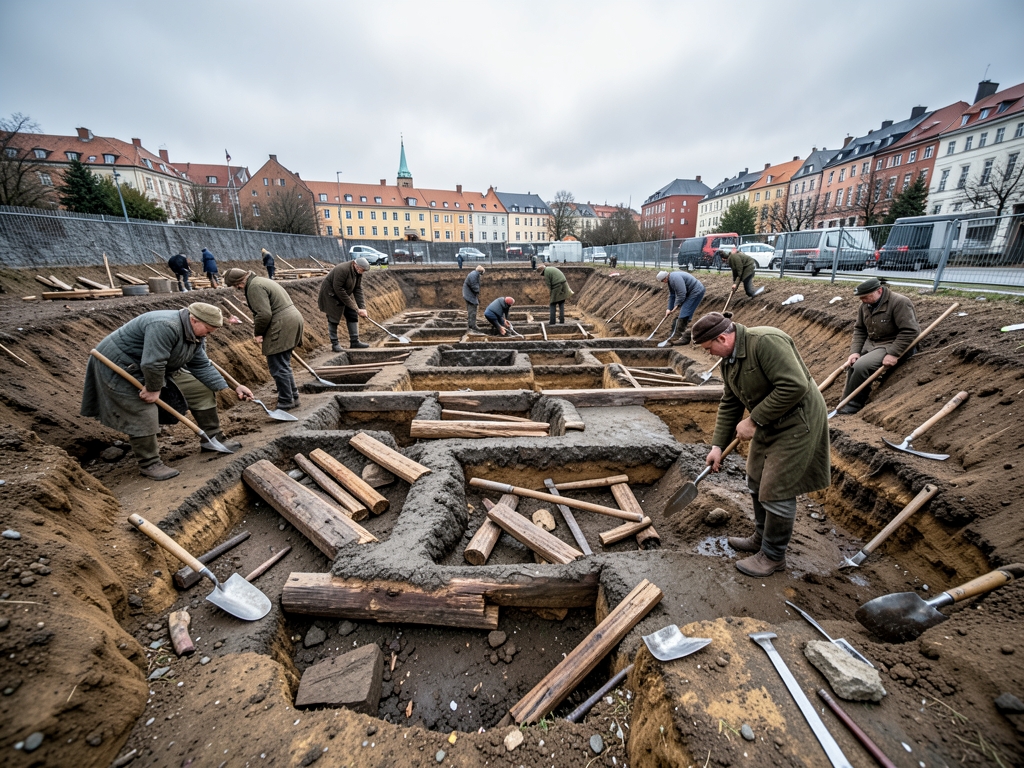
Uncovering the hidden health burdens of medieval populations requires sophisticated scientific techniques far beyond traditional documentary analysis. Archaeologists and paleoparasitologists examine preserved latrine sediments, coprolites (fossilized feces), and soil samples extracted from ancient urban and agricultural layers. By employing advanced microscopy and biomolecular screening, researchers can identify microscopic parasite eggs trapped within centuries-old soil matrices with remarkable precision.
Info! Paleoparasitological analysis allows scientists to reconstruct the ancient disease landscapes of specific communities, tracking the prevalence and distribution of intestinal worms across different social strata and geographic regions.
In the case of Trondheim, soil core samples taken from ancient garden plots and disposal sites revealed high concentrations of roundworm eggs directly associated with the periods following the introduction of organized municipal waste management. The correlation between increased urban sanitation activity and the proliferation of agricultural parasite contamination provides concrete scientific backing for how early public health interventions inadvertently sustained endemic parasitic infections across generations.
Broader Implications for Medieval Public Health History
The findings from Trondheim fit into a growing body of archaeological research demonstrating that medieval people lived with a far higher baseline parasitic load than once assumed. While historical texts often highlight dramatic epidemics like the Black Death, chronic parasitic infections like roundworm, whipworm, and liver fluke operated as silent, persistent burdens that sapped the vitality, nutritional status, and economic productivity of entire populations.
Furthermore, these insights highlight the inherent challenges of transferring urban waste into rural agricultural environments without modern understanding of pathogen transmission. Medieval sanitation was driven by empirical observations—removing foul odors and visible filth clearly improved immediate quality of life and reduced fire hazards. However, without knowledge of germ theory or microscopic pathogens, early reformers could not foresee that recycling urban waste onto food crops would effectively weaponize the harvest against the community's own health.
| Sanitation Reform | Intended Benefit | Unintended Biological Consequence |
|---|---|---|
| Street Clearing | Reduced odors and fire hazards | Concentration of organic waste for transport |
| Waste Transport | Removal of refuse from city center | Relocation of waste to agricultural areas |
| Manure Application | Enhanced crop yields and soil fertility | Contamination of food crops with parasite eggs |
| Crop Consumption | Sustained urban food supply | Ingestion and reinfection of human populations |
Lessons for Modern Infrastructure and Public Health
The historical trajectory of medieval Trondheim offers valuable lessons for contemporary infrastructure planning and global development initiatives. Even today, large-scale engineering and public health projects must carefully evaluate downstream ecological impacts. Modern wastewater treatment, agricultural irrigation safety, and organic fertilizer processing are all direct descendants of the historical trial-and-error process that began centuries ago.
When modern cities implement organic composting programs or greywater recycling systems, agricultural scientists and public health officials must rigorously screen for pathogens, heavy metals, and chemical pollutants to prevent analogous modern loops of contamination. Understanding that every technological intervention alters biological systems in complex ways reinforces the necessity of holistic, science-driven planning that anticipates secondary and tertiary consequences.
History demonstrates that every major leap in human sanitation is accompanied by new ecological challenges that require continuous adaptation, scientific inquiry, and structural refinement.
Ultimately, the story of Trondheim's medieval sanitation reforms does not diminish the importance of early public health efforts; rather, it humanizes the historical process. It portrays medieval communities actively grappling with the mounting pressures of urbanization, striving to improve their living conditions with the best tools and knowledge available to them at the time. Their struggles and unintended setbacks form an essential chapter in the long, ongoing human endeavor to build cleaner, healthier, and more sustainable societies.
What caused the spread of roundworm infections in medieval Trondheim?
The infection spread because municipal authorities collected human and organic waste from city sanitation reforms and applied it as fertilizer on local agricultural fields, unknowingly contaminating food crops with resilient parasite eggs.
How do scientists detect ancient parasites in archaeological sites?
Scientists use paleoparasitological analysis, examining preserved soil samples, latrine sediments, and coprolites using advanced microscopy and biomolecular screening to identify microscopic parasite eggs trapped in ancient layers.
Did medieval sanitation reforms improve overall public health?
While sanitation reforms successfully reduced street filth, fire hazards, and odor, they inadvertently maintained chronic endemic parasitic infections by cycling human waste back into the local food supply.
What lessons does this historical discovery offer for modern infrastructure?
The findings emphasize that modern engineering and recycling programs must rigorously evaluate downstream biological impacts, pathogen transmission risks, and agricultural safety standards to prevent unintended health consequences.
As ongoing archaeological excavations and scientific analyses continue to unearth new details about medieval life, our comprehension of past epidemics and health challenges deepens. Recognizing the intricate links between urban planning, agriculture, and disease allows historians and scientists to paint a more complete picture of how ancient societies navigated the dual challenges of growth and survival.
Sources and Further Reading
- Medieval Trondheim Sanitation Reforms Unintentionally Spread Parasitic Roundworm Infections Through Crops - Bioengineer.org — Bioengineer.org (published 2026-11-13 01:21)
- The introduction of a medieval public health system in Trondheim exposed the population to roundworm - EurekAlert! — EurekAlert! (published 2026-11-12 19:54)
