

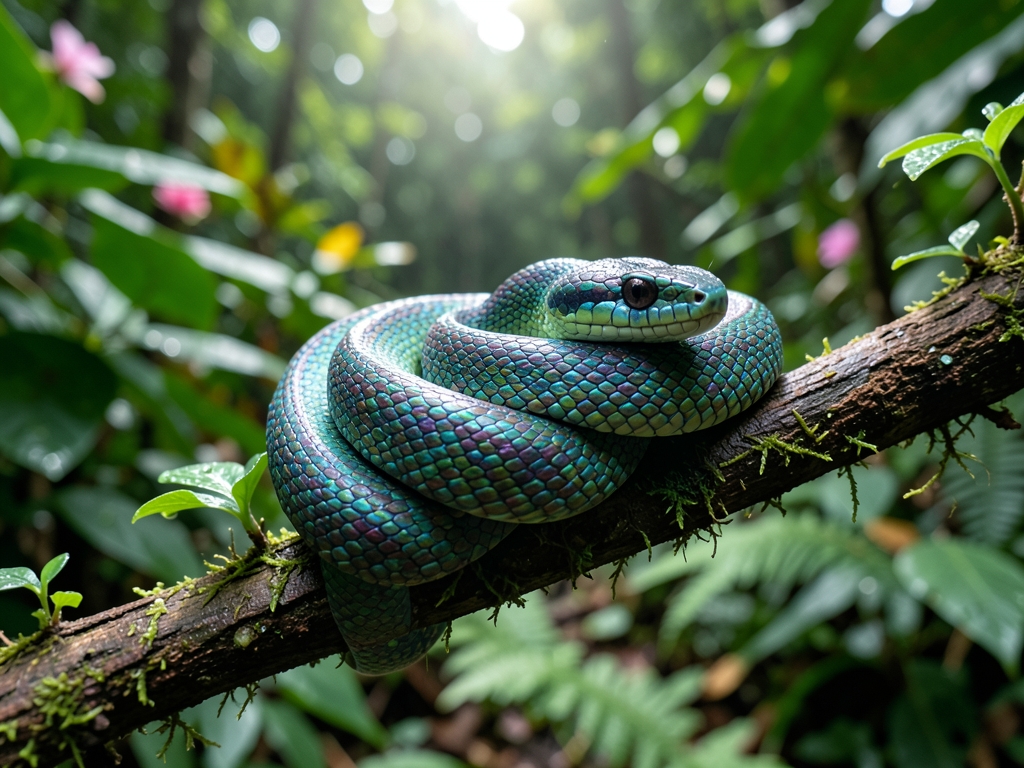
The dense and mist-shrouded tropical rainforests of the Western Ghats continue to yield astonishing biological surprises for the scientific community. Herpetologists and wildlife researchers have officially identified a brand-new species of tree snake dwelling within this globally recognized biodiversity hotspot. This discovery highlights the ecological richness of the region and underscores the critical importance of continuous field exploration and rigorous taxonomic assessment in remote and protected habitats. As environmental pressures mount across South Asia, uncovering cryptic species provides vital baseline data required for effective conservation planning and habitat preservation.
Understanding the Western Ghats Biodiversity Hotspot
The Western Ghats, a mountain chain running parallel to the western coast of the Indian Peninsula, is internationally celebrated as one of the world's premier biodiversity hotspots. Older than the Himalayas, these hills harbor an immense variety of endemic flora and fauna that cannot be found anywhere else on Earth. The complex topography, characterized by high-elevation shola forests, rolling grasslands, and torrential monsoon river systems, creates countless isolated microclimates. These isolated pockets act as evolutionary laboratories where distinct species evolve over millennia.
Reptile diversity in the Western Ghats is particularly remarkable, featuring an array of geckos, skinks, pit vipers, and specialized arboreal snakes. Arboreal species, by virtue of spending the vast majority of their lives high in the canopy or among dense understory vines, frequently evade detection. Their camouflage, cryptic coloration, and secretive nocturnal habits make them exceptionally difficult to locate, even for seasoned field biologists. The identification of this new tree snake species is a testament to meticulous night surveys, painstaking morphological analysis, and modern molecular phylogenetics.
The Discovery Process: From Fieldwork to Taxonomic Confirmation
Finding a new vertebrate species in a well-studied region requires a combination of patience, serendipity, and advanced scientific methodology. The initial encounter typically happens during nocturnal expeditions when researchers scour foliage with high-powered headlamps, looking for the telltale reflection of reptile eyes or subtle movement among branches. Once a specimen is encountered, field biologists document its live coloration, behavioral patterns, and exact microhabitat before collecting detailed measurements.
Morphological examination is only the first step in modern herpetological research. To confirm whether a specimen represents a genuinely new species, scientists must compare its physical characteristics—such as scale counts, head shape, hemipenial morphology, and dentition—with historical type specimens housed in natural history museums. Furthermore, DNA barcoding and mitochondrial gene sequencing are employed to assess genetic divergence from known sister taxa. This multi-pronged approach ensures that individual variations or regional morphs are not mistakenly classified as entirely new lineages.
| Research Phase | Primary Objective | Key Methodologies |
|---|---|---|
| Field Surverys | Locating and documenting specimens | Nocturnal visual encounter surveys, habitat logging |
| Morphology | Analyzing physical characteristics | Scale counting, biometric measurement, digital radiography |
| Genetics | Assessing evolutionary divergence | DNA barcoding, mitochondrial and nuclear sequencing |
| Taxonomic Review | Formal description and publication | Peer-reviewed monograph, museum specimen comparison |
Ecological Role of Arboreal Snakes in Tropical Forests
Tree snakes play an indispensable ecological role within forest ecosystems, acting as both specialized predators and crucial links in the food web. As apex or mid-level predators in the arboreal niche, they help regulate populations of small vertebrates, including frogs, lizards, rodents, and nestling birds. By keeping prey populations in check, these snakes contribute to the overall health and dynamic balance of the forest canopy.
At the same time, arboreal snakes serve as prey for larger predators such as birds of prey, civets, and larger mammalian carnivores. Their presence or absence in a given forest patch often serves as an indirect indicator of ecosystem health. Because many arboreal snakes require complex, multi-layered canopies with high structural integrity, their decline can signal broader environmental degradation, forest fragmentation, or the adverse impacts of localized climate shifts.
The discovery of a new arboreal vertebrate in a heavily monitored mountain range demonstrates that our understanding of tropical biodiversity remains incomplete, reinforcing the urgency of safeguarding remaining forest fragments.
Conservation Challenges in the Western Ghats
Despite their ecological significance and protected status across numerous reserves, the forests of the Western Ghats face unprecedented anthropogenic pressures. Rapid infrastructure expansion, agricultural encroachment, logging, and the fragmentation of continuous forest tracts into isolated islands threaten fragile endemic populations. When habitats are divided by roads and plantations, wildlife migration is restricted, leading to reduced genetic diversity and increased vulnerability to disease and environmental stochasticity.
Reptiles, particularly snakes, suffer intensely from negative human perceptions driven by fear and misinformation. Unlike charismatic mammals, snakes are frequently killed on sight by humans out of unfounded terror, even when the species is entirely non-venomous and ecologically harmless. Furthermore, road mortality during the monsoon season claims the lives of countless reptiles as they attempt to cross roadways dividing forest patches. Conservation initiatives must therefore incorporate public education campaigns alongside strict habitat protection measures to ensure the long-term survival of newly discovered and existing taxa alike.
Info! Protecting micro-habitats such as riparian corridors and old-growth canopy patches is essential for preserving cryptic arboreal species that cannot cross open, degraded terrain.
Future Directions for Herpetological Research in South Asia
The formal description of this Western Ghats tree snake is unlikely to be an isolated event. Advanced molecular techniques and increased survey efforts in previously overlooked ravines and high-altitude plateaus suggest that many more cryptic species await discovery. Collaborative efforts between academic institutions, governmental forestry departments, and grassroots conservation organizations are expanding our knowledge of South Asian herpetofauna faster than ever before.
Researchers are also emphasizing the integration of citizen science into biodiversity monitoring. Nature enthusiasts, photographers, and local guides frequently capture images of unusual animals in remote areas. When shared responsibly through scientific platforms, these observations can direct professional researchers to populations that warrant formal investigation. Ultimately, discovering new species is only the beginning; translating these findings into robust legal protections and community-supported conservation areas is the critical next step in safeguarding the natural heritage of the Western Ghats.
How do scientists confirm a new snake species?
Scientists combine detailed morphological analysis—such as counting scales and examining physical proportions—with genetic testing like DNA barcoding to verify that a specimen differs significantly from all known species.
Why are tree snakes difficult to find in the wild?
Tree snakes are naturally secretive, possess excellent camouflage that blends into foliage, and many species are strictly nocturnal, spending their time high in the forest canopy where human access is limited.
What is the ecological importance of the Western Ghats?
The Western Ghats is a global biodiversity hotspot containing thousands of endemic plant and animal species found nowhere else on Earth, making it a critical region for evolutionary research and global conservation.
What are the major threats facing reptiles in this region?
Major threats include habitat fragmentation caused by infrastructure development, agricultural expansion, road mortality during monsoons, and direct killing by humans due to negative perceptions of snakes.
Conclusion
The identification of a new tree snake species in the Western Ghats is a remarkable reminder of the hidden wonders still waiting to be uncovered in our natural world. It underscores the profound richness of tropical ecosystems and the vital necessity of rigorous scientific inquiry. However, this discovery also serves as a poignant warning regarding the fragility of these habitats in the face of human expansion. By prioritizing comprehensive ecological research, public education, and robust conservation frameworks, we can ensure that the intricate web of life within the Western Ghats endures for generations to come.
