

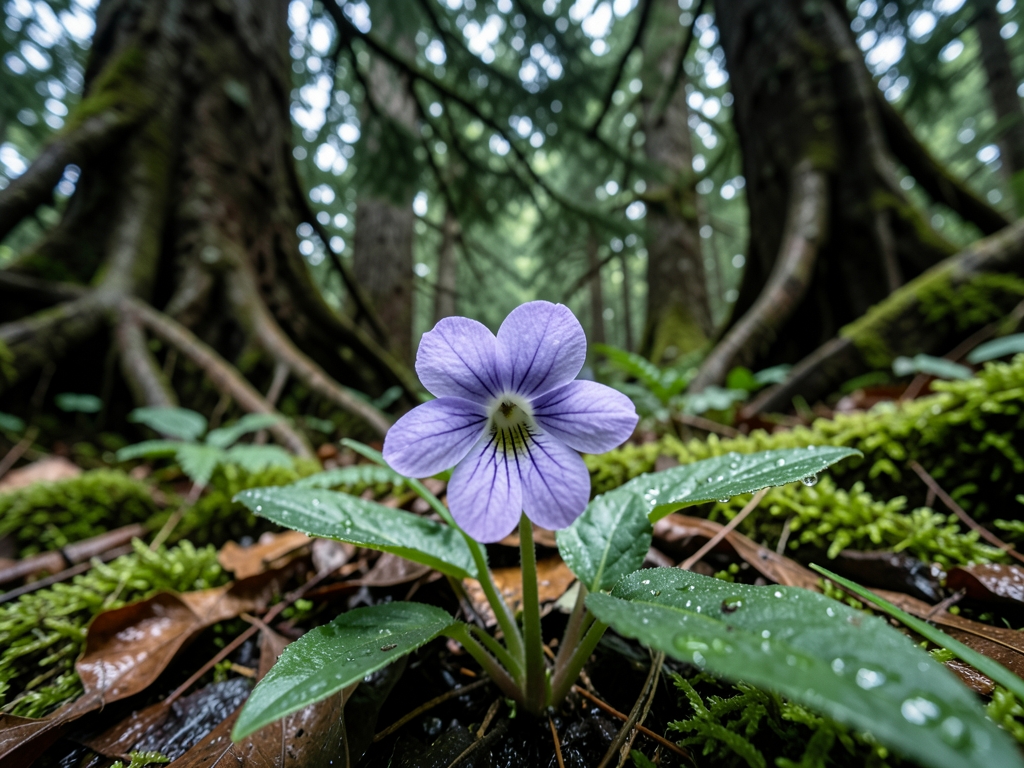
Botanical exploration within protected ecosystems continues to reveal the astonishing diversity of plant life hidden away in remote terrain. Researchers working in the forested landscapes of China have announced a notable addition to global biodiversity records with the identification of a brand new species of violet. Discovered within a protected nature reserve in Jiangxi province, this newly documented plant adds to our growing understanding of regional flora and underscores the critical importance of safeguarding specialized natural habitats against encroaching environmental pressures.
The announcement, which emerged from field surveys conducted by regional botanical specialists, highlights the meticulous nature of modern taxonomy. Identifying a unique plant species involves far more than spotting an unusual flower during a routine walk through the woods. It requires rigorous morphological comparison, genetic barcoding, and careful cross-referencing against historical herbarium specimens collected across Asia over the past two centuries. The discovery in Jiangxi demonstrates that even well-studied regions can harbor undiscovered taxa when scientists apply advanced field techniques and maintain long-term ecological monitoring programs.
The Botanical Significance of Jiangxi's Protected Reserves
Jiangxi province, located in southeastern China, is characterized by diverse topography ranging from rolling hills to dense mountain ranges featuring subtropical forest ecosystems. These varied microclimates create exceptional conditions for plant speciation. The dense canopy cover, high relative humidity, and acidic soils typical of the region provide ideal habitats for understory specialists belonging to the Violaceae family.
Violets are often considered humble plants, frequently overlooked in favor of more dramatic flowering trees or orchids, but they play crucial ecological roles within forest floors. As part of the understory vegetation, they serve as vital indicators of soil health and forest microclimate stability. The discovery of a distinct violet species in a Jiangxi nature reserve suggests that localized evolutionary pressures, such as geographic isolation across distinct valley systems, have allowed unique lineages to diverge over thousands of years.
Info! Botanical discoveries in protected Chinese reserves are increasingly supported by cross-sector initiatives that integrate field taxonomy with modern molecular analysis to confirm new plant lineages.
How Researchers Verified the New Violet Species
Confirming a new plant species is a methodical process governed by international codes of nomenclature. When field researchers first encountered the unusual violet population in Jiangxi, they noted distinct physical characteristics that separated it from known relatives in the region. These traits included unique leaf blade morphology, specific hair-like trichome distributions on the stems, and subtle color variations within the corolla and nectar spurs.
To validate these field observations, the research team undertook several crucial steps:
- Collecting voucher specimens according to strict international herbarium standards for permanent deposition in recognized scientific repositories.
- Performing detailed microscopic examinations of floral organs, pollen grains, and seed structures to document diagnostic anatomical features.
- Extracting genomic DNA from plant tissue samples to conduct phylogenetic analyses comparing the specimen's sequences with existing GenBank records of related Asian Violaceae.
- Consulting historical monographs and type specimens housed in major national herbaria to ensure the plant had not been previously described under a different synonym.
The combination of morphological distinctness and molecular divergence confirmed that the Jiangxi population represented a lineage previously unknown to science. Such rigorous verification ensures that conservation resources are directed toward genuinely distinct taxonomic entities.
Broader Implications for Biodiversity Conservation
The discovery of a new violet species in Jiangxi arrives at a time when global conservation initiatives are placing heightened emphasis on protecting plant diversity. While much public attention focuses on endangered megafauna, plants form the foundational architecture of terrestrial ecosystems. Protecting specialized understory flora ensures the preservation of complex trophic webs that support local insects, pollinators, and soil microbial communities.
Furthermore, regional nature reserves serve as living laboratories where long-term ecological succession can be studied without direct anthropogenic interference. As global climate patterns shift, maintaining intact natural reserves allows plant species to adapt, migrate along altitudinal gradients, or persist within localized microrefugia. Documenting the full baseline of existing biodiversity is an essential prerequisite for measuring the future impacts of environmental change on vulnerable ecosystems.
The formal description of new plant species in protected reserves highlights the irreplaceable value of continuous field research and habitat conservation in safeguarding global biodiversity for future generations.
Future Research and Exploration in Jiangxi
With the new violet species now formally described, botanical researchers are turning their attention to understanding its precise distribution range, population size, and reproductive biology. Rare understory plants with restricted geographic ranges are often particularly vulnerable to habitat fragmentation, climate fluctuations, and stochastic environmental events. Conservation managers in Jiangxi are already considering targeted monitoring protocols to ensure that the newly identified populations remain secure within the reserve boundaries.
Botanists emphasize that many more cryptic plant species likely await discovery in similar understory environments across Asia. Continued investment in taxonomic research, regional herbaria, and field training programs will remain essential as scientists race to document Earth's botanical heritage before changing environmental conditions alter vulnerable habitats permanently.
Where was the new violet species discovered?
The new violet species was discovered within a protected nature reserve located in Jiangxi province, southeastern China.
What methods did scientists use to confirm the new species?
Researchers used a combination of detailed morphological analysis, microscopic examination of floral structures, DNA barcoding, and comparisons with historical herbarium specimens.
Why are plant discoveries in nature reserves important?
Plant discoveries establish baseline biodiversity records, help monitor ecosystem health, and ensure that conservation strategies protect specialized understory habitats and endangered lineages.
What family of plants does the newly discovered species belong to?
The newly discovered plant belongs to the Violaceae family, which comprises various groups of flowering herbs and shrubs commonly known as violets.
The documentation of unique flora in Jiangxi's protected forests serves as a powerful reminder of the intricate natural history still waiting to be uncovered. By combining meticulous fieldwork with advanced scientific analysis, researchers continue to refine our understanding of the natural world and strengthen the scientific foundation supporting global conservation efforts.
