

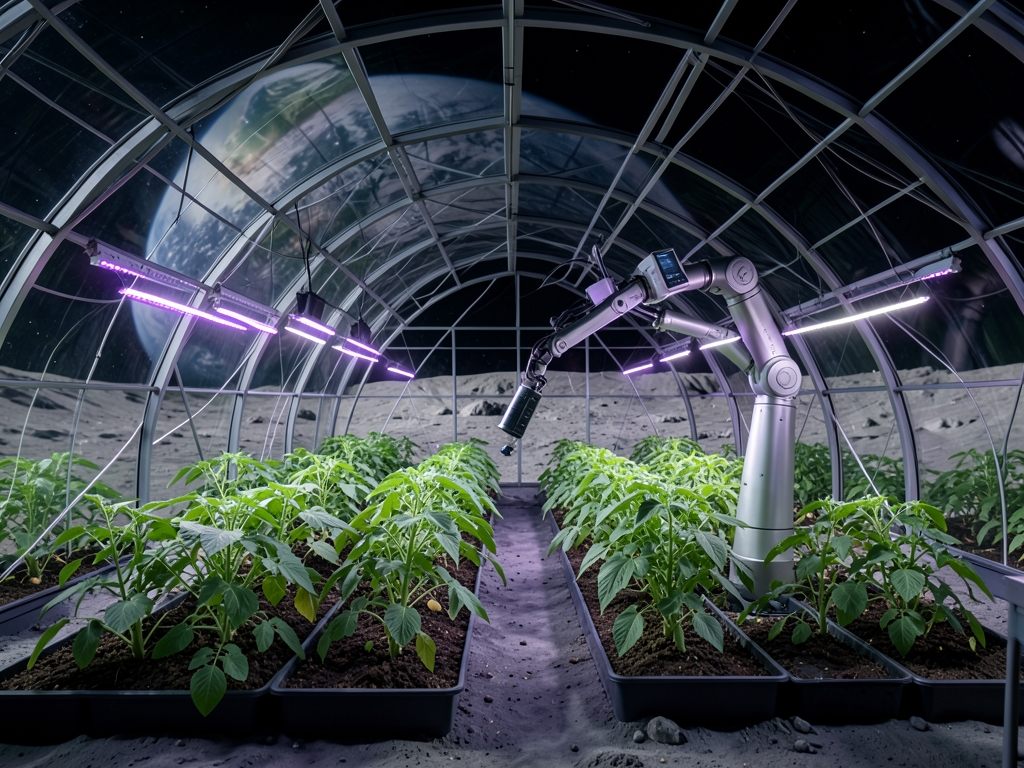
As space agencies around the globe look toward establishing permanent human settlements on the Moon and eventually Mars, one of the most persistent challenges remains feeding astronauts over long-duration missions. Transporting every single meal from Earth is financially and logistically prohibitive due to enormous payload weights and fuel costs. Consequently, researchers have dedicated considerable effort to developing reliable extraterrestrial agriculture systems. Recent scientific evaluations and agricultural experiments suggest that humble root vegetables—specifically potatoes—could serve as the primary dietary foundation for future lunar pioneers, offering high caloric yields and exceptional resilience in harsh environments.
The Nutritional Powerhouse of the Potato
When planning for long-term survival in closed-loop extraterrestrial habitats, mission planners must prioritize crops that maximize caloric output while minimizing water consumption, growing space, and waste. The potato (Solanum tuberosum) has historically been one of humanity's most dependable staple foods, and for good reason. It provides a dense concentration of complex carbohydrates, essential dietary fiber, vitamin C, potassium, and trace amounts of high-quality protein. Unlike cereal grains, which require extensive post-harvest processing such as threshing, milling, and baking before they become edible, potatoes can be consumed relatively soon after harvesting with minimal preparation.
Furthermore, potato plants exhibit an exceptionally high harvest index, meaning that a large percentage of the total plant biomass consists of edible tubers rather than inedible stalks and leaves. The remaining vegetative matter can be recycled through biological composting systems to enrich lunar soil simulants for subsequent planting cycles. This closed-loop efficiency makes the potato an ideal candidate for controlled environment agriculture (CEA) facilities operating inside pressurized lunar lava tubes or shielded surface modules.
| Nutrient / Parameter | Potato Value (per 100g cooked) | Benefit for Lunar Astronauts |
|---|---|---|
| Calories | 87 kcal | High energy density for demanding EVA tasks |
| Carbohydrates | 20.1 g | Provides sustained energy and glycogen replenishment |
| Vitamin C | 19.7 mg | Supports immune function and collagen synthesis |
| Potassium | 425 mg | Mitigates bone density loss and regulates fluid balance |
Overcoming the Challenges of Lunar Regolith
Growing terrestrial crops on the Moon is not as simple as dropping seeds into lunar dirt. Actual lunar regolith is pulverized rock pulverized by billions of years of meteorite impacts. It lacks organic matter, contains sharp abrasive particles that can damage plant roots, and lacks essential bio-available nitrogen. To achieve successful agricultural yields, scientists must condition the regolith by mixing it with organic waste, introducing beneficial microbial communities, and washing away toxic compounds.
Controlled environment chambers utilizing hydroponic, aeroponic, or heavily amended regolith simulant beds represent the current gold standard for space farming research. These automated setups allow scientists to meticulously regulate temperature, humidity, carbon dioxide enrichment, and LED light spectrums. Potatoes respond exceptionally well to photoperiod control, allowing researchers to accelerate tuber bulking phases by optimizing light-to-dark cycles inside indoor farming modules.
The ability to cultivate high-yield caloric crops locally on the Moon will fundamentally transform space exploration economics, shifting missions from purely exploratory visits to self-sustaining outposts.
Radiation Shielding and Habitat Integration
Establishing agriculture on the Moon also serves a dual engineering purpose: life support integration. Greenhouses planted with dense crops like potatoes act as natural bio-filters. During photosynthesis, the plants absorb carbon dioxide exhaled by human crew members and release breathable oxygen, while simultaneously transpiring pure water vapor that can be condensed and collected for drinking and irrigation.
Moreover, agricultural modules embedded beneath the lunar surface or protected by thick layers of packed regolith provide vital radiation shielding. Galactic cosmic rays and solar particle events pose severe health hazards to human crews on the unshielded lunar surface. By integrating large-scale cultivation bays into subterranean habitats, space agencies can create protected zones where crops thrive while simultaneously shielding crew quarters from cosmic radiation.
Info! Future lunar farming facilities will likely rely heavily on autonomous robotics to monitor soil moisture, prune foliage, and harvest mature tubers without requiring excessive crew intervention.
Steps Toward Self-Sustaining Lunar Outposts
Transitioning from short-term lunar exploration to permanent settlement requires a phased technological roadmap. Agricultural pioneers are currently testing various resilient crop varieties in extreme terrestrial environments that mimic lunar and Martian conditions, such as the Atacama Desert and high-altitude volcanic slopes.
- Develop advanced hydroponic and regolith-amendment protocols to ensure safe nutrient uptake.
- Deploy automated indoor vertical farming units within early robotic precursor landers.
- Test multi-generational crop growth cycles to verify genetic stability and resistance to space-flight stressors.
- Integrate complete biological life-support loops combining human waste recycling with agricultural production.
Addressing Potential Risks and Limitations
Warning! Growing plants in extraterrestrial environments carries inherent risks, including pathogen outbreaks in closed ecosystems, mechanical failures in life-support pumps, and unexpected toxicity from unwashed regolith minerals.
While the prospects are promising, significant hurdles remain before astronauts can enjoy freshly harvested lunar french fries. Pathogen management is paramount; in a closed lunar habitat, a fungal or bacterial outbreak could wipe out an entire harvest in days, jeopardizing the mission's food supply. Redundancy systems, genetic diversity among seed stocks, and strict quarantine protocols are mandatory safeguards for any operational space farm.
Why are potatoes chosen over other crops for lunar farming?
Potatoes offer an exceptional caloric yield, require minimal post-harvest processing, provide essential carbohydrates and vitamins, and have a high harvest index where most of the plant mass is edible.
Can plants grow directly in raw lunar soil?
Raw lunar regolith is toxic, abrasive, and lacks organic nutrients. It must be heavily amended with organic waste, washed, and inoculated with beneficial microbes before plants can safely grow in it.
How do lunar greenhouses help with oxygen production?
Through photosynthesis, growing plants absorb carbon dioxide exhaled by astronauts and release fresh oxygen while also transpiring water vapor that can be captured for drinking and irrigation.
What are the main risks of farming inside a lunar base?
Primary risks include potential crop disease outbreaks in closed ecosystems, mechanical failures in automated irrigation equipment, and the presence of toxic chemical compounds in local regolith dust.
Conclusion
The prospect of cultivating potatoes on the Moon represents a critical bridge between science fiction and sustainable space colonization. As research into controlled-environment agriculture, regolith conditioning, and closed-loop life support systems accelerates, the humble potato stands out as an indispensable ally for humanity's expansion into the solar system. By turning extraterrestrial dirt into fertile ground, future astronauts will secure the nutritional foundation needed to build lasting civilizations beyond Earth.
