

Archaeological discoveries often capture the human imagination by offering tangible connections to worlds long vanished, revealing the daily lives, spiritual beliefs, and monumental architecture of ancient societies. Recent excavations at historical sites across the globe continually refine our understanding of past civilizations, shedding light on political structures, religious traditions, and elite domestic spaces that textbooks only summarize. Among these remarkable finds, the unearthing of ancient administrative centers and royal halls provides unprecedented insight into how ancient kingdoms operated, particularly those governed by powerful religious hierarchies and royal lineages.
In the study of ancient civilizations, royal palaces served as the pulsing heart of political, economic, and religious power. Unlike ordinary domestic dwellings, these sprawling architectural complexes were meticulously designed to project authority, host sacred rituals, and house the elite administrators who managed vast territories. When modern archaeological techniques are applied to these sites, researchers can reconstruct not only the physical layout of the buildings but also the complex social stratifications that defined ancient life. The discovery of specialized chambers, such as royal halls and ceremonial courtyards, highlights the intricate interplay between sacred duty and secular governance in antiquity.
The Architectural Significance of Ancient Royal Halls
The architecture of a royal hall was never accidental; every pillar, stone threshold, and spatial proportion communicated specific cultural values and political messages. In many ancient societies, these grand spaces functioned as audience chambers where monarchs or high-ranking religious officials received dignitaries, rendered judgments, and performed sacred rites. The construction techniques employed in these structures often reflect advanced engineering capabilities, utilizing durable local stone, timber framing, and sophisticated drainage systems to ensure longevity.
Furthermore, the decoration within these halls—ranging from carved stone reliefs and painted frescoes to inlaid floors—served as visual records of mythological narratives and historical triumphs. By examining the remnants of these decorative elements, modern historians and archaeologists can decipher the propaganda, religious devotion, and aesthetic preferences of ancient elites. The survival of such structural components, even in a fragmentary state, offers a rare window into the ceremonial routines that governed elite existence centuries ago.
Religious Devotion and Elite Governance
In numerous ancient cultures, political power was inextricably linked to religious authority. Rulers and members of the royal family often derived their legitimacy from direct service to the gods, acting as intermediaries between the divine realm and the mortal population. This intersection of piety and governance is frequently manifested in the layout of palatial complexes, where sacred shrines and altars were situated adjacent to administrative and residential quarters.
Princesses and high-status women frequently played pivotal roles in these religious institutions. In various ancient Mediterranean, Near Eastern, and Asian societies, royal daughters were dedicated to major temples as high priestesses, wielding significant economic power, managing extensive temple estates, and participating in vital agricultural and seasonal rituals. Their residences and administrative halls were consequently designed to reflect both their royal bloodline and their exalted spiritual status, creating unique architectural footprints that continue to fascinate contemporary researchers.
Modern Excavation Techniques and Preservation
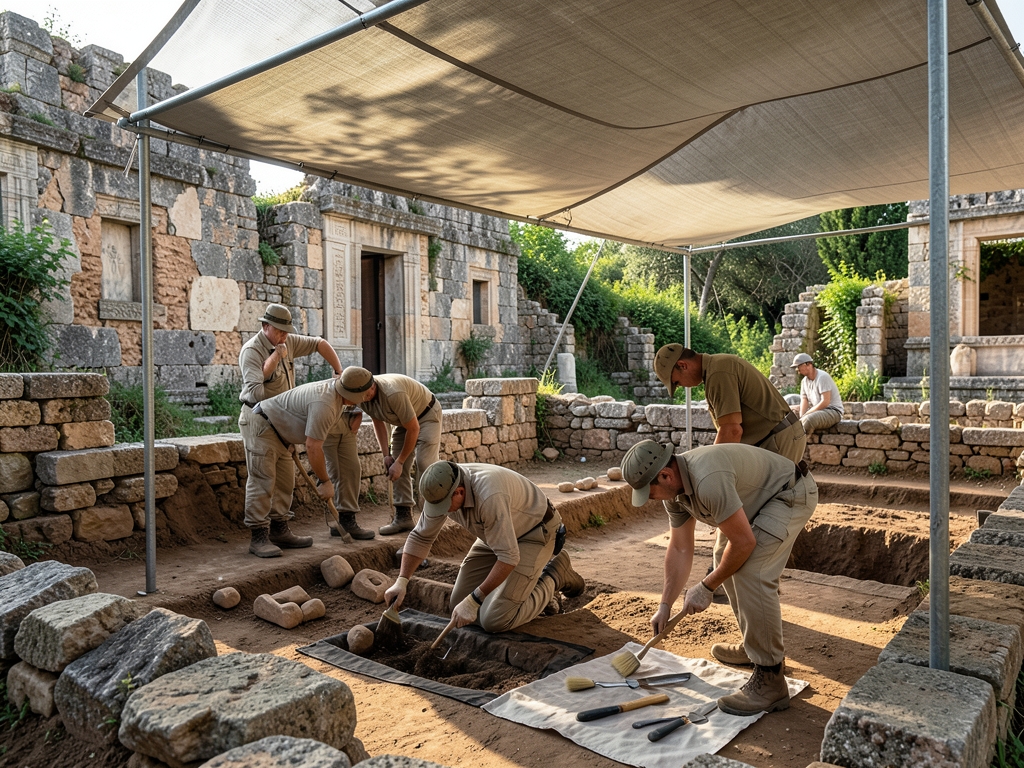
The process of uncovering ancient architectural marvels has been revolutionized by modern scientific methodologies. Today, archaeologists rely on non-invasive surveying tools, advanced 3D photogrammetry, stratigraphic analysis, and meticulous artifact cataloging to extract maximum data without compromising the structural integrity of the ruins. Environmental analysis of soil samples, pollen grains, and organic residues found within ancient floors further allows scientists to reconstruct the surrounding ecosystem, diet, and climate of the era.
Preserving these delicate structures presents a continuous challenge for heritage management teams. Once exposed to the elements, ancient stone and mortar are vulnerable to weathering, microbial growth, and anthropogenic pressures. Consequently, conservation strategies now incorporate protective shelters, chemical consolidation treatments, and digital archiving to ensure that these historical treasures endure for future generations of scholars and curious visitors alike.
Broader Implications for Historical Research
Every newly discovered chamber or artifact contributes a critical piece to the vast mosaic of human history. When researchers piece together the layout of a royal hall or analyze the contents of an ancient storeroom, they are not merely studying dead stones; they are recovering the lost voices of individuals who lived, worked, worshipped, and struggled within those walls. These discoveries challenge preexisting assumptions, fill gaps in historical chronicles, and demonstrate the remarkable continuity and diversity of human civilization across millennia.
What is the significance of discovering an ancient royal hall?
Discovering an ancient royal hall provides crucial insights into the political, administrative, and religious structures of past civilizations, revealing how elites governed and performed ceremonial duties.
How do archaeologists preserve excavated ancient architectural structures?
Archaeologists use protective shelters, chemical consolidation treatments, and digital archiving techniques to shield fragile ancient stone and mortar from environmental degradation after exposure.
What role did royal women typically play in ancient religious institutions?
Royal princesses and women often served as high priestesses, holding significant economic power, managing temple estates, and acting as vital intermediaries between the monarchy and the divine realm.
What modern technologies assist in contemporary archaeological excavations?
Modern excavations utilize 3D photogrammetry, non-invasive ground-penetrating radar, stratigraphic analysis, and environmental sampling of pollen and residues to gather detailed historical data safely.
As archaeological exploration continues to unearth forgotten chapters of our collective past, the commitment to rigorous scientific research and cultural preservation remains paramount. By bridging the gap between ancient material culture and modern historical inquiry, we ensure that the stories of ancient societies continue to enlighten and inspire modern global audiences.
