

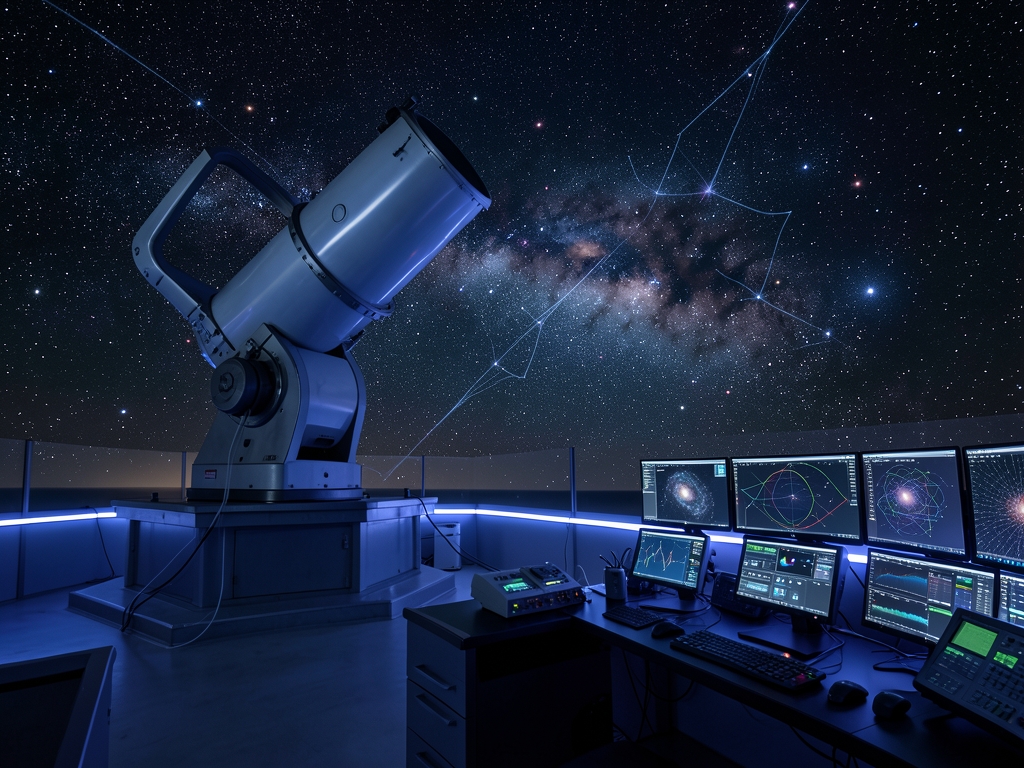
The scientific understanding of our cosmos has long rested on a foundation of dynamic, ever-changing measurements that challenge our deepest intuition about space and time. For decades, researchers, theoretical physicists, and astronomers worldwide have debated the ultimate fate of the universe, scrutinizing data gathered from distant supernovae, cosmic microwave background radiation, and large-scale galactic surveys. Recently, the discourse surrounding cosmological models received a profound stabilization when experts confirmed significant new insights regarding cosmic expansion. Rather than slowing down or stabilizing into a static equilibrium, the observable universe continues its outward surge at an accelerating rate, clearing up previous theoretical anxieties and providing fresh empirical backing for modern astrophysical frameworks.
This comprehensive exploration examines the verified findings announced by the Royal Astronomical Society, detailing what the latest measurements reveal about cosmic expansion, the underlying mechanisms driving this phenomenon, and the broader implications for our understanding of fundamental physics. By analyzing primary research updates and historical context, we can better appreciate how modern observational tools continue to refine humanity's view of the cosmos.
The Historical Context of Cosmic Expansion
To grasp the significance of recent announcements, one must first look back at how humanity's view of the universe evolved from a static model to an expanding reality. In the early twentieth century, pioneering observations by Edwin Hubble and theoretical work by Georges Lemaître demonstrated that distant galaxies are moving away from us in every direction. This discovery implied that the universe is not static, as classical Newtonian physics and early Einsteinian models initially assumed, but is actively expanding.
For decades, scientists debated whether the mutual gravitational attraction of all matter within the universe would eventually halt this expansion or even cause a gravitational contraction known as the Big Crunch. However, in the late 1990s, measurements of distant type Ia supernovae revealed an unexpected twist: the expansion of the universe is not decelerating due to gravity, but is actually speeding up. This discovery stunned the scientific community and led to the widespread adoption of the concept of dark energy—a mysterious, pervasive pressure driving galaxies apart against the pull of gravity.
The confirmation of accelerating cosmic expansion reinforces our reliance on observational data to map the unseen forces governing the structure and evolution of the universe.
Despite the robustness of the standard cosmological model, subsequent years brought debates, tensions, and occasional theoretical controversies. Discrepancies between different measurement techniques—such as those derived from the cosmic microwave background versus local distance ladders involving Cepheid variables—sparked lively scientific debates about whether our foundational models required radical revision or even whether a cosmological crisis was looming.
What the Latest Royal Astronomical Society Findings Reveal
The recent announcements from the Royal Astronomical Society offer reassuring clarity amidst these ongoing scientific discussions. By synthesizing advanced datasets and refining observational methodologies, researchers have addressed several lingering uncertainties concerning the rate and uniformity of cosmic acceleration.
The analysis confirms that the acceleration remains consistent with established theoretical predictions while ruling out various alternative scenarios that had proposed a slowing or stalling expansion rate. This confirmation acts as a stabilizing anchor for theoretical astrophysicists who rely on consistent baseline parameters to model galaxy formation, large-scale structure evolution, and the lifecycle of stars.
Furthermore, the refined measurements help mitigate some of the friction between early-universe and late-universe expansion rate estimates, commonly referred to in the scientific community as the Hubble tension. While the tension itself remains an active area of investigation, the new data provide higher-precision constraints that allow researchers to test theoretical adjustments with greater confidence.
Key Mechanisms Driving the Expansion
Understanding why the universe is expanding at an accelerating pace requires examining the two primary forces at play across cosmological scales: attractive matter and repulsive dark energy.
| Cosmological Component | Primary Influence | Behavior Across Time |
|---|---|---|
| Ordinary Matter | Attractive Gravity | Dilutes as volume increases |
| Dark Matter | Attractive Gravity | Forms scaffolding for galaxies |
| Dark Energy | Repulsive Pressure | Remains relatively constant |
As illustrated in the table above, ordinary matter and dark matter pull cosmic structures together, creating stars, galaxies, and galaxy clusters. In contrast, dark energy acts as a uniform repulsive pressure inherent to space itself. As the universe expands, the density of matter decreases, but the density of dark energy remains relatively stable. Consequently, as time progresses, dark energy increasingly dominates the dynamics of the cosmos, overpowering gravity on large scales and driving the observed acceleration.
Implications for Future Astrophysical Research
The confirmation of ongoing cosmic acceleration has profound implications for the future of astronomy, space exploration, and theoretical physics. With observational parameters more tightly constrained, upcoming space telescopes and ground-based observatories can plan targeted surveys designed to probe the exact nature of dark energy.
Info! Next-generation sky surveys will map billions of galaxies across unprecedented cosmic volumes to chart the exact history of expansion over billions of years.
Researchers are particularly interested in determining whether dark energy is a cosmological constant—a static energy density intrinsic to empty space—or a dynamic field that changes over time, often referred to as quintessence. Resolving this question will not only illuminate the ultimate fate of our universe—whether it ends in a prolonged cooling, a dispersion of all structures, or another cosmological scenario—but may also provide the crucial missing link needed to unify general relativity with quantum mechanics.
Practical Challenges in Measuring Cosmic Distances
Measuring the expansion rate of the universe is an extraordinary technical challenge that requires astronomers to construct a cosmic distance ladder. Because we cannot physically place a ruler across light-years of space, scientists must rely on standardized candles and geometric markers:
- Identifying nearby celestial reference points such as parallax measurements from space-based astrometry missions.
- Calibrating secondary distance indicators including Cepheid variable stars and pulsating stellar beacons.
- Leveraging distant type Ia supernovae as standardizable explosions to probe deep into the expanding cosmos.
- Comparing local measurements with ancient cosmic microwave background radiation maps to chart overall expansion history.
Each step in this ladder introduces observational challenges and potential sources of error, which is why ongoing refinements—such as those highlighted by recent expert confirmations—are vital for maintaining scientific accuracy.
What does it mean for the universe's expansion to be accelerating?
It means that not only are distant galaxies moving away from each other, but the speed at which they are separating is increasing over time due to the influence of dark energy.
Why did recent findings from the Royal Astronomical Society matter?
They provided higher-precision verification of cosmic acceleration, helping to resolve theoretical debates and stabilize standard cosmological models against alternative hypotheses.
What is dark energy and how does it relate to cosmic expansion?
Dark energy is an unknown form of energy that permeates all of space and exerts a repulsive force, counteracting gravity and driving the accelerated expansion of the universe.
Does this confirmation solve all questions in modern cosmology?
No, while it confirms acceleration and stabilizes current models, ongoing mysteries such as the exact nature of dark energy and the Hubble tension remain active areas of scientific research.
Ultimately, the continuous refinement of our cosmological models demonstrates the self-correcting nature of scientific inquiry. As observational instruments grow more sensitive and analytical techniques advance, humanity moves closer to unraveling the deepest mysteries of space, time, and the fundamental forces that shape our universe.
