

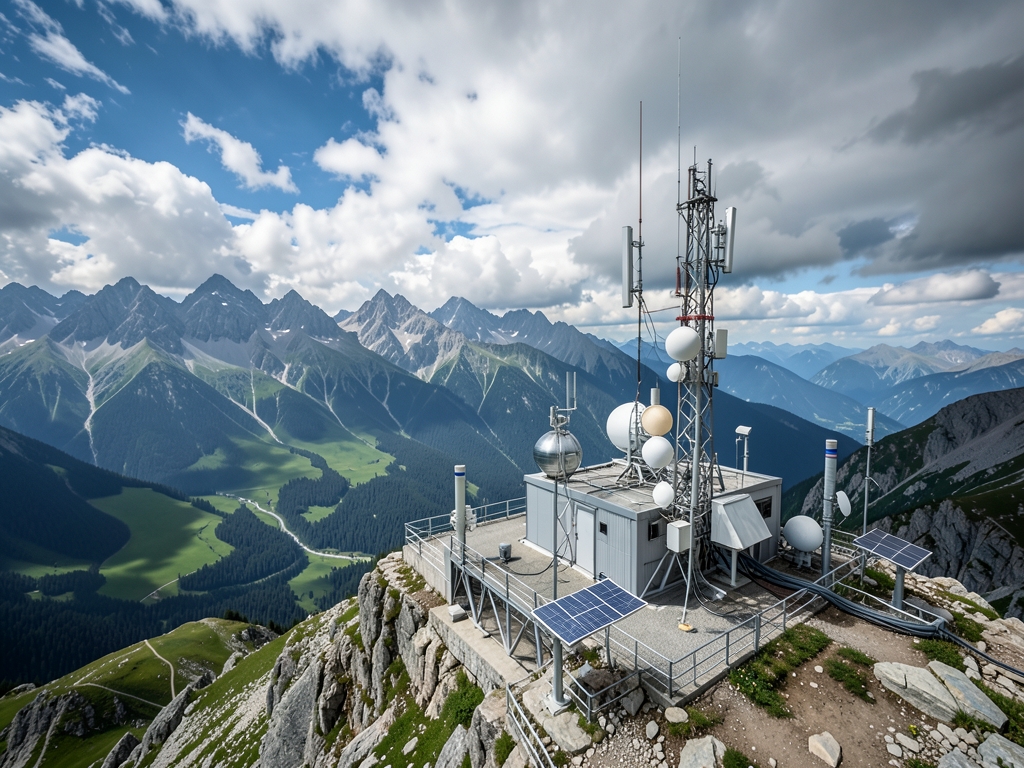
The global scientific community continuously monitors Earth's climatic vital signs, transforming raw atmospheric data into comprehensive assessments of planetary health. Recent reports issued by meteorological authorities highlight sustained upward trajectories in global temperatures, pressing environmental scientists across Europe, the United States, and international research institutions to re-evaluate established climate models. Understanding these shifts requires examining the empirical data, historical baselines, and physical mechanisms driving modern environmental transformations.
Earth's climate system operates through intricate feedback loops involving atmospheric composition, ocean heat absorption, cryosphere stability, and terrestrial carbon cycles. When greenhouse gas concentrations alter the radiative balance, excess thermal energy accumulates primarily within the world's oceans before manifesting as shifts in atmospheric circulation patterns. Researchers utilize global observation networks, satellite telemetry, and deep-sea buoy arrays to quantify these energy fluxes with high precision.
The Historical Baseline and Modern Temperature Anomalies
Evaluating modern temperature records requires a consistent reference period, typically defined as the pre-industrial baseline spanning from 1850 to 1900. During this era, industrial combustion and large-scale land-use changes had not yet driven exponential increases in atmospheric carbon dioxide and methane concentrations. Modern assessments measure ongoing anomalies against this foundational epoch to determine the magnitude of planetary warming.
Recent observational data compiled by international scientific bodies indicate that global mean surface temperatures continue to hover near critical thresholds. Specifically, assessments from the World Meteorological Organization point toward persistent multi-year anomalies reaching approximately 1.47 degrees Celsius above pre-industrial averages. These figures represent the culmination of decades of cumulative emissions and underscore the narrowing window for mitigating severe ecological impacts.
To contextualize these temperature metrics, researchers examine multi-decadal trends across diverse geographical zones:
- High-Latitude Amplification: Arctic and sub-polar regions warm at rates significantly exceeding the global average, accelerating permafrost degradation and reducing sea ice extent.
- Ocean Heat Content: Marine basins absorb more than ninety percent of excess anthropogenic heat, driving thermal expansion and altering marine ecosystem dynamics.
- Atmospheric Moisture Capacity: Warmer air holds exponentially more water vapor, intensifying precipitation extremes and fueling severe convective weather events globally.
- Cryospheric Retreat: Mountain glaciers and continental ice sheets experience net mass loss, contributing to long-term sea-level rise and altering freshwater availability.
Primary Drivers of Contemporary Climate Variability
While long-term anthropogenic warming establishes the overarching trajectory of global temperatures, natural climate modes introduce significant year-to-year variability. Phenomena such as the El Niño-Southern Oscillation interact dynamically with background warming trends, occasionally supercharging seasonal temperatures and shifting regional precipitation regimes across the globe.
During positive El Niño phases, warmer subsurface waters in the central and eastern tropical Pacific release vast amounts of thermal energy into the atmosphere. This interaction frequently results in record-breaking global monthly temperature averages and triggers cascading weather anomalies, ranging from prolonged droughts in tropical ecosystems to severe storm tracks across temperate latitudes. Climatologists separate these cyclical oscillations from long-term trends by analyzing multi-decadal smoothing filters and ocean heat content anomalies.
Info! Natural climate oscillations modulate short-term weather patterns, but long-term atmospheric warming is driven by cumulative greenhouse gas emissions from human activities.
In addition to oceanic cycles, aerosol concentrations, solar irradiance variations, and volcanic eruptions exert secondary influences on short-term radiative forcing. However, extensive empirical analysis confirms that none of these natural factors account for the rapid, sustained thermal acceleration observed over the past fifty years.
Evaluating Mitigation and Adaptation Frameworks
As international policy forums convene to address mounting environmental risks, governments and scientific organizations increasingly focus on actionable adaptation strategies alongside emission reduction targets. Adaptation finance, resilient infrastructure development, and ecosystem-based management have become central pillars of global climate policy.
Vulnerable coastal communities, agricultural sectors, and urban centers require targeted interventions to withstand rising sea levels, prolonged heatwaves, and water scarcity. Financial mechanisms designed to support ecosystem restoration—such as protecting mangrove forests, expanding marine protected areas, and preserving terrestrial carbon sinks—offer dual benefits for biodiversity conservation and climate resilience.
The integration of rigorous scientific observation with adaptive policy frameworks remains essential for navigating the complex ecological realities of a rapidly warming world.
Furthermore, technological innovations in environmental monitoring, such as advanced satellite constellations and AI-powered meteorological modeling, enable researchers to forecast extreme weather risks with greater lead times. These tools empower emergency response agencies and agricultural planners to mitigate potential disruptions before they impact vulnerable populations.
| Indicator Category | Primary Observation Method | Observed Trend | Ecological Implication |
|---|---|---|---|
| Surface Temperature | Global Weather Stations and Buoys | Sustained positive anomalies near 1.47°C | Increased thermal stress on terrestrial and marine species |
| Ocean Heat Content | Argo Float Arrays and Satellites | Unprecedented heat accumulation | Coral bleaching and altered marine migration pathways |
| Sea Ice Extent | Remote Sensing Satellites | Declining winter and summer coverage | Disruption of polar food webs and indigenous livelihoods |
| Extreme Precipitation | Ground Radar and Satellite Telemetry | Increased frequency of high-intensity events | Soil erosion, urban flooding, and infrastructure strain |
Looking Ahead: Scientific Priorities for the Coming Decade
Addressing the multifaceted challenges posed by ongoing climate shifts requires sustained investment in fundamental earth science research. Priority areas include improving cloud-feedback models, expanding ocean observation networks in under-sampled marine basins, and refining regional downscaling techniques to provide localized risk assessments for municipal planners.
Collaboration between academic institutions, governmental agencies, and international science bodies ensures that empirical data remains accessible and transparent. By maintaining rigorous standards of peer review and open data sharing, the scientific community equips decision-makers with the reliable evidence needed to formulate effective, long-term environmental strategies.
What is the pre-industrial baseline used in climate research?
The pre-industrial baseline generally refers to the global temperature average recorded between 1850 and 1900, before widespread industrial activity significantly increased greenhouse gas concentrations in the atmosphere.
How do natural climate cycles like El Niño affect global temperatures?
El Niño phases release stored heat from the tropical Pacific Ocean into the atmosphere, temporarily supercharging global temperatures and altering regional weather patterns on top of the long-term warming trend.
Why do high-latitude regions warm faster than the rest of the planet?
Polar regions experience amplified warming primarily due to the ice-albedo feedback, where melting reflective ice exposes darker ocean or land surfaces that absorb more solar radiation.
What role do oceans play in mitigating atmospheric warming?
World oceans absorb over ninety percent of the excess heat generated by anthropogenic greenhouse gas emissions, acting as a massive thermal buffer that slows down atmospheric temperature increases.
In conclusion, tracking planetary environmental indicators provides an objective foundation for understanding the trajectory of Earth's climate system. As empirical research continues to refine our comprehension of thermal dynamics, feedback mechanisms, and regional impacts, society remains challenged to align policy and conservation efforts with the clear empirical evidence gathered by the global scientific community.
