

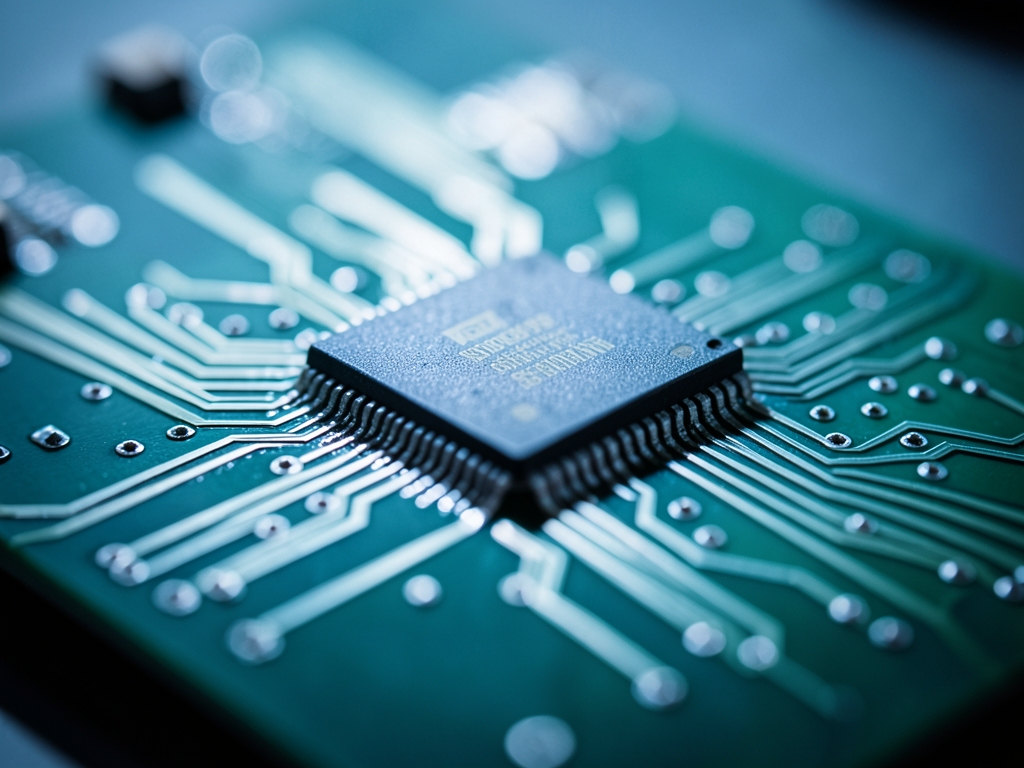
The landscape of embedded systems and industrial computing is undergoing a profound structural transformation. As artificial intelligence workloads shift away from centralized cloud data centers toward localized hardware, semiconductor manufacturers are racing to deliver silicon that can execute complex neural network models directly on edge devices. In this rapidly evolving sector, STMicroelectronics has officially unveiled the STM32A series, a dedicated family of edge AI processors engineered specifically for automotive, industrial, and robotics applications. This launch addresses the critical industry demand for high-throughput, low-latency machine learning execution in resource-constrained environments where cloud connectivity is either unreliable, too slow, or restricted by data privacy mandates.
Modern edge applications, from autonomous manufacturing floors to advanced driver-assistance systems, require hardware capable of performing real-time computer vision, predictive maintenance, and sensor fusion without draining excessive battery power or relying on continuous internet access. The introduction of the STM32A lineup marks a major milestone in micro-controller and micro-processor architecture, combining traditional real-time control capabilities with powerful neural processing units. Industry analysts and embedded system engineers have closely monitored these developments, as edge AI integration dictates the next wave of automation across Europe, the United States, and global manufacturing hubs.
Understanding Edge AI Architecture in Modern Silicon
To appreciate the significance of the STM32A launch, it is essential to examine how edge processing differs from conventional cloud computing. Traditional microcontrollers excel at deterministic, low-power control tasks such as reading temperature sensors, adjusting motor speeds, or managing power supplies. However, running machine learning models—such as convolutional neural networks for object detection or recurrent neural networks for acoustic anomaly detection—requires massive parallel matrix multiplication capabilities that traditional CPU cores struggle to deliver efficiently.
The architecture of modern edge AI chips integrates specialized hardware blocks, including dedicated neural processing units (NPUs), enhanced digital signal processors (DSPs), and accelerated memory subsystems. By offloading neural network inference from the main CPU to a dedicated hardware accelerator, systems can execute complex AI algorithms consuming a fraction of the power. This architectural shift dramatically reduces thermal output and extends the operational lifespan of deployed hardware in harsh industrial environments. Furthermore, local execution ensures that sensitive data, such as video feeds from security cameras or proprietary manufacturing telemetry, remains on the device, mitigating privacy risks associated with cloud transmission.
Key Features and Capabilities of the STM32A Series
The STM32A series introduces several architectural advancements tailored for demanding commercial deployments. Designed to bridge the gap between low-power microcontrollers and high-performance application processors, the new chip family incorporates robust security frameworks, high-speed interface options, and scalable processing tiers.
- Dedicated Neural Accelerators: Integrated hardware NPUs optimized for executing quantized machine learning models with minimal latency.
- Real-Time Determinism: Preservation of hard real-time execution capabilities for critical safety loops in automotive and robotics applications.
- Enhanced Security Infrastructure: Hardware-based cryptographic engines, secure boot mechanisms, and protected storage to thwart sophisticated cyber attacks at the hardware level.
- Scalable Software Ecosystem: Comprehensive development toolchains that allow developers to import models trained in popular frameworks like TensorFlow Lite and PyTorch directly onto the silicon.
These capabilities make the STM32A particularly attractive for automotive Tier-1 suppliers and industrial automation equipment manufacturers who must comply with stringent functional safety standards such as ISO 26262. By providing pre-certified hardware blocks and robust software libraries, STMicroelectronics aims to shorten development cycles and reduce time-to-market for next-generation smart devices.
Impact on Automotive and Robotics Industries
The automotive and robotics sectors stand to benefit immensely from the proliferation of edge AI silicon. In modern vehicles, Electronic Control Units (ECUs) are increasingly tasked with processing data from myriad sensors, including LiDAR, radar, ultrasonic arrays, and high-definition cameras. Relying on remote servers for split-second collision avoidance decisions is impractical due to network latency and potential connection drops. Edge processors like the STM32A enable localized, instantaneous decision-making directly within the vehicle architecture.
Similarly, in industrial robotics, autonomous mobile robots (AMRs) operating in dynamic warehouse environments must map their surroundings, identify obstacles, and adjust their navigation paths in milliseconds. Traditional industrial controllers often lack the computational horsepower to run simultaneous localization and mapping (SLAM) algorithms alongside deep learning-based object recognition. The integration of advanced edge AI chips empowers these robots to operate with greater autonomy, safety, and precision, reducing the need for expensive infrastructure modifications inside manufacturing plants.
Broader Hardware Trends: Balancing Performance and Supply Chain Realities
The release of the STM32A series occurs against a complex backdrop of global semiconductor manufacturing dynamics. As highlighted by recent industry data and supply chain assessments, hardware manufacturers face ongoing challenges related to advanced substrate shortages, packaging bottlenecks, and the surging global demand for specialized AI infrastructure. While major cloud providers continue to absorb vast quantities of high-end data center GPUs, the edge computing market demands cost-effective, high-yield silicon that can be manufactured at scale without triggering prohibitive supply delays.
Engineers and procurement teams are increasingly prioritizing hardware versatility and long-term component availability. Industrial installations often have lifespans exceeding a decade, requiring semiconductor vendors to guarantee sustained production and software support. STMicroelectronics' long-standing commitment to extended product lifecycle management aligns well with these enterprise requirements, offering a stable foundation for industrial deployments that cannot afford frequent hardware redesigns.
| Feature / Specification | Traditional Microcontrollers | STM32A Edge AI Series |
|---|---|---|
| Neural Processing Unit (NPU) | Absent or software-emulated | Dedicated hardware acceleration |
| Inference Efficiency | Low throughput, high CPU load | High throughput, minimal CPU overhead |
| Safety Compliance | Standard industrial ratings | Automotive and industrial functional safety certified |
| Target Applications | Basic I/O control and sensing | Automotive ADAS, robotics, edge vision |
Security Considerations for Edge AI Deployments
As intelligent devices become more pervasive, they also become prime targets for malicious actors. Vulnerabilities in edge firmware or exposed machine learning models can lead to intellectual property theft, unauthorized device manipulation, or catastrophic failures in critical infrastructure. Consequently, modern chip designs must incorporate rigorous defense-in-depth strategies.
Info! Hardware-level root of trust implementation ensures that unauthorized firmware modifications are blocked before the device boots up, safeguarding operational integrity.
Manufacturers are placing unprecedented emphasis on secure boot, encrypted memory interfaces, and isolated execution environments. When deploying AI models at the edge, protecting the model weights from reverse engineering is equally critical, as proprietary neural networks represent significant research and development investments. The integration of advanced cryptographic accelerators within the STM32A architecture reflects this industry-wide shift toward secure-by-design hardware principles.
Furthermore, maintaining software security requires diligent patching and lifecycle updates. Just as enterprise software platforms and server operating systems routinely schedule high-severity security fixes, embedded devices deployed in the field must support secure over-the-air (OTA) firmware updates to address newly discovered vulnerabilities without requiring physical intervention.
What are the primary target markets for the STM32A chip series?
The STM32A series is primarily targeted at automotive applications, industrial automation, and advanced robotics, where real-time edge processing and low power consumption are essential.
How do edge AI chips differ from standard microcontrollers?
Edge AI chips incorporate dedicated neural processing units (NPUs) and hardware accelerators designed to run machine learning inferences efficiently, whereas standard microcontrollers rely solely on general-purpose CPU cores for control tasks.
Are these processors compliant with automotive safety standards?
Yes, the STM32A lineup is engineered to support stringent functional safety standards such as ISO 26262, making them suitable for critical automotive and industrial control systems.
What software frameworks are supported for model deployment?
Developers can import pre-trained machine learning models from popular frameworks like TensorFlow Lite and PyTorch using STMicroelectronics' dedicated development toolchains and software libraries.
The introduction of STMicroelectronics' STM32A series underscores the accelerating maturation of edge computing technology. By combining specialized neural acceleration with rigorous hardware security and real-time operational determinism, the semiconductor industry is equipping engineers with the tools necessary to build smarter, safer, and more autonomous systems. As these processors find their way into commercial vehicles, automated factories, and advanced robotics platforms, the boundary between cloud intelligence and local hardware execution will continue to blur, paving the way for the next generation of intelligent machines.
