

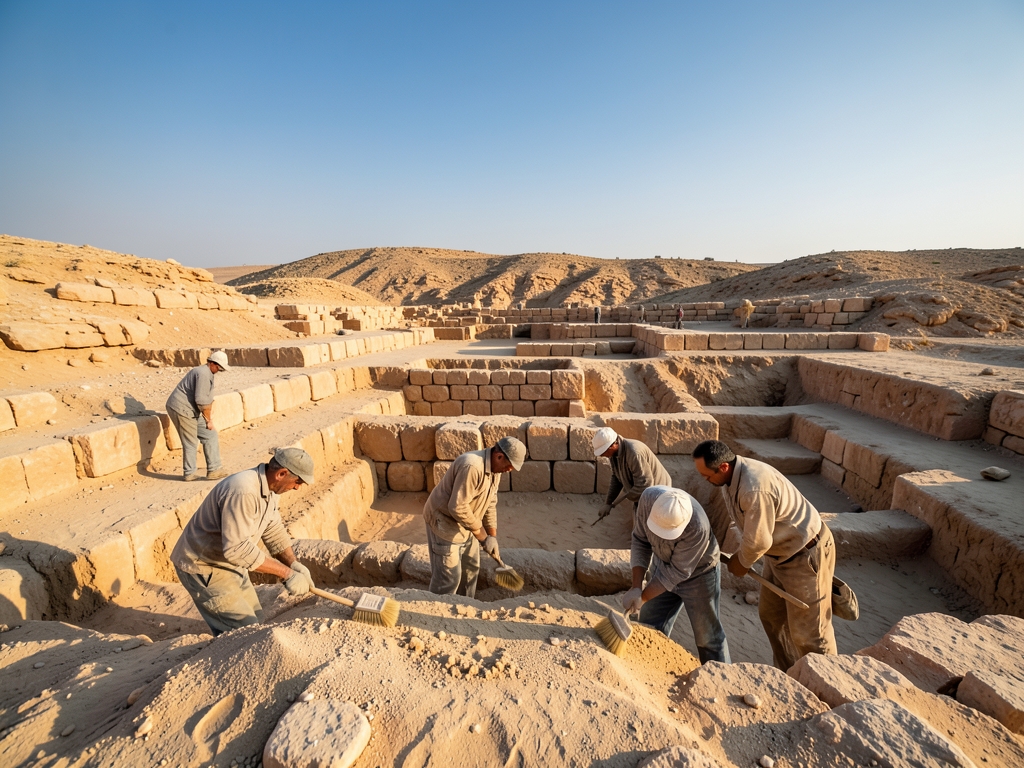
Archaeology serves as the vital bridge connecting contemporary societies to the complex webs of trade, culture, and governance that defined past civilizations. Recent international collaborative initiatives continue to illuminate these ancient pathways, offering scholars and the public unprecedented clarity regarding how early regional kingdoms interacted across shared maritime and terrestrial borders. A prominent example of this ongoing scholarly commitment is the recent formal partnership established between leading cultural institutions in the United Arab Emirates and the Kingdom of Bahrain, focusing on historical exploration at a globally recognized archaeological landmark.
Understanding the depth of human occupation in the Arabian Gulf requires rigorous fieldwork, multi-institutional cooperation, and advanced scientific analysis. By combining resources, expertise, and archival methodologies, modern archaeological teams can re-examine foundational layers of history that have remained largely obscured for centuries. This comprehensive overview explores the significance of recent institutional joint ventures, the historical weight of designated excavation zones, and how modern heritage management shapes our understanding of ancient civilization.
The Partnership Between Zayed National Museum and Bahrain National Museum
The formal announcement of a joint archaeological project between the Zayed National Museum in Abu Dhabi and the Bahrain National Museum marks a significant milestone in regional cultural diplomacy and scientific cooperation. Official announcements released by regional media offices detailed how this bilateral agreement aims to deepen historical understanding of the shared heritage binding the Gulf nations together. Rather than operating in isolated academic silos, researchers from both institutions will pool their expertise in stratigraphy, artifact conservation, and ancient material culture.
Cooperative archaeological initiatives of this scale typically involve shared field schools, exchange programs for junior researchers, and joint laboratory analyses of unearthed organic and inorganic materials. By coordinating excavation methodologies, both museums ensure that data recovery adheres to the highest international standards of archaeological recording. This collaborative framework not only accelerates the pace of discovery but also fosters a unified approach to preserving and interpreting the fragile material remains of ancient societies.
Excavation Focus at Qal'at al-Bahrain
The focal point of this collaborative excavation is Qal'at al-Bahrain, also known as the Bahrain Fort, which stands as one of the most important archaeological sites in the Arabian Gulf. Designated as a UNESCO World Heritage Site, Qal'at al-Bahrain is a multilayered artificial hill, or tell, created by successive human occupation spanning several millennia. The site served as the capital of the ancient civilization of Dilmun, a central trading hub that connected ancient Mesopotamia and the Indus Valley.
Stratigraphic excavations at Qal'at al-Bahrain have historically revealed multiple distinct architectural cities built one on top of the other, ranging from around 2300 BCE up to the sixteenth century CE. These layers contain monumental administrative structures, residential quarters, defensive fortifications, and extensive industrial areas dedicated to copper smelting and maritime trade. The new project launched by the Zayed National Museum and the Bahrain National Museum aims to target specific unexcavated or underexplored sectors of the tell, seeking fresh insights into the daily life, economic systems, and diplomatic exchanges that sustained Dilmun at its commercial peak.
| Historical Period | Key Characteristics | Archaeological Evidence |
|---|---|---|
| Early Dilmun Period | Rise of regional maritime trade and urban centers | Distinctive burial mounds, stamp seals, and early copper workshops |
| Middle Dilmun Period | Integration into broader Mesopotamian trade networks | Cuneiform references, administrative complexes, and imported pottery |
| Kassite Period | Administrative reorganization and external political influence | Monumental architecture, official seals, and altered fortifications |
| Portuguese Era | Construction of defensive military fortifications | Stone bastions, European firearms, and remodeled structural layouts |
The Role of Material Culture in Unwritten Histories
One of the persistent challenges faced by historians studying ancient Gulf societies is the relative scarcity of extensive native written records compared to regions like Mesopotamia or Egypt. While foreign administrative texts occasionally mentioned Dilmun as a prosperous emporium of copper, ivory, and pearls, the daily realities of its inhabitants must be reconstructed primarily through material culture. Archaeologists rely heavily on pottery typologies, metal implements, architectural remains, and bioarchaeological samples to piece together economic shifts and social structures.
Advanced scientific techniques now play an indispensable role in extracting data from these physical remnants. Organic residue analysis on ceramic vessels can identify ancient dietary habits and stored commodities such as oil, wine, or dates. Meanwhile, zooarchaeological and paleobotanical studies examine animal bones and plant remains recovered from excavation trenches, revealing how ancient populations adapted to arid coastal environments, managed livestock, and utilized marine resources. The integration of these scientific protocols into modern excavations ensures that every fragment of earth yields maximum historical context.
International Collaboration and Museum Diplomacy
Beyond immediate academic gains, joint archaeological projects serve broader cultural and diplomatic objectives. By uniting researchers across national boundaries, these initiatives strengthen institutional ties and promote mutual respect for shared regional history. Museums such as the Zayed National Museum and the Bahrain National Museum act as custodians of collective memory, translating complex stratigraphical data into engaging exhibitions that educate the broader public.
Exhibitions curated from collaborative excavations often feature rare artifacts, interactive displays, and digital reconstructions that bring ancient ruins to life for international visitors. This public outreach is vital for engendering appreciation for heritage preservation. As urbanization and climate pressures continue to threaten archaeological landscapes across the globe, high-profile institutional partnerships draw necessary attention and funding to safeguarding vulnerable historical strata.
Challenges in Modern Archaeological Conservation
Conducting archaeological fieldwork in arid coastal environments presents unique technical and logistical challenges. High ambient temperatures, shifting sands, and high water tables can severely complicate excavation and artifact preservation. Once organic materials or delicate metallic objects are exposed to the atmosphere after millennia underground, they are highly susceptible to rapid degradation unless immediate conservation measures are applied in the field.
Modern conservation science requires trained specialists on-site during every phase of excavation to stabilize fragile finds before transportation to climate-controlled laboratory facilities. Furthermore, urban development surrounding historical sites like Qal'at al-Bahrain necessitates careful zoning and non-invasive remote sensing surveys, such as ground-penetrating radar and magnetometry, to map subterranean features without disturbing deeper archaeological deposits. Balancing the demands of modern infrastructure growth with the imperative of heritage protection remains an ongoing priority for regional authorities and museum directors.
The Broader Impact on Regional Heritage Tourism
Archaeological research does not exist in a vacuum; it directly feeds into cultural tourism strategies and educational curricula across the Middle East. Well-preserved and thoroughly studied sites like Qal'at al-Bahrain provide tangible destinations where visitors can witness history firsthand. When national museums collaborate on active research, the resulting discoveries frequently form the centerpiece of new gallery installations, temporary international exhibitions, and digital archives accessible to global audiences.
This dynamic flow of knowledge enriches global scholarship while reinforcing local identity. By training local students and early-career archaeologists in advanced excavation techniques and conservation methods, projects sponsored by institutions like the Zayed National Museum build sustainable domestic capacity for future heritage management. These educational investments ensure that the stewardship of ancient history remains anchored within the communities directly connected to these ancestral landscapes.
Info! Collaborative international archaeology projects adhere to strict ethical guidelines, ensuring that all recovered artifacts remain under the legal protection and stewardship of the host nation's national antiquities authorities.
As fieldwork progresses at Qal'at al-Bahrain, scholars anticipate uncovering further evidence regarding the intricate commercial and cultural networks that spanned the ancient Near East. Through sustained institutional commitment, rigorous scientific methodology, and international cooperation, the obscured chapters of Gulf history continue to be brought to light, offering profound insights into the resilience and ingenuity of early human societies.
What is the primary goal of the Zayed National Museum and Bahrain National Museum project?
The project aims to launch a joint archaeological excavation at Qal'at al-Bahrain to explore shared regional history, enhance research methodologies, and deepen understanding of ancient civilizations in the Gulf.
Why is Qal'at al-Bahrain historically significant?
Qal'at al-Bahrain is a UNESCO World Heritage Site that served as the capital of the ancient Dilmun civilization, functioning as a major trading hub linking Mesopotamia and the Indus Valley for millennia.
How do archaeologists study periods with few written records?
When written records are scarce, archaeologists rely on material culture, including pottery typologies, metal artifacts, architectural remains, organic residue analysis, and bioarchaeological samples.
What measures are taken to protect fragile artifacts during excavations?
Trained conservation specialists work directly on-site during excavations to stabilize delicate organic and metallic finds immediately upon exposure before transferring them to climate-controlled facilities.
Ultimately, these ongoing archaeological endeavors underscore the enduring value of international scholarly cooperation. By uncovering the material foundations of ancient trade and societal development, researchers ensure that the rich historical tapestry of the region is preserved and understood for generations to come.
Sources and Further Reading
- UAE's Zayed museum, Bahrain launch archaeological project to explore shared history - Khaleej Times — Khaleej Times (published 2026-11-16 10:02)
- Zayed National Museum and Bahrain National Museum launch archaeological excavation project at Qal’at al-Bahrain - مكتب أبوظبي الإعلامي — مكتب أبوظبي الإعلامي (published 2026-11-16 08:10)
