

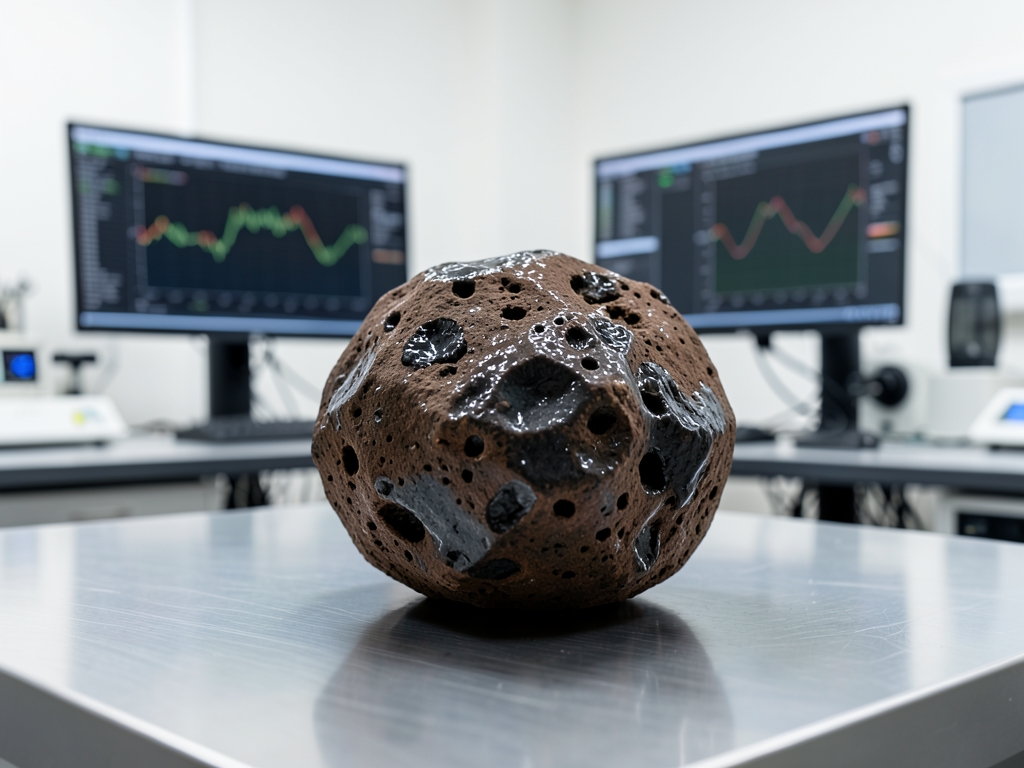
Scientists examining an extraordinary 4.1-billion-year-old Martian meteorite discovered in Mali have uncovered critical new evidence regarding when and how the Red Planet may have possessed an environment capable of supporting liquid water and early planetary stability. This remarkable geological specimen provides researchers with a rare window into the primordial conditions of our solar system, offering fresh insights into the planetary evolution of Mars during its earliest epoch known as the Noachian period. As planetary geologists and astrobiologists push the boundaries of chronological dating and mineralogical analysis, this discovery stands as a major milestone in understanding why Earth and Mars diverged onto such drastically different evolutionary paths.
Unveiling the 4.1-Billion-Year-Old Martian Rock From Mali
The meteorite, recovered from the arid terrain of Mali, has undergone rigorous examination by international research teams utilizing advanced mass spectrometry and microscopic imaging techniques. Radiometric dating of the rock's mineral grains places its crystallization at approximately 4.1 billion years ago. This timeframe aligns precisely with the transition from the heavy bombardment era of the inner solar system to a period when planetary surfaces began cooling and stabilizing.
What makes this specific sample exceptionally valuable to the scientific community is its pristine preservation state despite enduring an impact violent enough to eject it from the Martian crust and send it on a multi-million-year journey through interplanetary space before landing on Earth. Unlike younger volcanic shergottites that make up the vast majority of known Martian meteorites, this ancient fragment formed during a time when orbital and atmospheric models suggest Mars was actively shaped by extensive hydrologic activity.
"Finding a rock that preserves the chemical signature of the 4.1-billion-year-old Martian crust is like finding a missing chapter in a planetary biography," notes recent planetary science literature regarding primordial meteorite discoveries. "It allows us to test hypotheses about early atmospheres and crustal weathering with unprecedented physical evidence."
Detailed mineralogical breakdowns indicate the presence of altered silicate phases and trapped volatile compounds that could only form in the presence of circulating water. These chemical markers reinforce the growing consensus that early Mars was not merely a frozen desert from its inception, but rather a dynamic world that experienced prolonged episodes of surface moisture, thick greenhouse-gas-trapping atmospheres, and active chemical weathering cycles.
Comparing Early Earth and Early Mars Geological Records
During the Hadean and early Archean eons, Earth and Mars shared remarkably similar planetary trajectories. Both rocky worlds were subjected to intense asteroid impacts, volcanic outgassing, and intense solar radiation. However, while plate tectonics and biological activity on Earth continuously recycled its crust—erasing almost all direct geological evidence from Earth's first 500 million years—Mars retained much of its ancient crust largely undisturbed by global plate recycling.
Because Mars acted as a planetary time capsule, examining rocks like the Mali meteorite provides indirect clues about what conditions on early Earth might have been like when prebiotic chemistry was first taking root. The similarities in mineral composition suggest that impact-induced hydrothermal systems were widespread across both planets, creating localized warm, wet environments that could have fostered complex organic reactions.
| Planetary Feature | Early Mars (4.1 Billion Years Ago) | Early Earth (4.1 Billion Years Ago) |
|---|---|---|
| Crustal Recycling | Minimal global plate tectonics | Active tectonic subduction and resurfacing |
| Hydrologic Activity | Extensive surface water, valley networks, and lakes | Global oceans and primordial seas |
| Atmospheric Composition | CO2-rich with significant water vapor | Reducing atmosphere rich in nitrogen, CO2, and steam |
| Preservation of Ancient Record | High (ancient crust preserved across southern highlands) | Very low (modified by continuous geological activity) |
Analytical Techniques Used to Verify Martian Origin
Confirming that a meteorite originated from Mars rather than an asteroid or the Moon requires meticulous multi-stage verification. When a large impactor strikes Mars, the extreme shock pressure melts surrounding rock, trapping tiny bubbles of atmospheric gas within pockets of glass. When laboratories analyze these trapped gases, their isotopic ratios—specifically nitrogen, argon, krypton, and xenon—match the exact atmospheric signature measured directly on the Martian surface by Viking landers and subsequent NASA rovers.
Info! Isotopic fingerprinting remains the definitive gold standard in meteoritics, allowing scientists to distinguish between asteroidal, lunar, and Martian origins with absolute certainty.
Furthermore, the specific ratio of iron to manganese in olivine and pyroxene minerals within the Mali sample falls squarely into the distinct geochemical signature established by known Martian meteorites. Advanced synchrotron radiation X-ray fluorescence and electron microprobe analysis allow researchers to map these elemental distributions down to the sub-micron level without destroying the irreplaceable sample.
Implications for the Search for Ancient Biosignatures
Understanding the duration and stability of the "Earth-like" phase of Mars directly impacts current exploration strategies carried out by robotic emissaries such as NASA's Perseverance rover in Jezero Crater and the European Space Agency's ExoMars program. If liquid water persisted on the Martian surface longer than previously modeled, the window of opportunity for prebiotic chemistry or primitive microbial life to emerge would have been significantly expanded.
However, the rapid loss of the Martian magnetic field approximately 4.0 to 3.7 billion years ago stripped the planet of its protective magnetosphere, leading to solar wind stripping of its thick atmosphere and the subsequent freezing or evaporation of its surface waters. The Mali meteorite captures the critical juncture right at the edge of this planetary catastrophe, recording the physical and chemical conditions just before the environment deteriorated into the cold, arid landscape observed today.
- Impact Ejection: A major asteroid strike on the Martian surface over 4.1 billion years ago shatters and melts primordial crust, launching rock fragments into escape trajectory.
- Interplanetary Transit: The fragment travels through space for millions of years, largely shielded from cosmic ray alteration until its atmospheric entry.
- Terrestrial Recovery: The meteorite lands in Mali, where weathering processes preserve its mineralogical integrity until scientific recovery and cataloging.
- Anaytical Decoding: Laboratories apply mass spectrometry and isotopic analysis to confirm Martian origin and date crystallization.
Future Research Directions in Meteorite Science
As international consortia continue to study the Mali sample, upcoming research will focus on isolating microscopic fluid inclusions to analyze the exact salinity and pH of the water that interacted with the rock billions of years ago. These findings will feed directly into advanced climate models, helping scientists reconstruct the atmospheric pressure and greenhouse gas concentrations of early Mars with greater fidelity.
The discovery also underscores the vital importance of pristine meteorite recovery networks across deserts and ice sheets globally. Each recovered stone represents a unique data point from worlds we cannot yet visit in person, bridging the gap between telescopic observation and ground-truth geochemistry.
How do scientists know this meteorite came from Mars?
Scientists confirm Martian origin by analyzing trapped gases inside shock-melted glass pockets within the rock. The isotopic ratios of elements like argon, nitrogen, and carbon dioxide match the exact atmospheric measurements recorded on the surface of Mars by NASA landers and rovers.
Why is a 4.1-billion-year-old rock important for studying early Mars?
This timeframe coincides with the Noachian period, when Mars is believed to have had an active hydrologic cycle with liquid water, a thicker atmosphere, and conditions much more similar to early Earth than its current frozen state.
Where was the meteorite discovered?
The ancient meteorite was recovered from the arid desert terrain of Mali in West Africa, an environment ideal for preserving fallen extraterrestrial rocks due to low moisture and minimal organic contamination.
Does this discovery prove life once existed on Mars?
No, the discovery does not prove life existed. Instead, it provides physical evidence that liquid water and stable environmental conditions persisted during a crucial window, which increases the plausibility that habitable conditions once existed on the planet.
Conclusion
The analysis of the 4.1-billion-year-old Martian meteorite from Mali represents a significant triumph for modern planetary science. By unlocking the chemical secrets preserved within this ancient rock, researchers gain a clearer understanding of how rocky planets evolve, how atmospheres are lost, and how the early inner solar system managed to foster environments capable of sustaining liquid water. As laboratory techniques continue to advance, these extraterrestrial messengers will continue to reshape our comprehension of planetary history and our place in the cosmos.
Sources and Further Reading
- ‘Never found one like this before’: Scientists examine 4.1-billion-year-old Martian rock to pinpoint when the Red Planet was ‘Earth-like’ - The Economic Times — The Economic Times (published 2026-10-30 08:25)
- Mali meteorite formed more than 4.1 billion years ago, study finds - Operativ Məlumat Mərkəzi — Operativ Məlumat Mərkəzi (published 2026-10-30 05:24)
- Ancient Martian meteorite discovered in Mali formed over 4.1 billion years ago: Study - Anadolu Ajansı — Anadolu Ajansı (published 2026-10-30 05:17)
