

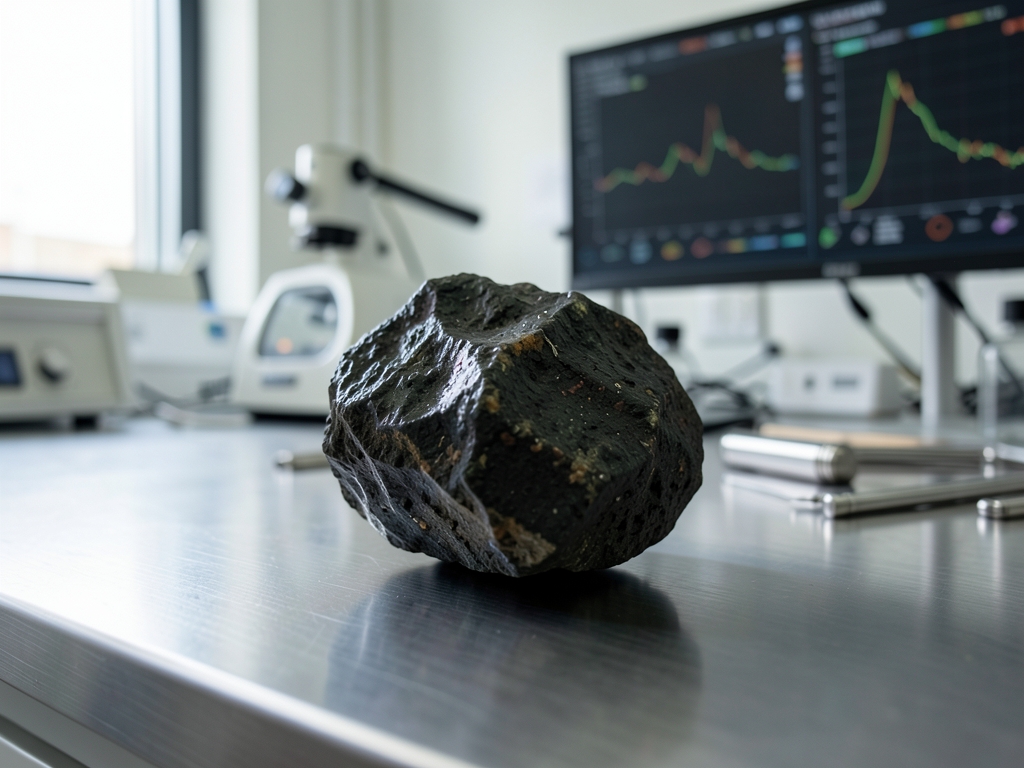
The search for liquid water beyond Earth has driven planetary exploration for decades, transforming how humanity understands its place in the cosmos. Recent scientific investigations into ancient rocks originating from the Red Planet continue to reshape our comprehension of early Martian history. Researchers examining exceptionally old space rocks have uncovered vital chemical and physical clues regarding the ancient environment of our neighboring world. These findings provide unprecedented windows into epochs billions of years ago when active aquatic systems may have shaped the planetary surface.
Understanding how water behaved on early Mars requires meticulous laboratory analysis of meteorites that survived fiery impacts and interplanetary journeys before landing on Earth. By applying advanced spectroscopy, isotopic analysis, and microscopic imaging, modern geochemists can read the geological history locked inside tiny mineral grains. This article examines the latest scientific insights derived from ancient Martian meteorites, exploring what these extraterrestrial samples reveal about planetary evolution, past water activity, and the enduring quest to determine whether habitable conditions ever existed beyond Earth.
The Geological Significance of Ancient Martian Meteorites
Meteorites originating from Mars represent some of the rarest and most scientifically valuable objects available to researchers. Ejected from the Martian surface by massive impact events millions of years ago, these rocks travel through the solar system before eventually intersecting Earth's orbit. When they land in arid regions such as the Sahara Desert or Antarctic ice sheets, scientists recover them under sterile conditions to prevent terrestrial contamination.
Dating techniques applied to these planetary fragments often reveal astonishing ages exceeding four billion years. This places their formation squarely within the Noachian period of Martian history, an era characterized by intense meteorite bombardment, volcanic activity, and crucially, the presence of surface water. Unlike Earth, where plate tectonics constantly recycle the crust, Mars preserves ancient geological formations largely undisturbed, offering a pristine record of early solar system processes.
Info! Martian meteorites are identified conclusively by comparing trapped gases within glassy mineral pockets to the atmospheric composition measured directly by Viking landers and subsequent Mars rovers.
Examining rocks that formed four billion years ago allows scientists to reconstruct the chemical composition of early planetary water. Minerals within these meteorites often show distinct alteration patterns caused by fluid interaction. When water flows through volcanic rock over extended periods, it dissolves certain elements while leaving behind secondary clay minerals, oxides, and carbonates. Detecting these secondary hydration products confirms that liquid water interacted with the rock matrix during its ancient history on Mars.
Interpreting Signatures of Ancient Aqueous Alteration
The presence of water alone does not paint a complete picture; scientists must determine the duration, temperature, and chemical makeup of the fluids that interacted with Martian rocks. Recent analytical breakthroughs allow researchers to examine isotope ratios within hydrous minerals with remarkable precision. These ratios reveal whether water was transient, such as a short-lived flash flood, or part of a stable, long-term hydrological cycle.
Advanced studies frequently focus on crystalline structures that trap water molecules or hydroxyl groups within their lattice. When researchers apply high-resolution mass spectrometry to these microscopic domains, they can measure hydrogen isotope fractionation. This specific metric helps distinguish between atmospheric moisture condensation, subsurface hydrothermal activity, and open-surface lakes or rivers.
| Analytical Method | Primary Application | Key Geological Insight |
|---|---|---|
| Isotope Mass Spectrometry | Measuring hydrogen and oxygen ratios | Determines water origin and atmospheric loss rates |
| X-Ray Diffraction | Identifying crystalline mineral phases | Detects clay minerals formed by prolonged water-rock interaction |
| Scanning Electron Microscopy | Mapping micro-scale elemental distribution | Reveals fluid pathways and secondary mineral deposits |
Furthermore, evaluating oxidation states within iron-bearing minerals provides clues about the ancient Martian atmosphere. A world with abundant surface water likely required a thicker, insulating atmosphere to maintain liquid temperatures despite the weaker solar radiation warming the young planet. The chemical fingerprints preserved in 4-billion-year-old rocks help climatologists test computer models of ancient planetary atmospheres and green-house dynamics.
Comparative Planetology: Earth and Early Mars
Studying the geological evolution of Mars offers critical context for understanding Earth's own formative years. During the Hadean and early Archean eons, Earth experienced environmental conditions that may have shared similarities with early Mars. However, Earth's active crustal recycling erased much of its oldest surface record, leaving a gap in our geological timeline that extraterrestrial samples help fill.
Both planets formed from the same protoplanetary disk, accumulating similar initial inventories of volatile elements and refractory minerals. Yet, their evolutionary paths diverged drastically. While Earth maintained a stable magnetic field, plate tectonics, and a robust atmosphere capable of sustaining global oceans, Mars lost its global magnetic shield, leading to atmospheric thinning and the eventual freezing or evaporation of its surface waters.
The study of ancient Martian meteorites bridges the gap between remote telescopic observation and direct laboratory analysis, allowing humanity to touch and measure pieces of another world's deep past.
By analyzing how water interacted with crustal minerals on Mars, planetary scientists can identify the tipping points that cause a world to transition from potentially habitable to hyper-arid. This comparative approach is essential not only for theoretical geology but also for guiding current and future robotic exploration missions currently traversing the Martian landscape.
Implications for Astrobiology and Future Exploration
The confirmation of ancient water activity on Mars directly influences the search for past microbial life. While liquid water is a fundamental prerequisite for carbon-based biology as we know it, the chemical stability and energy sources available within aqueous environments determine whether life could actually originate and sustain itself.
Minerals altered by ancient fluids often act as exceptional preservation matrices for microfossils or organic molecules. On Earth, the oldest evidence of life is found in similar hydrothermally altered mineral formations. Consequently, understanding where and how water persisted on ancient Mars guides rovers like Perseverance to the most promising sampling locations within Jezero Crater and beyond.
- Collection of pristine geological samples from ancient Martian strata.
- Laboratory identification of hydrous secondary minerals and alteration halos.
- Isotopic verification of fluid origin and environmental stability.
- Targeting rover drill sites where organic preservation potential remains highest.
As analytical instruments become more sensitive, laboratories on Earth extract increasingly detailed chemical signatures from smaller sample masses. These ongoing discoveries reinforce the value of planetary sample return initiatives, ensuring that meteorites studied today pave the way for definitive answers when returned Martian samples are analyzed in future decades.
How do scientists confirm a meteorite came from Mars?
Scientists confirm Martian origin by analyzing trapped gas bubbles inside the rock's glassy pockets. The chemical and isotopic ratios of these noble gases match measurements taken directly on the Martian surface by spacecraft and landers.
What does a 4-billion-year-old rock tell us about Mars?
Rocks from this timeframe provide a direct record of the Noachian era, offering chemical evidence of early volcanic activity, atmospheric composition, and interactions between the planetary crust and liquid water.
Did Mars always lack liquid water on its surface?
No, geological evidence from meteorites and rover missions indicates that ancient Mars possessed stable liquid water, rivers, and possibly shallow lakes billions of years ago before atmospheric loss occurred.
Why are Martian meteorites found in deserts and ice sheets?
Deserts and ice sheets provide stable, high-contrast environments where dark meteorite stones stand out clearly against sand or white snow, making them easier for researchers to locate and recover uncontaminated.
Conclusion
Research into ancient Martian meteorites continues to illuminate the complex geological and environmental history of our solar system. By examining the chemical whispers preserved within four-billion-year-old stone, scientists gain profound insights into how planetary water shaped the Red Planet long before humanity gazed up at its reddish glow. As laboratory techniques advance and robotic missions continue to explore Martian terrain, these extraterrestrial clues remain indispensable guides in our ongoing quest to understand planetary evolution and the cosmic distribution of habitable worlds.
Sources and Further Reading
- Could life have existed on Mars? Ancient meteorite offers new clues - Ynetnews — Ynetnews (published 2026-10-31 08:23)
- 4 Billion-Year-Old Mars Rock Shows Signs of Water - Newsmax — Newsmax (published 2026-10-31 00:14)
- Ancient Martian Meteorite Found in the Sahara Desert May Have Formed More Than 4.1 Billion Years Ago - Discover Magazine — Discover Magazine (published 2026-10-30 22:47)
