

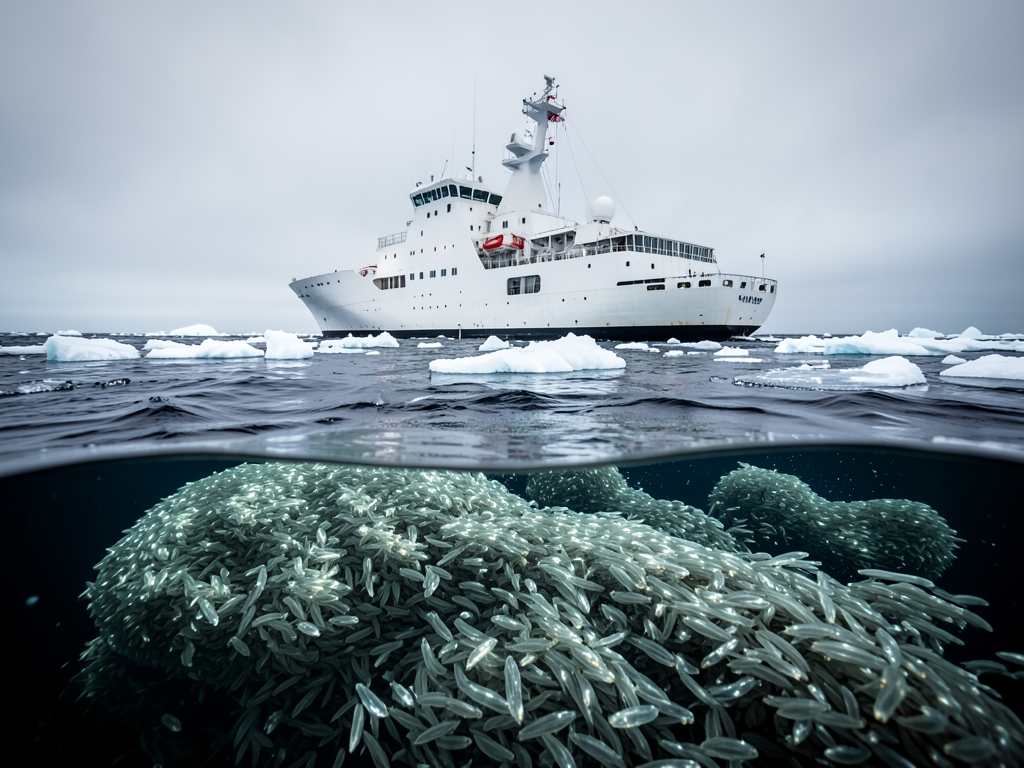
The vast, ice-chilled expanse of the Southern Ocean represents one of the most remote and ecologically vital marine biomes on planet Earth. Within this complex habitat, Antarctic krill operate as the foundational keystone species upon which countless predators depend. From majestic blue whales and sleek leopard seals to millions of penguins and seabirds, the biological productivity of the entire region hinges directly on the abundance and health of these small, translucent crustaceans. In recent years, however, intensive commercial harvesting has intensified debates among international policymakers, conservationists, and industrial operators. The recurrent early closure of the Antarctic krill fishery has thrust these tensions into the global spotlight, prompting urgent re-evaluations of how human enterprises interact with fragile polar ecosystems in an era of rapid climatic transformation.
The Ecological Significance of Antarctic Krill
To understand the gravity of regulatory actions surrounding the krill fishery, one must first recognize the sheer ecological magnitude of Euphausia superba. These shrimplike creatures drift in immense swarms that can stretch for miles across the open ocean. Despite their diminutive size, their combined biomass is staggering, making them one of the most successful animal species on the planet by weight.
Krill serve as the primary energetic bridge between microscopic primary producers—phytoplankton—and the higher trophic levels of the Southern Ocean food web. Without robust krill populations, the reproductive success of Adélie and chinstrap penguins plummets, seal pups struggle to survive their weaning period, and great whales face severe nutritional stress during their summer feeding migrations. Furthermore, krill play an active role in global biogeochemical cycles. By grazing on surface phytoplankton and excreting heavy, carbon-rich fecal pellets that sink rapidly to the deep ocean floor, krill contribute significantly to biological carbon sequestration, helping to regulate global climate patterns.
Info! Antarctic krill are not only vital for regional biodiversity but also act as a major pump for drawing atmospheric carbon dioxide down into the deep ocean via biological sinking mechanisms.
The Mechanics and Motivations of Commercial Krill Harvesting
In recent decades, commercial interest in Antarctic krill has surged dramatically. Once harvested primarily for use as agricultural feed and aquaculture meal, modern processing technologies have unlocked lucrative new markets for human consumption. Krill oil supplements, prized for their high concentrations of omega-3 fatty acids and antioxidants, have become mainstream health products across Europe, North America, and parts of Asia. Additionally, specialized trawling vessels equipped with continuous pumping systems can haul immense volumes of biomass aboard, processing the catch rapidly to maintain high product quality.
This industrial expansion operates under the international oversight of the Commission for the Conservation of Antarctic Marine Living Resources (CCAMLR). Established by international convention, CCAMLR is tasked with implementing ecosystem-based management principles that balance sustainable commercial utilization with the absolute preservation of marine life. Catch limits are established for specific sub-areas to prevent localized depletion and protect foraging predators. When fishing fleets reach these scientifically determined precautionary catch limits ahead of schedule, the fishery is legally mandated to close early for the remainder of the season.
Understanding the Drivers Behind Early Fishery Closures
The recurrent early closure of the krill fishery is not a random administrative occurrence; it is a direct consequence of catch limits being met at an accelerated pace. Modern factory trawlers possess unprecedented efficiency, advanced acoustic fish-finding technology, and massive holding capacities. When environmental conditions concentrate krill swarms into predictable geographic zones—often driven by shifting sea-ice dynamics and ocean currents—harvesting rates spike dramatically.
However, these early closures also reflect a growing precautionary approach by regulatory bodies responding to environmental pressures. As warming ocean temperatures, shrinking winter sea ice, and shifting wind patterns alter the distribution and reproduction rates of krill, scientists have pushed for more conservative catch thresholds. When ecological monitoring indicates that breeding predators are struggling to find adequate food near their colonies, management frameworks increasingly prioritize conservation over uninterrupted industrial extraction.
Clashing Perspectives: Industry Ambitions Versus Conservation Imperatives
The debate surrounding the future of the Southern Ocean is characterized by a fundamental tension between economic expansion and environmental protection. Industry representatives argue that modern krill harvesting is among the most strictly regulated and scientifically monitored fisheries in the world. They point out that total catch remains a tiny fraction of the estimated total biomass, and that technological innovations have successfully reduced accidental bycatch of seabirds and marine mammals.
Conversely, environmental organizations and marine biologists contend that static catch limits fail to account for the compounding stresses of climate change. As sea ice diminishes and ocean acidification alters chemical balances, krill face unprecedented survival challenges. Conservationists argue that concentrating industrial fishing fleets in the exact same coastal foraging grounds utilized by breeding penguins and seals creates an unacceptable risk of localized overfishing, even if total basin-wide biomass figures appear stable on paper.
| Management Dimension | Industry Perspective | Conservation Perspective |
|---|---|---|
| Catch Quotas | Current limits represent a safe fraction of total estimated biomass. | Quotas must be dynamic and lowered to reflect climate stress. |
| Fishing Locations | Fleets operate in designated, legally approved sub-areas. | Foraging grounds near predator colonies should be permanent marine reserves. |
| Technological Impact | Continuous pumping reduces environmental damage and improves efficiency. | High-efficiency gear accelerates local depletion before management triggers trip. |
| Future Outlook | Sustainable expansion can supply growing global nutritional demands. | Complete precautionary moratoriums are needed in vulnerable polar zones. |
Pathways Forward for Southern Ocean Governance
Addressing the complex challenges facing the Antarctic krill fishery requires innovative policy instruments and enhanced international cooperation. Several key pathways are currently being explored within diplomatic and scientific forums:
- Implementation of Dynamic Spatial Management: Moving beyond static seasonal boundaries to close specific fishing zones in real-time when predator stress or low reproductive success is detected.
- Expansion of Marine Protected Areas (MPAs): Establishing large-scale no-take zones across critical breeding and feeding habitats to safeguard foundational species from industrial competition.
- Enhanced Ecosystem Monitoring: Leveraging autonomous underwater vehicles, satellite tracking, and acoustic surveys to gather continuous, high-resolution data on krill distribution independent of commercial fishing logs.
- Stricter Traceability Standards: Requiring transparent supply chain verification for krill-derived omega-3 supplements and aquaculture feeds to ensure consumer accountability.
Warning! Without proactive regulatory adaptation, continued warming and uncoordinated fishing pressure could trigger irreversible trophic cascades across the entire Antarctic ecosystem.
Ultimately, the decisions made by international regulators over the coming years will serve as a crucial test for global environmental governance. Balancing the nutritional demands of a growing human population with the ethical imperative to preserve the pristine wilderness of the Southern Ocean demands unprecedented scientific rigor and political resolve.
What are Antarctic krill and why are they important?
Antarctic krill are small, shrimplike crustaceans that form the foundation of the Southern Ocean food web, serving as the primary food source for whales, penguins, seals, and seabirds while also playing a major role in global carbon sequestration.
Why does the Antarctic krill fishery close early?
The fishery closes early when industrial trawlers reach scientifically determined precautionary catch limits ahead of schedule, designed to prevent overexploitation and protect dependent predators in the region.
Who regulates commercial fishing in the Southern Ocean?
Commercial fishing is managed by the Commission for the Conservation of Antarctic Marine Living Resources (CCAMLR), an international body dedicated to ecosystem-based conservation and sustainable resource management.
How does climate change impact Antarctic krill populations?
Rising ocean temperatures, shrinking winter sea ice, and changing current patterns disrupt the reproduction, larval survival, and geographic distribution of krill, placing additional stress on populations already targeted by industrial fishing.
As international scientific bodies continue to monitor polar waters, the future of the krill fishery will depend heavily on adaptive management strategies that prioritize ecosystem resilience above short-term economic gains. Protecting the delicate balance of the Southern Ocean remains an essential responsibility for the global community.
