

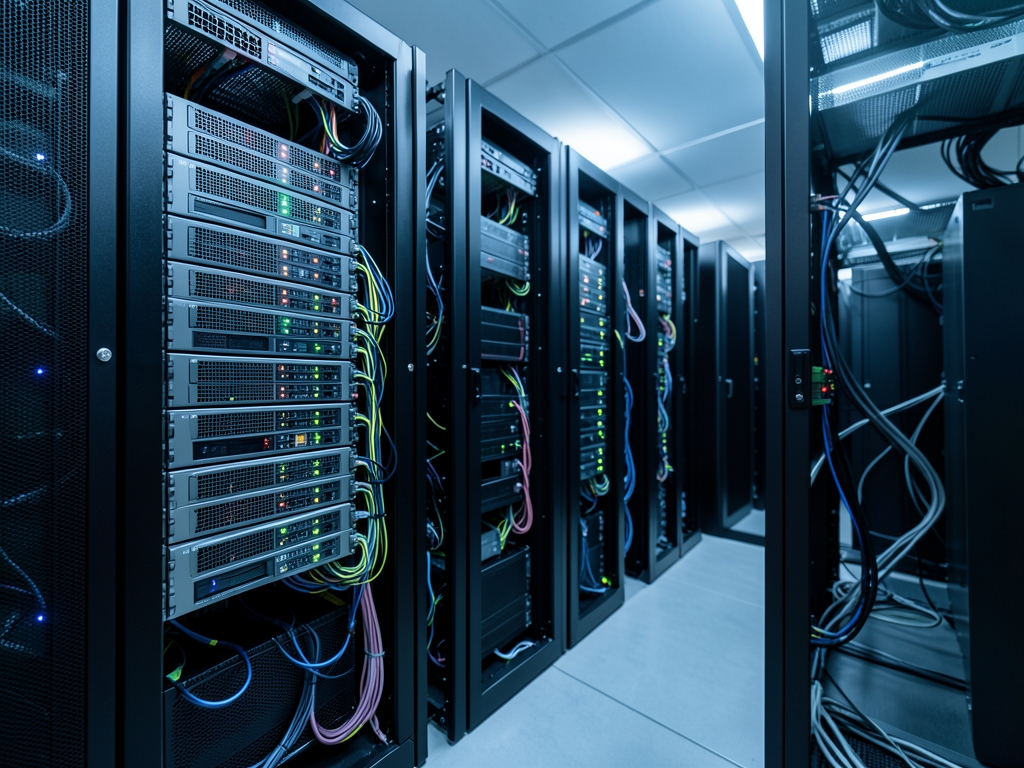
Modern enterprise data centers face unprecedented traffic demands driven by accelerating artificial intelligence workloads, massive cloud computing deployments, and real-time data processing requirements. As hyperscale operators expand their infrastructure to support large language models and distributed machine learning clusters, conventional networking architectures encounter severe bandwidth bottlenecks. Traditional switches struggle to maintain the ultra-low latency and massive throughput required to feed thousands of accelerated compute nodes simultaneously. To address these systemic infrastructure challenges, hardware manufacturers are engineering revolutionary switching silicon capable of moving staggering volumes of data across the network fabric with exceptional energy efficiency and minimal packet loss.
A major milestone in high-performance networking hardware arrived with the introduction of ultra-high-capacity switching platforms designed to meet the rigorous demands of Open Compute Project environments. These next-generation systems redefine the limits of packet processing density, offering unprecedented throughput numbers that enable seamless scalability for modern cloud infrastructure. Understanding the architectural innovations, underlying packet processing mechanisms, and real-world deployment implications of these advanced networking silicon solutions is essential for network engineers, data center architects, and IT strategists navigating the future of enterprise connectivity.
The Evolution of High-Performance Network Switching
The trajectory of data center network architecture has been shaped by the relentless growth of east-west traffic—communication occurring between servers within the data center rather than traditional north-south traffic flowing between clients and servers. Artificial intelligence training clusters and distributed storage systems generate petabytes of internal traffic, requiring network fabrics that scale horizontally without introducing latency jitter. Over the past decade, switch aggregate bandwidth has evolved from single-terabit architectures to multi-terabit beasts, driven by advances in CMOS manufacturing nodes, serializer/deserializer (SerDes) technology, and advanced packaging techniques.
Early data center designs relied on multi-tiered architectures that introduced significant oversubscription ratios and multi-hop latency penalties. The industry shift toward leaf-spine topologies eliminated many of these bottlenecks by ensuring a predictable, low-latency path between any two servers in the fabric. However, as compute nodes became exponentially faster with the integration of specialized GPU accelerators, the interconnect fabric itself emerged as the primary performance limiter. Network switches needed to match the blistering data generation speeds of modern processors, pushing manufacturers to explore novel silicon layouts, advanced optical integration, and high-density port configurations.
Architectural Deep Dive into Ultra-High-Bandwidth Silicon
Achieving massive aggregate throughput—such as the staggering 102.4 Tbps benchmark reached by cutting-edge enterprise switches—requires radical departures from traditional silicon design principles. At the core of these modern switches lies an extraordinarily complex application-specific integrated circuit (ASIC) engineered to handle immense packet ingestion, routing, and buffering tasks concurrently. The following sections examine the primary architectural components that make this level of performance possible:
- Advanced SerDes Technology: High-speed input/output interfaces are critical for translating electrical signals across copper traces and optical modules. Modern silicon utilizes ultra-dense, low-power SerDes lanes running at incredible baud rates to maximize per-pin bandwidth without overheating the package.
- Buffered Packet Memory Management: Managing packet congestion during microbursts requires sophisticated on-chip and external memory hierarchies. Dynamic buffering algorithms ensure fair bandwidth allocation while minimizing buffer bloat and latency accumulation.
- Forwarding Engine Optimization: Accelerated lookup engines process massive routing tables, access control lists, and telemetry data in hardware, ensuring line-rate performance even under heavy security and monitoring loads.
- Thermal and Power Efficiency: Delivering over 100 terabits of switching capacity within standard rack power envelopes demands rigorous power management features, including dynamic voltage scaling and advanced thermal dissipation packaging.
Info! Modern high-capacity switches are meticulously designed to integrate into Open Compute Project (OCP) standards, ensuring seamless compatibility with open-source networking software and hardware frameworks.
Open Compute Project Integration and Open-Source Networking
The deployment of ultra-high-speed switching hardware is increasingly tied to open-source hardware initiatives and disaggregated network operating systems. The Open Compute Project (OCP) has transformed how hyperscalers and enterprise organizations procure and manage data center infrastructure. By standardizing mechanical dimensions, power delivery, and management interfaces, OCP-compliant switches allow operators to decouple hardware procurement from software licensing.
This disaggregated approach offers several distinct advantages for large-scale deployments:
- Software Flexibility: Network operators can choose from a variety of commercial and open-source network operating systems (NOS) tailored to their specific telemetry, routing, and automation requirements.
- Vendor Neutrality: Standardization prevents proprietary lock-in, enabling organizations to mix and match hardware components from different manufacturers within the same spine-leaf architecture.
- Streamlined Automation: Open APIs and standardized streaming telemetry frameworks simplify the integration of intent-based networking tools and automated orchestration platforms.
- Cost Optimization: Commodity hardware principles applied to enterprise-grade switching silicon reduce capital expenditure while maintaining rigorous reliability standards.
Addressing AI Cluster Bottlenecks and Fabric Scalability
Artificial intelligence training and inference workloads place unique demands on data center networks. Unlike traditional web traffic, which consists of many independent, short-lived flows, AI distributed training relies on synchronized collective communication primitives such as All-Reduce and All-to-All. A single slow packet or a congested link in an AI cluster can stall thousands of expensive GPU accelerators, leading to wasted compute cycles and extended training times.
To mitigate these risks, modern high-throughput switches incorporate advanced congestion notification mechanisms, fine-grained load balancing, and adaptive routing protocols. By dynamically shifting traffic flows across parallel paths in real time, the network avoids hot spots and maintains optimal throughput across the entire cluster fabric. Furthermore, support for lossless Ethernet standards ensures that high-priority AI workloads experience zero packet loss, preserving the strict determinism required for large-scale neural network training.
Comparative Overview of Data Center Switch Generations
| Metric / Feature | Previous Generation (51.2 Tbps) | Current Generation (102.4 Tbps) |
|---|---|---|
| Aggregate Bandwidth | 51.2 Terabits per second | 102.4 Terabits per second |
| SerDes Speed | 112G PAM4 signaling | 224G high-speed signaling |
| Typical Form Factor | 2U fixed chassis | 1U/2U high-density modular |
| AI Cluster Readiness | Standard enterprise scaling | Optimized for 100B+ parameter models |
| Power Efficiency | Moderate watts per gigabit | Optimized ultra-low power profile |
Practical Implementation Guidelines for Enterprise Data Centers
Migrating to a 102.4 Tbps switching architecture requires careful planning across multiple operational domains. Network architects must evaluate their physical cabling infrastructure, cooling capacities, and software orchestration stacks before introducing high-density silicon into production environments. Below are practical steps for successful integration:
- Conduct a comprehensive traffic audit to identify existing bandwidth bottlenecks between compute and storage tiers.
- Verify power and cooling distribution within target server racks to support high-density switch power envelopes.
- Establish robust telemetry and monitoring pipelines utilizing streaming telemetry APIs for real-time visibility.
- Test interoperability between the new switching hardware and existing orchestration tools in a staged staging environment.
Security and Telemetry in High-Speed Switching Fabrics
As data center speeds scale into the hundreds of terabits, traditional packet inspection and security monitoring techniques become computationally intractable if performed purely via software layers. Modern high-capacity switches integrate advanced hardware-based telemetry engines capable of capturing fine-grained network statistics, packet drop rates, and latency metrics without impacting forwarding performance.
Hardware-enforced security features, such as line-rate MACsec encryption and granular access control list processing, ensure that data in transit remains protected against unauthorized interception or tampering. By offloading these critical security functions directly to the switching silicon, organizations maintain robust perimeter defense throughout the internal fabric without sacrificing throughput or introducing latency penalties.
The convergence of artificial intelligence infrastructure and ultra-high-density switching silicon marks a foundational shift in how enterprise networks are architected, managed, and scaled for the future.
Future Outlook for Data Center Networking Silicon
Looking ahead, the networking industry is already researching the next horizon of silicon innovation to keep pace with exponential growth in data generation. Co-packaged optics—integrating optical transceivers directly onto the switch ASIC package—represent a promising frontier for overcoming the electrical losses and thermal limitations associated with traditional copper traces. As machine learning models continue to scale toward hundreds of billions of parameters, the symbiosis between advanced compute accelerators and ultra-high-capacity switching fabrics will remain the cornerstone of digital infrastructure evolution.
What is the primary significance of a 102.4 Tbps network switch?
A 102.4 Tbps network switch doubles the aggregate bandwidth of previous generation switches, providing the massive throughput and ultra-low latency required to support modern artificial intelligence training clusters and hyperscale cloud infrastructure.
How do high-capacity switches benefit artificial intelligence workloads?
They incorporate advanced congestion notification, adaptive routing, and lossless Ethernet capabilities that prevent bottlenecks during synchronized collective communication, ensuring expensive GPU accelerators do not idle waiting for data.
What role does the Open Compute Project play in modern switching?
The Open Compute Project standardizes hardware specifications and encourages disaggregated network operating systems, allowing enterprise operators to mix and match hardware and software while avoiding proprietary vendor lock-in.
What architectural improvements drive this massive increase in bandwidth?
Improvements include advanced high-speed SerDes signaling, optimized on-chip packet memory management, hardware-accelerated forwarding engines, and power-efficient packaging designed for high-density enterprise environments.
In conclusion, the deployment of 102.4 Tbps switching silicon represents a vital technological leap for enterprise data centers striving to keep pace with intensive AI and cloud workloads. By combining unprecedented throughput, advanced congestion management, and open-source standards compliance, these modern networking platforms lay a resilient foundation for the next generation of digital infrastructure.
