

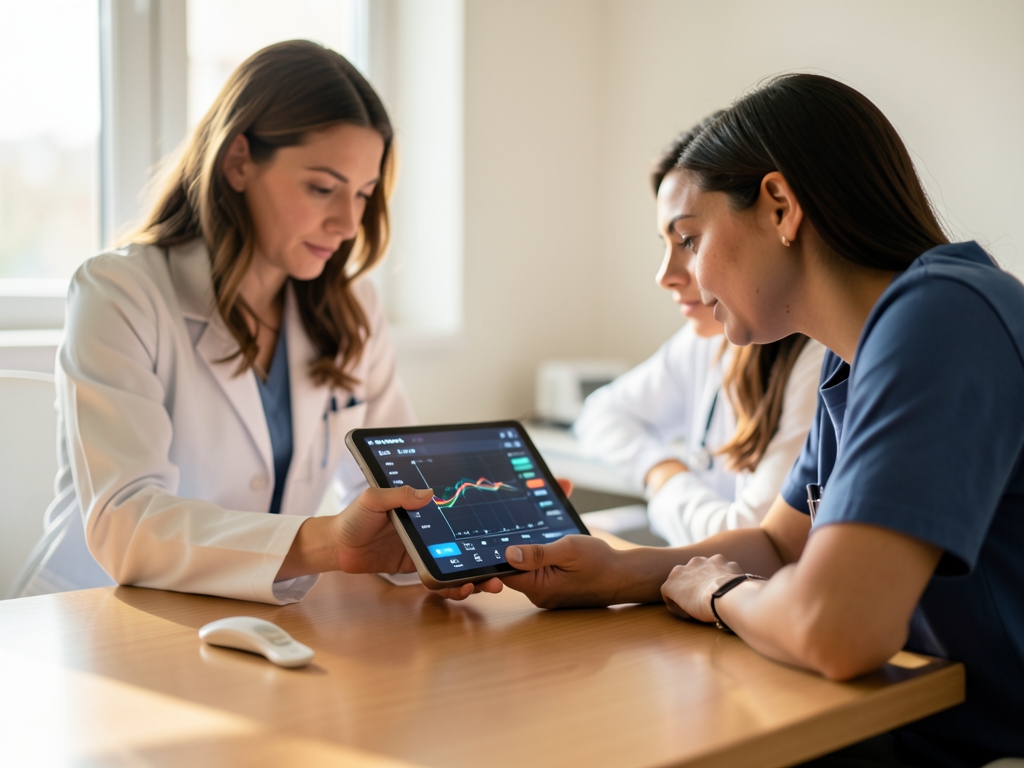
The management of type 2 diabetes has long relied heavily on traditional blood glucose meters, which require individuals to perform painful finger-prick tests multiple times a day to gauge their blood sugar levels. For patients managing their condition with lifestyle modifications, diet, exercise, or oral medications rather than insulin therapy, checking blood sugar frequently can be cumbersome and discouraging. However, recent clinical investigations are transforming how medical professionals view metabolic monitoring for non-insulin users. Emerging scientific data indicates that continuous glucose monitors, often abbreviated as CGMs, offer substantial clinical benefits even for individuals with type 2 diabetes who do not take insulin, providing a clearer window into daily glycemic fluctuations and empowering patients to make informed lifestyle choices.
Understanding the evolving landscape of diabetes care requires looking closely at how metabolic data is gathered and interpreted. Traditional self-monitoring of blood glucose provides only isolated snapshots of a person's blood sugar at a single moment in time. These sporadic checks can easily miss dangerous post-meal spikes or overnight drops in glucose levels. In contrast, continuous glucose monitors track interstitial glucose levels around the clock through a tiny sensor inserted just beneath the skin. This continuous stream of information generates comprehensive ambulatory glucose profiles, revealing trends, patterns, and responses to specific foods, stress, and physical activity that would otherwise remain hidden.
Clinical Evidence Supporting Non-Insulin CGM Use
Recent research published across medical journals has evaluated the real-world impact of continuous glucose monitoring devices on individuals with type 2 diabetes who do not rely on insulin therapy. Historically, health insurance policies and clinical guidelines reserved CGMs primarily for patients with type 1 diabetes or those requiring intensive insulin regimens, where avoiding severe hypoglycemia is a constant, daily safety priority. Payers and clinicians often questioned whether the cost and complexity of continuous monitoring were justified for patients whose glycemic management relies solely on oral medications or lifestyle modifications.
Recent clinical trials have challenged this traditional assumption by demonstrating that access to real-time glucose data significantly improves glycemic control across broader patient populations. When patients can see the immediate physiological consequences of their dietary and exercise habits on a smartphone screen or dedicated receiver, behavioral modification becomes much more tangible. Instead of receiving abstract feedback during quarterly clinic visits, individuals gain immediate, actionable insights into their metabolic health. Studies tracking non-insulin users equipped with CGMs have observed notable reductions in glycated hemoglobin levels, indicating better long-term blood sugar management and a lower risk of long-term microvascular and macrovascular complications.
Continuous glucose monitors provide an unprecedented window into daily metabolic fluctuations, shifting diabetes care from reactive management to proactive, data-driven daily lifestyle adjustments.
Furthermore, these devices help demystify the complex relationship between nutrition and metabolism. Every individual processes carbohydrates, fats, and proteins differently, and what triggers a sharp glycemic spike in one person might produce a stable response in another. By wearing a continuous sensor, patients discover their unique metabolic fingerprint. This personalized understanding fosters sustainable dietary adjustments rather than restrictive, generalized diets that are difficult to maintain over the long term.
How Continuous Glucose Monitoring Technology Works
To appreciate why these devices are making such a significant impact in modern healthcare, it helps to understand the underlying technology. A typical continuous glucose monitoring system consists of three primary components: a small wearable sensor, a transmitter, and a display device such as a smartphone or dedicated reader.
Info! CGMs measure glucose concentrations in the interstitial fluid—the fluid surrounding the body's cells—rather than directly in the bloodstream, which introduces a slight physiological time lag during rapid blood sugar changes.
The sensor features a flexible, hair-thin filament that is inserted just under the skin using a simple, automated applicator. Most modern sensors are designed to remain in place for 10 to 14 days, withstanding normal daily activities including showering, exercising, and sleeping. A small transmitter attached to the sensor wirelessly relays glucose readings every few minutes. Advanced companion smartphone applications analyze this continuous data stream, plotting trend lines and sounding customizable alerts if glucose levels rise above or fall below predetermined safe thresholds.
| Feature | Traditional Blood Glucose Meter | Continuous Glucose Monitor (CGM) |
|---|---|---|
| Testing Method | Finger-prick blood sample | Subcutaneous sensor (interstitial fluid) |
| Frequency | Spot checks (2 to 4 times daily) | Continuous readings (every 1 to 5 minutes) |
| Trend Data | None (isolated numbers only) | Real-time arrows showing speed and direction |
| Behavioral Impact | Reactive adjustment | Proactive, real-time biofeedback |
Empowering Patients Beyond Pharmacotherapy
The primary advantage of expanding CGM adoption among non-insulin-dependent individuals lies in empowerment and education. Chronic disease management often feels overwhelming when patients are given a list of dietary restrictions and sent home without tools to measure their daily progress. When individuals visualize how a brisk evening walk blunts a post-dinner glucose rise, or how poor sleep quality elevates morning baseline blood sugar, they connect daily habits directly to biological outcomes.
This biofeedback loop encourages adherence to lifestyle changes that are notoriously difficult to sustain. Motivation increases when people witness positive numerical trends resulting from their own choices. Additionally, these devices bridge the communication gap between patients and healthcare providers. Instead of relying on unreliable patient recall or sporadic logbooks during clinical consultations, endocrinologists and primary care physicians can review comprehensive ambulatory glucose profiles, enabling more precise, personalized therapeutic recommendations.
Limitations, Costs, and Accessibility Challenges
Despite the encouraging clinical data supporting continuous glucose monitor use for non-insulin-dependent type 2 diabetes, important limitations and practical challenges remain. Financial accessibility is a primary barrier. While insurance coverage for CGMs has expanded significantly for individuals on intensive insulin therapy, coverage criteria for patients managing diabetes through diet or oral medications alone remain restrictive in many healthcare systems.
Out-of-pocket costs for sensors, transmitters, and accessories can be substantial, potentially creating disparities in who can benefit from this advanced technology. Furthermore, wearing a physical device on the skin requires a period of adjustment. Some users experience mild skin irritation from the adhesive patches, occasional sensor compression lows during sleep, or sensor detachment prior to the scheduled replacement date.
Warning! Continuous glucose monitoring data should be interpreted in consultation with qualified healthcare professionals, as sensor reading discrepancies can occur, particularly during rapid physiological transitions or hydration shifts.
Interpreting continuous data streams can also cause anxiety for certain individuals. Seeing constant fluctuations throughout the day might lead to fixating on minor numerical variations rather than focusing on overarching trends and general health improvements. Proper patient education and clinical guidance are therefore essential to ensure that the technology serves as a constructive tool rather than a source of stress.
Future Directions in Metabolic Health Monitoring
As sensor technology continues to evolve, devices are becoming smaller, more accurate, and more affordable. Manufacturers are actively developing next-generation biosensors with longer wear times, enhanced sensor accuracy, and integration into broader digital health ecosystems. Artificial intelligence algorithms embedded within companion applications are also becoming more sophisticated, capable of identifying subtle metabolic patterns and offering personalized lifestyle recommendations tailored to an individual's unique health profile.
The growing body of clinical evidence supporting CGM use in non-insulin diabetes management suggests that proactive metabolic tracking will play an increasingly central role in preventive medicine. By catching glycemic variability early and equipping individuals with actionable insights, modern healthcare systems can help patients prevent disease progression and improve overall quality of life.
Do continuous glucose monitors require a doctor's prescription?
Yes, in most jurisdictions, continuous glucose monitoring systems are classified as medical devices and require a prescription from a licensed healthcare provider for purchase and insurance reimbursement.
How accurate are CGMs compared to traditional finger-prick blood tests?
Modern CGMs are highly accurate, but because they measure glucose in interstitial fluid rather than blood, they may exhibit a brief time delay during rapid changes in blood sugar levels.
Can people without diabetes use continuous glucose monitors?
Some wellness and metabolic health companies offer non-diagnostic continuous monitoring devices directly to consumers for general health tracking, though clinical devices remain intended primarily for diagnosed populations.
How long does a single continuous glucose monitor sensor last?
Depending on the specific brand and model, most individual sensors are designed to be worn comfortably on the skin for a duration of 10 to 14 days before replacement is necessary.
Conclusion
Recent clinical findings regarding continuous glucose monitors highlight a shifting paradigm in metabolic health management. Expanding access to continuous monitoring beyond insulin-dependent patients offers valuable insights that foster meaningful lifestyle adjustments and improve long-term outcomes for individuals managing type 2 diabetes. As technology advances and accessibility improves, continuous monitoring stands to become an even more powerful asset in preventive healthcare and personalized medicine.
