

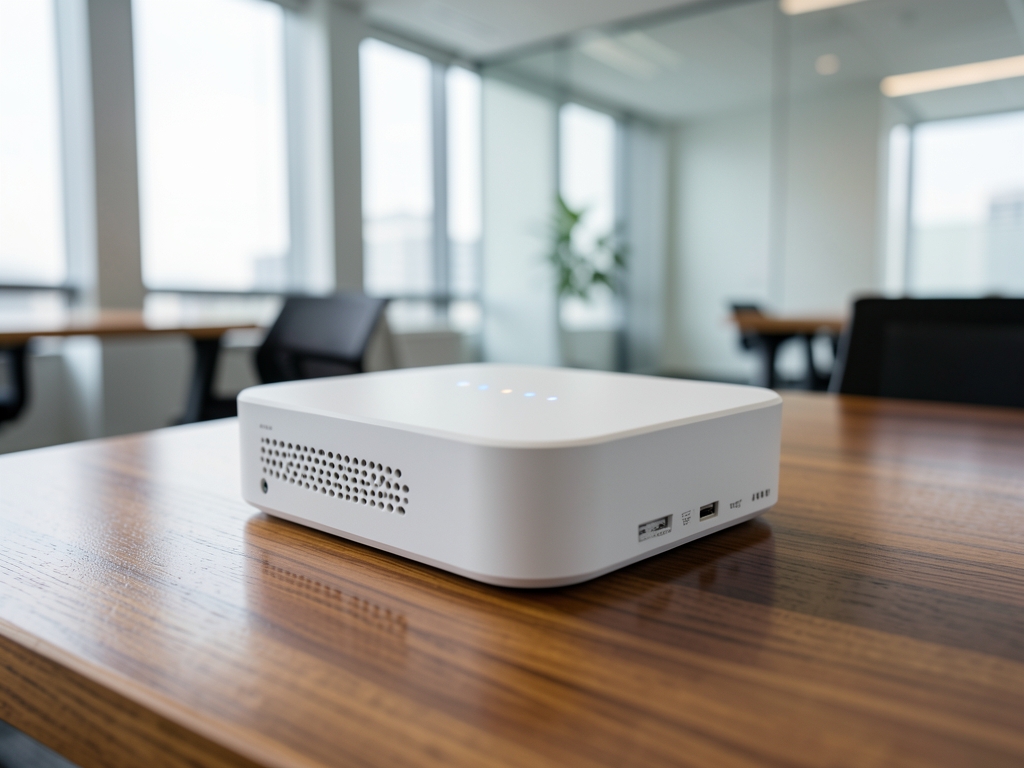
The rapid evolution of home and enterprise networking has reached a significant milestone with the official introduction of next-generation connectivity architecture. At the prominent Network X 2026 conference, industry leaders gFiber, Qualcomm, and Gemtek jointly unveiled a groundbreaking AI-native Wi-Fi 8 broadband gateway. This high-performance networking device represents a major leap forward in wireless telecommunications, merging advanced artificial intelligence capabilities with cutting-edge Wi-Fi 8 protocols to deliver unprecedented speeds, minimal latency, and intelligent traffic management for modern digital environments.
The Strategic Collaboration Behind the Wi-Fi 8 Gateway
The development of this advanced broadband gateway stems from a powerful synergy between three distinct powerhouses in the telecommunications and semiconductor sectors. Qualcomm brings its industry-leading wireless chipset architecture and embedded neural processing units, providing the computational horsepower required to execute complex machine learning algorithms directly on the edge device. Gemtek contributes its decades of expertise in high-volume networking hardware manufacturing and enclosure design, ensuring that enterprise-grade performance can be housed in an efficient, consumer-ready appliance. Meanwhile, gFiber provides the robust fiber-optic infrastructure backbone, ensuring that gigabit-plus throughput reaches the gateway without internal bottlenecks.
Industry analysts observing the Network X 2026 exhibition noted that this collaboration addresses a critical bottleneck in contemporary home and office connectivity. As households and businesses connect dozens of smart devices, high-resolution streaming displays, augmented reality headsets, and cloud-computing workstations, traditional routers frequently experience congestion and packet loss. By integrating hardware-accelerated artificial intelligence straight into the broadband gateway, the new system dynamically allocates bandwidth based on real-time usage patterns, predicting data flow requirements before congestion even occurs.
Core Architectural Advancements of Wi-Fi 8 Integration
Building upon the foundational improvements of previous wireless generations, the newly unveiled gateway incorporates specific Wi-Fi 8 engineering principles designed to optimize reliability in dense interference environments. While earlier iterations focused primarily on raw throughput maximization, the Wi-Fi 8 standard places equal emphasis on ultra-reliable low latency (URLLC) and spatial efficiency. The collaborative gateway from gFiber, Qualcomm, and Gemtek leverages these capabilities through several core architectural enhancements:
- Distributed AI Traffic Shaping: Machine learning models analyze incoming and outgoing packet signatures to prioritize mission-critical data streams, such as real-time video conferencing and cloud gaming, over background downloads.
- Advanced Multi-Link Operation (MLO): The gateway simultaneously aggregates multiple frequency bands to maintain an unbreakable connection, instantly switching lanes if interference or physical obstruction degrades one specific channel.
- Optimized Power Management: Intelligent sleep-and-wake cycles reduce energy consumption across connected Internet of Things (IoT) sensors and smart home peripherals without introducing wake-up latency.
- Enhanced Beamforming Arrays: Specialized antenna configurations direct focused wireless signals precisely toward active devices, extending reliable coverage across large multi-story residences and congested office spaces.
Transforming Enterprise and Residential Broadband Experiences
The deployment of an AI-native broadband gateway signals a paradigm shift in how internet service providers manage customer premises equipment (CPE). Historically, troubleshooting home network issues required reactive customer service calls, remote firmware reboots, or technician dispatches. The new system introduced at Network X 2026 features autonomous self-healing diagnostics powered by on-device machine learning. If a local channel suffers from transient interference caused by neighboring networks or physical obstacles, the gateway automatically recalculates optimal frequency allocation without user intervention.
The convergence of advanced semiconductor platforms and intelligent edge computing is redefining what users expect from their broadband connection, shifting the paradigm from passive data transmission to active network optimization.
Info! The integration of on-device neural processing units ensures that local network telemetry remains private, processing optimization routines directly on the gateway without unnecessarily transmitting sensitive usage metadata to external cloud servers.
Global Deployment Timelines and Market Implications
Following its high-profile debut at Network X 2026, the gFiber, Qualcomm, and Gemtek broadband gateway is slated for initial field trials with select international telecommunications providers in North America and Europe. Equipment manufacturers and service providers are closely monitoring these trials to gauge how effectively the hardware handles extreme bandwidth demands under real-world residential conditions. As fiber-to-the-home (FTTH) deployments continue to expand globally, pairing ultra-fast fiber infrastructure with intelligent Wi-Fi 8 customer premises equipment ensures that end-users experience the full benefit of multi-gigabit internet plans on every wireless device they own.
| Feature | Traditional Wi-Fi 6/7 Gateways | AI-Native Wi-Fi 8 Gateway (2026) |
|---|---|---|
| Traffic Management | Static Quality of Service (QoS) rules | Dynamic AI-driven predictive shaping |
| Interference Mitigation | Reactive channel switching | Proactive spatial stream optimization |
| Diagnostic Capabilities | Cloud-dependent remote logging | Autonomous on-device self-healing |
| Power Efficiency | Standard device sleep states | Advanced AI-managed per-device scaling |
Practical Recommendations for Network Upgrades
For organizations and tech enthusiasts preparing for the eventual commercial rollout of Wi-Fi 8 equipment, evaluating current infrastructure is an essential first step. While older client devices will continue to function seamlessly through backward compatibility, unlocking the full performance advantages of an AI-native gateway requires compatible client hardware equipped with modern wireless network interface cards. Reviewing internal wiring, evaluating ethernet backhaul capabilities for mesh nodes, and assessing cybersecurity configurations will ensure a smooth transition when next-generation broadband gateways become widely available.
What companies collaborated to create the AI-native Wi-Fi 8 broadband gateway?
The gateway was jointly developed through a strategic partnership between gFiber, Qualcomm, and Gemtek, combining fiber infrastructure, advanced chipset architecture, and networking hardware manufacturing expertise.
Where was the new Wi-Fi 8 broadband gateway officially unveiled?
The device was publicly unveiled at the Network X 2026 conference, drawing significant attention from international telecommunications experts and industry analysts.
How does artificial intelligence improve the performance of this broadband gateway?
The gateway utilizes on-device machine learning to dynamically manage traffic patterns, predict bandwidth demands, mitigate wireless interference, and execute autonomous self-healing diagnostics without user intervention.
Are older devices compatible with the new Wi-Fi 8 gateway hardware?
Yes, the gateway maintains full backward compatibility with older Wi-Fi standards, though clients specifically equipped with Wi-Fi 8 capabilities will experience the maximum performance and latency improvements.
Conclusion
The introduction of the AI-native Wi-Fi 8 broadband gateway by gFiber, Qualcomm, and Gemtek at Network X 2026 marks a defining moment in modern telecommunications engineering. By fusing high-speed fiber connectivity with embedded artificial intelligence and advanced wireless protocols, this collaborative hardware addresses the growing complexity of modern digital ecosystems. As these systems move from exhibition floors to commercial deployment across Europe and the United States, they promise to establish a new benchmark for reliability, speed, and intelligent home networking.
