

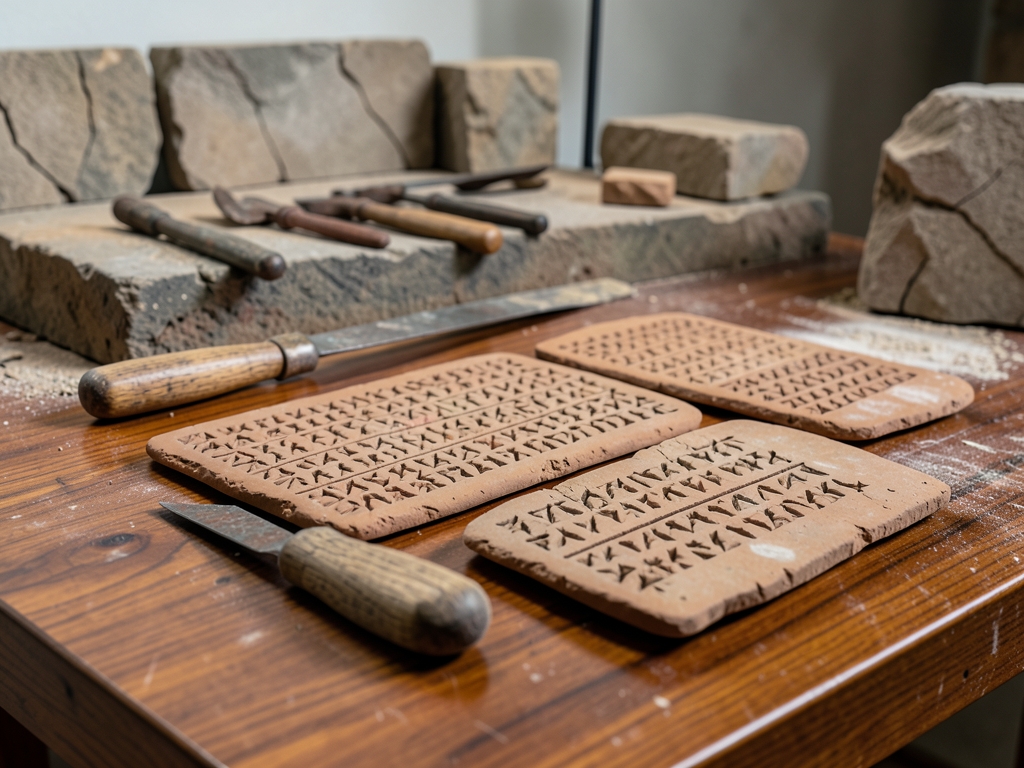
Archaeology has long served as humanity's bridge to the forgotten epochs of the ancient world, allowing researchers to piece together the rise and fall of civilizations that shaped the modern landscape. Among the most fascinating discoveries of the ancient Near East are the imperial archives of the Hittite Empire, a dominant Bronze Age superpower that rivaled Egypt and Mesopotamia. Recent archaeological investigations and ongoing philological studies of these vast clay archives continue to yield groundbreaking insights into the political maneuvers, daily administration, military campaigns, and societal crises that defined the ancient Anatolian heartland. By examining thousands of cuneiform inscriptions unearthed from capital sites like Hattusa, historians gain a remarkably detailed window into a society that flourished more than three millennia ago.
The rediscovery of the Hittite civilization stands as one of the great triumphs of modern archaeology. For centuries, the Hittites were known almost exclusively through brief, scattered references in biblical texts and Egyptian monumental inscriptions, leading many nineteenth-century scholars to question their historical scale and cultural complexity. However, systematic excavations at the site of Boğazkale—ancient Hattusa—located in north-central Turkey, shattered these doubts. Beneath the wind-swept Anatolian steppe lay the monumental remains of a fortified capital complete with massive stone gates, elaborate temples, and royal storehouses containing tens of thousands of clay tablets inscribed in cuneiform script. These texts, written in both Akkadian (the international diplomatic language of the era) and various indigenous Anatolian dialects including Nesitic (the earliest attested Indo-European language), transformed our understanding of the ancient world.
The Architecture and Linguistic Diversity of the Archives
The royal archives discovered at Hattusa were not merely random collections of administrative receipts; they represented a centralized state bureaucracy that meticulously recorded everything from international treaties and royal decrees to religious rituals, land grants, and judicial verdicts. The tablets were originally stored on wooden shelving units within administrative and temple complexes. When catastrophic fires swept through the citadel during various periods of conflict and turmoil, these wooden structures collapsed, inadvertently baking the soft clay tablets and preserving them for posterity.
Philologists and epigraphers analyzing these texts face a monumental intellectual challenge. The Hittites adopted the Mesopotamian cuneiform writing system but adapted it to record multiple distinct languages spoken within their multi-ethnic empire. Scholars had to decode not only Hittite proper but also Luwian, Palaic, Hurrian, and Hattic—an extinct language isolate unrelated to the Indo-European or Semitic families. This linguistic diversity reflects the cosmopolitan nature of the Hittite state, which governed diverse populations across modern-day Turkey, Syria, and the Levant through a complex network of vassal kingdoms and administrative provinces.
The Hittite royal archives provide an unparalleled documentary record of a Bronze Age imperial administration, capturing the voice of kings, scribes, diplomats, and ordinary citizens across centuries of geopolitical change.
Imperial Diplomacy and International Relations
One of the most remarkable aspects of the Hittite archives is the extensive collection of international correspondence and peace treaties. Long before modern diplomacy established formal channels of international law, the Hittites maintained regular diplomatic relations with the great powers of the ancient Mediterranean and Mesopotamia, including Egypt, Babylonia, Assyria, and Ahhiyawa (often associated with Mycenaean Greece).
The most famous diplomatic artifact to emerge from these traditions is the Silver Treaty, whose clay draft versions were preserved in the royal archives at Hattusa. Concluded between the Hittite King Hattusili III and the Egyptian Pharaoh Ramesses II following the famous Battle of Kadesh, this pact is widely regarded as the world's earliest surviving written peace treaty. The cuneiform tablets detail clauses on mutual non-aggression, territorial integrity, and the extradition of political refugees. This sophisticated approach to statecraft demonstrates that Bronze Age geopolitics was governed by complex legal frameworks rather than unbridled military force alone.
Epidemics, Warfare, and Societal Crises
Beyond high-level diplomacy, the archives offer poignant testimony to the daily struggles, domestic tragedies, and existential threats faced by the Hittite population. Recent historical analyses of newly categorized administrative texts highlight how the empire repeatedly wrestled with severe systemic shocks, including protracted regional wars, dynastic succession disputes, and devastating epidemic outbreaks.
Ancient medical and ritual texts recovered from the ruins reveal how Hittite priests and physicians attempted to combat contagious diseases that swept through military garrisons and civilian settlements. Believing that plagues were divine punishments inflicted by angry deities due to ritual impurity or broken oaths, the royal court commissioned extensive purification rituals, prayer cycles, and administrative audits to appease the gods. These documents provide modern epidemiologists and historians with rare textual evidence regarding ancient disease transmission patterns, quarantine-like isolation practices, and the profound psychological impact of epidemic crises on ancient imperial stability.
| Archive Category | Primary Content | Historical Significance |
|---|---|---|
| Royal Decrees | Laws, land grants, and judicial rulings | Illustrates the legal structure and social hierarchy of Bronze Age Anatolia. |
| Diplomatic Treaties | Pacts with Egypt, Assyria, and vassal states | Documents early international law and statecraft, including the Kadesh peace accords. |
| Ritual and Myth | Religious texts, prayers, and folklore | Preserves indigenous Anatolian, Hurrian, and Mesopotamian religious traditions. |
| Economic Records | Tribute lists, agricultural tallies, and inventories | Reflects the taxation mechanisms, trade networks, and sustenance of the capital. |
The Collapse and Legacy of the Hittite State
Despite its formidable military might and administrative sophistication, the Hittite Empire suffered a dramatic collapse around 1200 BCE, coinciding with the broader Late Bronze Age collapse that destabilized civilizations across the Aegean and the Levant. The capital of Hattusa was sacked, burned, and largely abandoned, leaving its grand palaces and archives buried beneath layers of ash and soil.
However, the collapse of the central imperial authority did not mean the total erasure of Hittite culture. In southern Anatolia and northern Syria, several Neo-Hittite successor states maintained Hittite artistic, architectural, and linguistic traditions for centuries before being gradually absorbed into the expanding Neo-Assyrian Empire. Today, ongoing excavations, digital epigraphy projects, and advanced preservation techniques continue to breathe new life into these ancient clay records, ensuring that the achievements and tribulations of the Hittite civilization remain accessible to modern scholars and history enthusiasts alike.
What material were the Hittite archives recorded on?
The Hittite archives were recorded primarily on clay tablets inscribed using cuneiform script. When administrative buildings caught fire during ancient conflicts, the intense heat accidentally baked and preserved these fragile clay documents.
Where was the primary Hittite royal archive discovered?
The primary royal archives were discovered at the archaeological site of Boğazkale, which corresponds to ancient Hattusa, the capital city of the Hittite Empire located in north-central Turkey.
Which languages were used in the Hittite cuneiform texts?
The texts were written in multiple languages reflecting the empire's diversity, including Hittite (Nesitic), Akkadian, Luwian, Palaic, Hurrian, and Hattic, demonstrating a sophisticated multi-lingual administrative system.
What historical treaty was preserved within these archives?
Drafts of the famous peace treaty between Hittite King Hattusili III and Egyptian Pharaoh Ramesses II, following the Battle of Kadesh, were preserved among the diplomatic correspondence in the archives.
Conclusion
The continued study of the Hittite royal archives underscores the enduring value of archaeological preservation and textual analysis. By lifting the veil on more than three millennia of history, these ancient clay tablets transform our understanding of early statecraft, international diplomacy, and human resilience in the face of natural and man-made disasters. As researchers apply modern digital tools to translate and protect these fragile artifacts, the legacy of the Hittite Empire remains a cornerstone of ancient Near Eastern history.
