

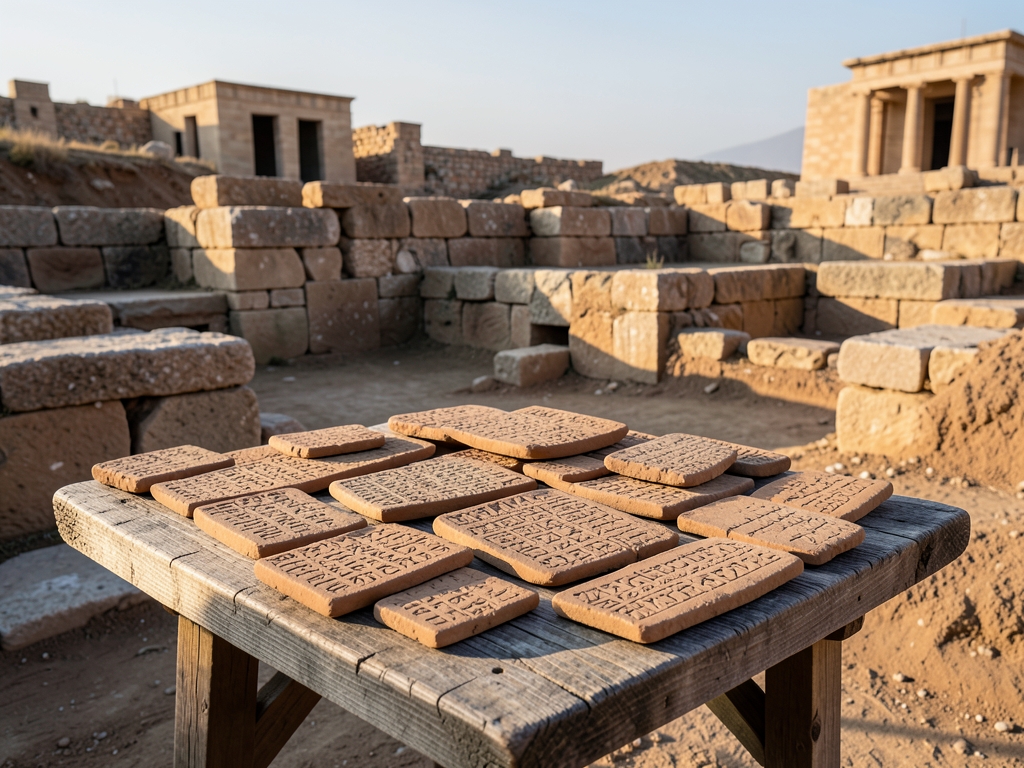
Archaeology has long served as humanity's bridge to forgotten eras, allowing modern researchers to reconstruct lost civilizations through the physical remnants they left behind. Among the most significant archaeological treasures ever unearthed are the vast royal archives of the Hittite Empire, discovered in the heart of modern-day Turkey. These ancient collections of clay tablets provide an extraordinary, firsthand look into the political machinery, diplomatic maneuvers, daily legal structures, and societal crises of one of the great superpowers of the ancient Bronze Age. By examining these cuneiform records, contemporary historians and epigraphers can piece together the complex tapestry of an empire that once rivaled Egypt and Mesopotamia.
The Historical Significance of the Hittite Civilization
The Hittites flourished in Anatolia during the second millennium BCE, establishing a powerful kingdom centered around their capital city of Hattusa. At the height of their influence, Hittite monarchs controlled vast territories spanning across modern-day Turkey, Syria, and parts of the Levant. Unlike many contemporary cultures that relied primarily on monumental stone inscriptions celebrating military victories, the Hittites maintained extensive administrative bureaucracies. They recorded everything from royal decrees and international treaties to land grants, religious rituals, and personal correspondence on durable clay tablets.
These documents were not merely tools for royal propaganda. They functioned as the operational brain of a complex centralized state. When archaeologists first began excavating the ruins of Hattusa, they uncovered tens of thousands of clay fragments buried within palace chambers, temple complexes, and administrative archives. Deciphering these records transformed our understanding of ancient Near Eastern history, proving that the Hittites possessed a sophisticated legal system, advanced diplomatic networks, and a deep appreciation for recorded history.
Recent Discoveries Within the Cuneiform Archives
Recent archaeological investigations and ongoing epigraphic analyses continue to shed fresh light on the contents of these ancient archives. Scholars working with the excavated tablets have identified numerous texts that detail specific historical crises faced by Hittite rulers. Recent academic evaluations of these archives highlight how the texts meticulously document periods of severe political instability, widespread military conflicts with neighboring states, and devastating epidemiological outbreaks that threatened the survival of the empire.
Info! Recent studies of the Hittite archives emphasize that ancient states faced complex overlapping crises, combining military threats with environmental and public health challenges.
These newly analyzed administrative records reveal that Hittite rulers were forced to implement sophisticated quarantine measures, manage grain reserves during supply shortages, and dispatch diplomatic envoys to negotiate fragile peace treaties while combating systemic internal unrest. Such findings challenge the simplistic view that ancient societies lacked institutional responses to large-scale disasters, demonstrating instead a high degree of organizational resilience.
Wars, Diplomacy and International Relations
The geopolitical landscape of the ancient Near East was notoriously volatile, and the Hittite archives capture this turbulence in striking detail. The tablets preserve diplomatic correspondence written in Akkadian, the lingua franca of the time, as well as administrative texts in various Anatolian dialects. Through these letters, historians trace the complex alliances and bitter rivalries between the Hittite Empire, the Egyptian New Kingdom, the Mitanni kingdom, and various regional principalities.
One of the most famous diplomatic artifacts preserved in these archives is the Silver Treaty, often considered the earliest surviving peace treaty in human history, established between the Hittite king Hattusili III and Egyptian pharaoh Ramesses II after the legendary Battle of Kadesh. While the bronze or silver originals are lost, the clay draft copies preserved in the Hittite capital provide the exact terms of alliance, non-aggression, and mutual extradition. These documents illustrate a remarkably modern approach to international law and conflict resolution in the ancient world.
Epidemics and Public Health in the Ancient World
Beyond politics and warfare, the Hittite archives offer profound insights into ancient public health. Several tablets describe prolonged pestilences that swept through Anatolia and the surrounding regions, decimating populations and disrupting military campaigns. Hittite kings often viewed these widespread epidemics as divine retribution for broken oaths or moral failures within the state, prompting elaborate religious rituals, national days of penance, and detailed prayers recorded on clay to appease angry deities.
Modern historians and epidemiologists study these descriptions not only for their cultural value but also to understand how ancient populations experienced and interpreted infectious disease outbreaks. While microbiological specifics are difficult to confirm from ancient texts alone, the archival descriptions of sudden illness spreading rapidly along trade routes and military encampments provide valuable historical context for the vulnerability of ancient urban centers.
Preservation and Modern Archaeological Challenges
The survival of the Hittite archives is a testament to the durability of cuneiform writing on clay. When the city of Hattusa was eventually destroyed and burned, the intense heat accidentally fired the unbaked clay tablets, transforming fragile administrative records into permanent historical artifacts. However, preserving these delicate fragments today presents significant challenges for modern conservators.
International teams of archaeologists, epigraphers, and digital preservation specialists employ advanced imaging technologies, 3D scanning, and digital epigraphy to record and protect fragile tablets without damaging their physical structure. These technological advancements ensure that deteriorating or fragmented texts can be digitally reconstructed and read by scholars worldwide.
| Aspect of Hittite Archives | Historical Function | Modern Significance |
|---|---|---|
| Administrative Tablets | Tracked taxes, labor, and palace inventories | Reveals economic structures and daily life |
| Diplomatic Correspondence | Managed foreign alliances and treaties | Illustrates early international law and diplomacy |
| Ritual and Religious Texts | Addressed plagues, wars, and spiritual crises | Provides insight into ancient psychology and belief systems |
| Royal Annals | Recorded military campaigns and kingly achievements | Helps establish chronological timelines of the Bronze Age |
Conclusion
The Hittite royal archives remain an invaluable window into a vanished imperial world. By preserving the triumphs, conflicts, and vulnerabilities of an ancient civilization, these cuneiform tablets bridge the vast chronological gulf between the modern era and the second millennium BCE. Ongoing archaeological research and digital conservation efforts ensure that the voices of ancient scribes, rulers, and citizens will continue to inform our understanding of human history for generations to come.
What are the Hittite royal archives?
The Hittite royal archives consist of tens of thousands of cuneiform clay tablets discovered primarily in the ancient capital city of Hattusa in Anatolia, recording the political, legal, economic, and religious history of the Hittite Empire.
Why are clay tablets so durable over thousands of years?
Unbaked clay tablets were often accidentally or intentionally fired during the destruction and burning of ancient cities, which hardened the clay into ceramic and permanently preserved the cuneiform inscriptions.
What do the archives reveal about ancient diseases?
The archives contain descriptions of severe epidemics that affected the population and military campaigns, accompanied by detailed prayers and national rituals performed by Hittite kings seeking divine intervention.
How do modern researchers study these ancient texts?
Epigraphers and archaeologists use advanced digital 3D scanning, high-resolution photography, and linguistic analysis to read, translate, and preserve fragile and fragmented clay tablets without damaging them.
