

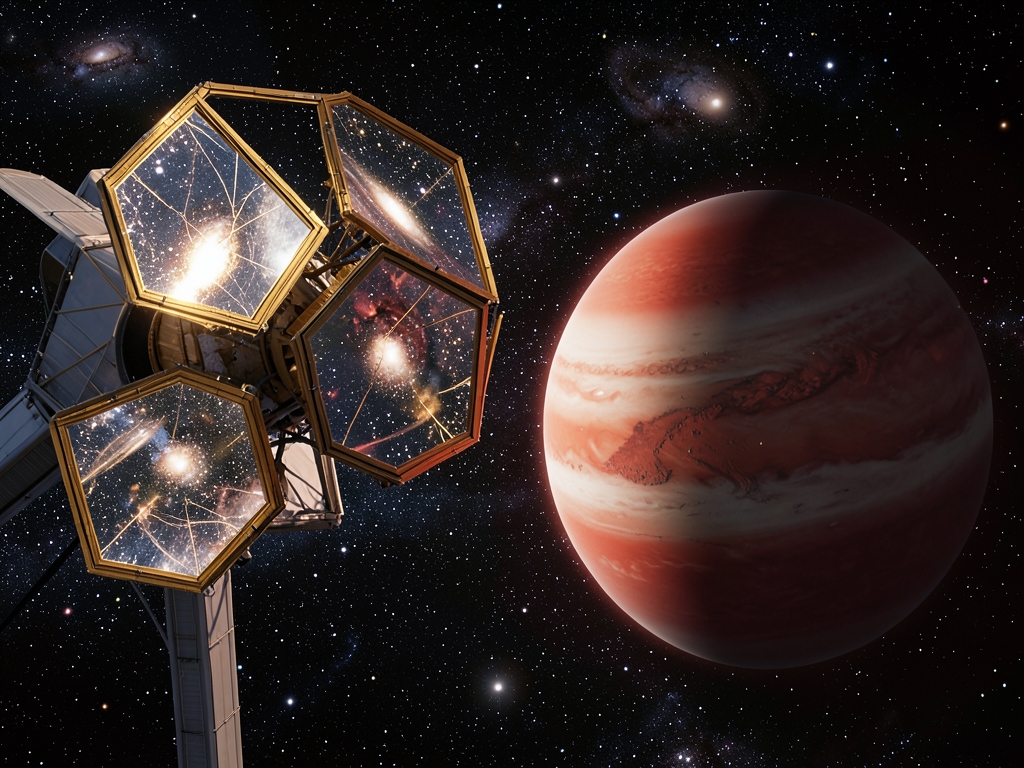
Astronomy has entered an unprecedented era of discovery, continually reshaping our understanding of the cosmos and our unique place within it. Recent observations conducted by international research teams utilizing the James Webb Space Telescope have delivered another milestone in planetary science. Astronomers have officially confirmed the spectroscopic detection of water vapor and complex atmospheric signatures within the habitable zone of a nearby rocky exoplanet system. This milestone represents a monumental leap forward in the long-standing scientific quest to characterize potentially habitable worlds beyond our solar system and evaluate their capacity to sustain liquid water on their surfaces.
For decades, detecting planetary atmospheres outside our solar system remained an elusive challenge restricted largely to massive gas giants orbiting perilously close to their host stars. Rocky worlds, which resemble Earth in mass and composition, proved exceedingly difficult to study due to their relatively small sizes and faint signals. However, the unprecedented sensitivity of infrared instruments deployed on modern space observatories has fundamentally changed the landscape of modern astrophysics. Researchers can now peer into distant stellar systems with remarkable precision, dissecting starlight filtered through alien atmospheres to uncover the fundamental molecular building blocks of planetary environments.
Understanding Transmission Spectroscopy and Atmospheric Detection
To comprehend the significance of this recent astronomical breakthrough, it is essential to examine the underlying physics of how scientists detect molecules across interstellar distances. The primary method utilized in this research is known as transmission spectroscopy. When an exoplanet passes directly in front of its host star from the perspective of an observer—an event astronomers refer to as a transit—a tiny fraction of the starlight filters through the outer envelope of the planet's atmosphere.
As this starlight travels through the atmospheric gases, specific molecules absorb distinct wavelengths of light corresponding to their unique quantum energy states. By analyzing the resulting light spectrum before, during, and after the transit, scientists can isolate the absorption fingerprint left behind by individual chemical species. Water vapor, carbon dioxide, methane, and various silicate particles each leave unmistakable spectral lines in the infrared spectrum.
| Molecular Species | Primary Absorption Band | Astrophysical Significance |
|---|---|---|
| Water Vapor (H2O) | Near-Infrared (1.1 - 1.7 µm) | Indicates hydrological cycling potential and atmospheric humidity |
| Carbon Dioxide (CO2) | Mid-Infrared (4.2 - 4.3 µm) | Provides insight into greenhouse warming and geological activity |
| Methane (CH4) | Infrared (3.3 µm) | Potential tracer for organic chemistry or biological processes |
| Molecular Oxygen (O2) | Optical / Near-Infrared | Key biomarker linked to photosynthetic activity on Earth |
The recent findings regarding the targeted exoplanet system validate advanced computer models that predicted stable atmospheric retention on worlds orbiting active M-dwarf stars. While previous observations occasionally hinted at atmospheric traces on scorching sub-Neptunes, finding definitive signatures of water vapor on a temperate, Earth-sized world within the traditional habitable zone marks a definitive turning point for astrobiology.
Characteristics of the Exoplanet System
The newly studied exoplanet orbits a stable, quiet red dwarf star located approximately forty light-years from Earth. Although red dwarfs are much cooler and smaller than our Sun, they represent the most common type of stellar object in the Milky Way galaxy, making them primary targets in the search for extraterrestrial life. Because these stars possess lower luminosity, their habitable zones—the orbital region where surface temperatures allow liquid water to exist stably—lie much closer to the star than Earth's orbit is to the Sun.
Info! Proximity to a red dwarf star often exposes orbiting planets to intense stellar wind and radiation, making atmospheric retention a critical factor in determining genuine habitability.
Planets orbiting within close-in habitable zones are frequently subjected to tidal locking, meaning one hemisphere remains in perpetual daylight while the other experiences eternal darkness. Theoretical models suggest that a thick atmosphere and active global weather patterns can effectively redistribute thermal energy from the dayside to the nightside, preventing total atmospheric collapse and maintaining temperate conditions along the terminator region.
The mass and radius measurements calculated for this specific exoplanet confirm that it is a dense, rocky world rather than a volatile-rich gas dwarf. Its surface gravity is sufficient to retain a substantial gaseous envelope without collapsing into a crushing, runaway greenhouse state akin to Venus. These physical characteristics narrow the parameters required for future observational campaigns aimed at mapping planetary weather and surface properties.
Implications for Astrobiology and the Search for Biosignatures
The confirmation of water vapor is only the first step in a much larger scientific endeavor. Astrobiologists emphasize that water is a necessary precondition for life as we know it, but it does not automatically indicate biological activity. Water can exist abundantly in abiotic environments, ranging from interstellar comets to ice giants in the outer solar system.
To elevate a world from potentially habitable to inhabited, researchers must identify robust biosignatures—combinations of gases that exist in chemical disequilibrium. On Earth, the coexistence of abundant molecular oxygen and methane requires continuous biological replenishment, as these two reactive gases would otherwise neutralize each other over geological timescales.
The detection of atmospheric water vapor on a temperate rocky world bridges the gap between theoretical astrobiology and empirical observation, bringing humanity closer to answering whether we are alone in the universe.
Future observation cycles scheduled for space-based infrared telescopes will focus on searching for secondary atmospheric constituents, such as ozone, nitrous oxide, and complex organic molecules. These upcoming spectroscopic analyses will help scientists differentiate between barren, water-rich steam worlds and dynamic, Earth-like environments capable of supporting complex ecosystems.
Technological Innovations Enabling Deep-Space Spectroscopy
The success of these recent observations underscores the extraordinary engineering feats behind modern space telescope design. Observing the faint atmospheric transmission signal of a small exoplanet requires isolating tiny fractional changes in starlight, often measuring less than one part in a thousand. Achieving this level of photometric precision demands extreme thermal stability, ultra-precise pointing control, and highly sensitive cryogenic detectors.
Key technological advancements driving modern astronomical breakthroughs include:
- Deployment of lightweight, deployable primary mirror segments coated in ultra-thin layers of vapor-deposited gold to optimize infrared light reflection.
- Advanced wavefront sensing and control algorithms that continuously correct mirror alignments in deep space to maintain optimal optical performance.
- Cryogenic cooling systems that maintain scientific instruments at temperatures near absolute zero to eliminate thermal background interference during infrared data collection.
- Sophisticated data-processing pipelines equipped with machine learning algorithms capable of filtering out stellar flare noise and instrumental drift from raw photometric datasets.
Without these sophisticated engineering milestones, peering into the atmospheres of distant rocky worlds would remain entirely theoretical. The collaboration between optical engineers, data scientists, and astrophysicists continues to push the boundaries of what instruments can achieve in deep space.
Warning! Interpreting exoplanetary spectra remains exceptionally complex; stellar contamination from starspots and active magnetic regions can sometimes mimic or obscure genuine atmospheric absorption features.
As research teams continue to refine their analytical techniques and gather extended datasets from subsequent transit observations, the scientific community anticipates even more detailed insights into neighboring planetary systems. Each successful observation expands our collective knowledge of planetary formation, stellar evolution, and the cosmic distribution of essential chemical compounds.
How did scientists detect water vapor on the exoplanet?
Scientists utilized transmission spectroscopy, analyzing starlight that filtered through the exoplanet's atmosphere as it crossed in front of its host star to identify molecular absorption fingerprints.
Does finding water vapor mean life exists on the exoplanet?
No, water vapor is a necessary precursor for life as we know it, but it does not prove biological activity. Researchers must look for additional biosignatures, such as atmospheric disequilibrium gases.
What type of star does this newly studied exoplanet orbit?
The exoplanet orbits a stable red dwarf star located approximately forty light-years away from Earth, positioned within the star's calculated habitable zone.
Why are rocky exoplanets difficult to study compared to gas giants?
Rocky exoplanets are much smaller and generate significantly fainter signals during stellar transits, requiring ultra-sensitive infrared space telescopes and advanced spectral analysis to characterize their atmospheres.
In conclusion, the confirmed detection of water vapor in the habitable zone of a nearby rocky exoplanet marks a monumental chapter in modern science. By combining state-of-the-art space instrumentation with rigorous astrophysical analysis, humanity is steadily unlocking the deepest mysteries of the universe and moving closer to answering fundamental questions about planetary habitability across the galaxy.
