

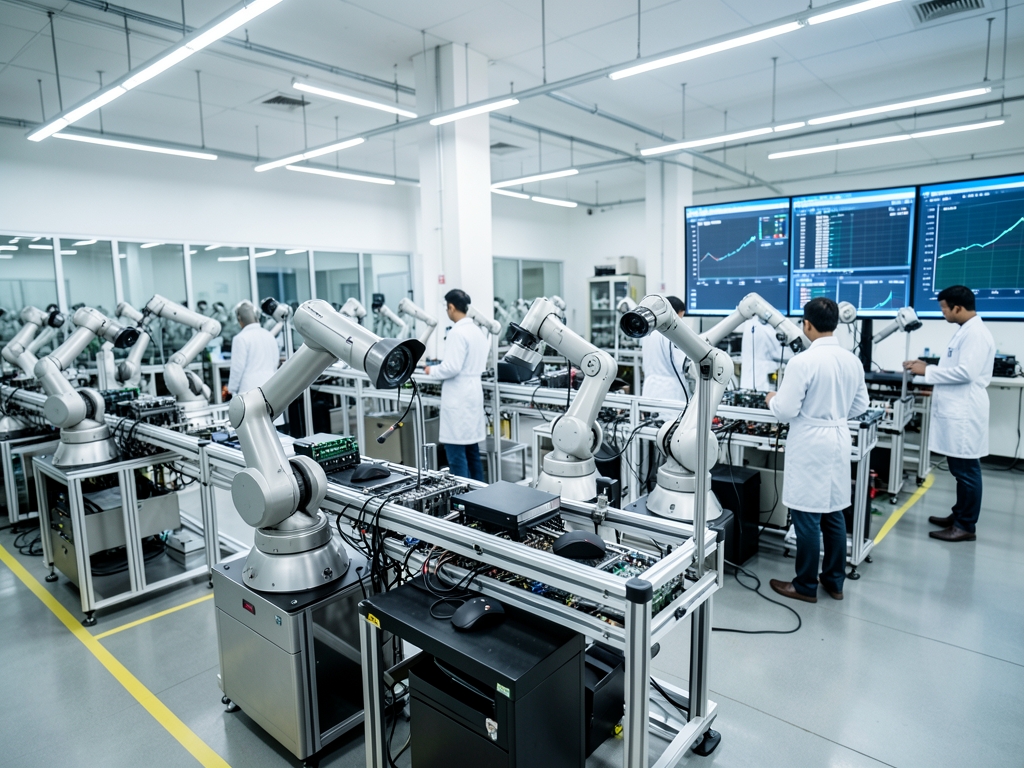
The global technology manufacturing landscape is undergoing a significant transformation as major multinational hardware brands diversify their production hubs across emerging industrial markets. A prominent milestone in this ongoing shift is Logitech's strategic decision to commence local manufacturing operations in India, initiating production with core computer peripherals including webcams and computer mice. This industrial expansion highlights the growing importance of regional supply chain resilience, proximity to burgeoning domestic consumer markets, and the alignment of multinational hardware design with localized manufacturing incentives.
For decades, the global supply chain for consumer electronics relied heavily on concentrated manufacturing clusters, primarily situated within specific East Asian corridors. While this centralized model optimized production velocity during periods of predictable global trade, recent disruptions have exposed structural vulnerabilities. In response, technology giants are actively distributing their production ecosystems. India has emerged as a primary destination for this capital redirection, supported by robust governmental manufacturing support initiatives, skilled engineering talent, and rapidly expanding digital infrastructure.
Strategic Scope of Logitech's Manufacturing Launch in India
The initial phase of Logitech's manufacturing rollout in India focuses on high-volume, high-precision peripheral devices. Webcams and computer mice represent ideal product categories for establishing localized assembly lines due to their standardized component requirements, complex optical alignment needs, and massive global demand. Establishing local production lines for these devices requires rigorous quality control protocols to ensure that products manufactured in Indian facilities meet the exact engineering and durability standards of units produced anywhere else in the world.
Webcam manufacturing, in particular, demands advanced calibration facilities. Modern webcams incorporate sophisticated CMOS sensors, precision lens elements, auto-focus mechanisms, and digital signal processors. Ensuring that these optical assemblies are correctly calibrated on local assembly lines requires the integration of automated optical inspection systems and specialized testing benches. Similarly, computer mice production involves precision plastic injection molding, surface coating durability testing, micro-switch actuation verification, and wireless RF testing for modern corded and cordless models.
Diversifying hardware manufacturing across regional hubs ensures long-term supply chain stability while enabling brands to respond more dynamically to regional market demands and regulatory frameworks.
By establishing manufacturing operations directly within India, Logitech aims to streamline logistics timelines, reduce carbon footprints associated with long-haul international shipping, and navigate import tariffs more effectively. This localized approach not only secures a stable supply for the rapidly growing South Asian technology market but also positions the regional facilities as potential export hubs for neighboring international territories.
The Broader Evolution of Hardware Production in South Asia
Logitech's entry into Indian manufacturing is part of a broader macroeconomic trend involving major consumer technology brands. Over the past several years, the Indian government has rolled out ambitious Production-Linked Incentive (PLI) schemes designed to attract global electronics manufacturers. These financial and regulatory incentives have successfully drawn multi-billion-dollar investments into smartphone assembly, semiconductor packaging, and now, advanced computer peripherals.
The multiplier effect of such investments extends far beyond final assembly. To sustain high-volume manufacturing of webcams and mice, a robust local tier-1 and tier-2 supplier ecosystem must develop. This includes local fabrication of plastic enclosures, printed circuit board assembly (PCBA) capabilities, surface-mount technology (SMT) placement services, and specialized packaging production. As these supporting industries mature within the region, the overall cost structure improves, fostering an environment of self-sustaining industrial innovation.
Engineering Challenges in Peripheral Manufacturing
Transitioning precision hardware manufacturing to a new geographic region involves overcoming substantial technical hurdles. Precision computer peripherals rely on tight manufacturing tolerances. For instance, the tactile feedback of a mechanical mouse switch is measured in grams of actuation force and millimeters of travel distance. Maintaining this exact tactile profile requires consistent calibration of automated pick-and-place machinery and injection molding tools.
Furthermore, optical sensors utilized in high-performance computer mice must be housed in rigid enclosures that prevent microscopic dust contamination during the assembly phase. Cleanroom standards must be strictly enforced within the manufacturing plant, even for peripheral devices, to prevent dust particles from interfering with optical tracking arrays or webcam sensor glass.
| Product Category | Key Manufacturing Requirements | Quality Assurance Focus |
|---|---|---|
| Computer Mice | Plastic injection molding, micro-switch integration, RF testing | Tactile durability, click latency, sensor accuracy |
| Webcams | Optical lens alignment, CMOS sensor seating, auto-focus calibration | Color reproduction, low-light performance, frame-rate stability |
Info! Localized manufacturing allows brands to iterate faster on hardware designs based on direct regional feedback and shorter distribution feedback loops.
Implications for Global Consumers and Enterprise Markets
While the immediate operational impact of this manufacturing expansion is regional, the long-term implications extend to global technology consumers and enterprise procurement managers. A diversified manufacturing footprint ensures that unexpected disruptions in one geographic sector do not paralyze worldwide product availability. For enterprise IT buyers outfitting modern hybrid workspaces with standardized webcams and input devices, supply chain redundancy translates into more reliable fulfillment timelines and more stable pricing models.
Moreover, as environmental regulations tighten across Europe and North America, multinational brands are under increasing pressure to optimize their shipping routes and minimize transport-related emissions. Manufacturing products closer to the end-consumer markets or within balanced regional hubs directly supports corporate sustainability targets.
What products are included in Logitech's initial manufacturing rollout in India?
The initial manufacturing phase focuses on core computer peripherals, specifically webcams and computer mice, which require high-precision assembly and strict optical and mechanical quality control.
Why are major technology companies shifting manufacturing operations to India?
Companies are diversifying their supply chains to enhance resilience, leverage supportive government manufacturing incentives, reduce logistics bottlenecks, and gain closer proximity to growing regional markets.
What technical challenges are involved in manufacturing webcams locally?
Webcam production requires advanced cleanroom environments, precise CMOS sensor seating, complex optical lens alignment, and automated calibration benches to ensure consistent video quality and frame-rate stability.
How does localized manufacturing benefit global enterprise customers?
Localized manufacturing provides supply chain redundancy, preventing single-region disruptions from halting global product availability and resulting in more stable fulfillment timelines for enterprise IT procurement.
As the integration of local component suppliers progresses, Logitech's manufacturing initiative in India serves as a clear indicator of where the hardware industry is heading. By balancing global engineering standards with regional manufacturing agility, technology leaders are building a more resilient, efficient, and adaptable future for consumer and enterprise electronics.
