

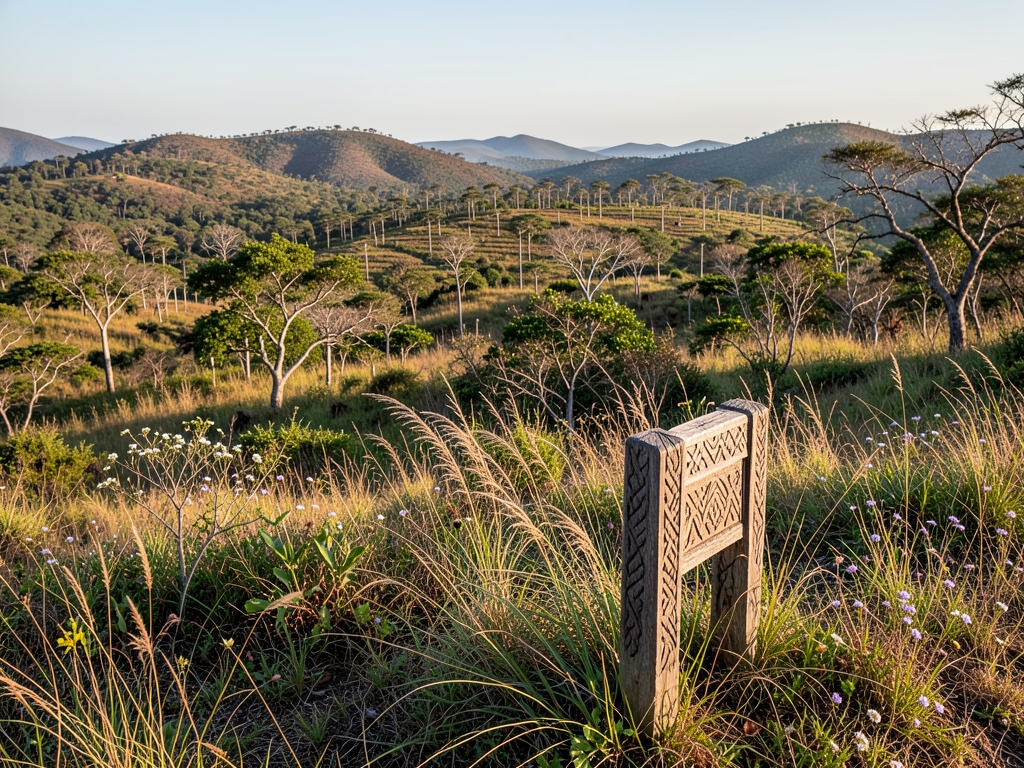
Traditional approaches to global conservation have long relied on a simple formula: draw a boundary around a tract of wilderness, designate it as a national park or strict nature reserve, and restrict human activity within its borders. While this model has successfully safeguarded countless iconic habitats and endangered species, it faces growing limitations in a rapidly changing world. As governments and international bodies race toward ambitious global biodiversity targets—most notably the objective to protect thirty percent of Earth's land and marine areas by the year 2030—conservation scientists and policymakers increasingly recognize that strict state-managed parks alone cannot achieve these goals. The sheer scale of the challenge requires looking far beyond conventional park borders to embrace diverse, decentralized forms of environmental stewardship.
Enter Other Effective Area-Based Conservation Measures, widely known by the acronym OECMs. Formally recognized internationally under the Convention on Biological Diversity, OECMs represent a paradigm shift in how humanity values and protects functional ecosystems. Unlike traditional protected areas that are established primarily and explicitly for conservation outcomes, OECMs are geographically defined spaces governed and managed in ways that achieve positive, long-term in-situ conservation of biodiversity alongside ancillary objectives such as sustainable resource use, cultural preservation, or indigenous livelihood maintenance. This comprehensive guide explores what OECMs are, how they differ from conventional parks, and why they are rapidly transforming international conservation strategies for decades to come.
Understanding the Core Concept of OECMs
To grasp the significance of Other Effective Area-Based Conservation Measures, one must understand the structural bottlenecks of traditional conservation frameworks. Historically, land designated for strict protection often overlooked vast territories managed by indigenous communities, local farmers, private landowners, and military or cultural institutions. Many of these lands harbored exceptional biodiversity and thriving ecological networks, yet because their primary management objective was cultural heritage, sustainable grazing, watershed protection, or sacred ritual rather than biodiversity preservation, they remained officially uncounted in global conservation tallies.
OECMs bridge this critical gap by providing formal international recognition to areas where biodiversity conservation is achieved as a byproduct of effective, sustainable management practices. For instance, a community forest managed for generations to supply sustainable timber and non-timber forest products may maintain a remarkably rich understory, complex canopy structures, and robust populations of native fauna. Although the community's immediate goal was sustainable resource yields rather than strict nature preservation, the resulting ecological health is undeniable. By evaluating these landscapes based on their actual conservation outcomes rather than their original administrative designation, OECMs bring millions of hectares of ecologically vital territory into the global accounting system without uprooting local communities or imposing restrictive park boundaries.
The Global 30 by 30 Race and the Spatial Challenge
The urgency surrounding OECMs stems directly from global commitments under the Kunming-Montreal Global Biodiversity Framework, which established the landmark target to conserve at least thirty percent of the world's terrestrial and marine areas by 2030. Achieving this monumental objective solely through the creation of new state-run national parks is practically impossible and socially fraught. Expanding traditional parks often requires massive financial capital, extensive bureaucratic oversight, and, in worst-case scenarios, the displacement of local populations who have sustainably stewarded those lands for centuries.
Relying exclusively on conventional protected areas also creates ecological islands—fragmented pockets of nature surrounded by intensive agriculture, urban sprawl, and industrial infrastructure. These isolated reserves struggle to support wide-ranging species, maintain genetic diversity, and adapt to shifting climatic conditions. OECMs offer a powerful antidote to this fragmentation by validating and connecting sprawling corridors of managed lands. Because OECMs frequently encompass indigenous territories, private conservancies, sacred groves, and sustainable marine fisheries, they create permeable ecological networks where wildlife can move freely across diverse human-dominated landscapes.
| Metric or Feature | Traditional Protected Areas | Other Effective Area-Based Conservation Measures (OECMs) |
|---|---|---|
| Primary Objective | Explicitly biodiversity conservation | Any objective, provided biodiversity conservation is a sustained byproduct |
| Governance Types | Government agencies, state ministries | Indigenous peoples, local communities, private entities, collaborative bodies |
| Human Activity | Often restricted, regulated, or excluded | Integrated sustainable use, cultural practices, and local livelihoods |
| Contribution to 30x30 | Directly counted as official protected areas | Counted as equivalent complementary conservation areas |
Diverse Governance Models and Local Stewardship
One of the most transformative aspects of the OECM framework is its radical inclusivity regarding governance. Traditional conservation has frequently suffered from top-down management structures that alienated local populations and ignored traditional ecological knowledge. OECMs flip this dynamic by empowering the people who live within and depend on these ecosystems.
Info! OECM recognition does not transfer land ownership or impose external legal restrictions; instead, it validates existing effective management practices and provides international backing to local stewardship efforts.
Across the globe, various governance types qualify as OECMs:
- Indigenous and Community Lands: Territories traditionally owned, managed, and protected by indigenous peoples whose cultural practices intrinsically maintain high biodiversity.
- Private Conservancies: Privately owned ranches, forests, or corporate holdings managed under strict ecological guidelines that preserve native habitats alongside commercial operations.
- Sacred Natural Sites: Groves, mountains, rivers, and coastal waters protected by spiritual or religious traditions that prohibit destructive exploitation.
- Institutional Grounds: Lands surrounding military installations, watersheds, university research stations, and government properties where public access is limited and ecosystems remain largely undisturbed.
Scientific Evaluation and Rigorous Criteria
While OECMs offer incredible flexibility, international conservation authorities maintain strict scientific criteria to prevent greenwashing and ensure that designated areas deliver genuine ecological benefits. An area cannot simply self-identify as an OECM; it must undergo rigorous evaluation against established international guidelines set by the International Union for Conservation of Nature (IUCN) and the Convention on Biological Diversity.
Evaluating authorities assess whether the area is geographically defined, whether its current governance and management are effective and long-term, and whether measurable biodiversity outcomes are being achieved. This verification process ensures that OECM status is reserved for functional ecosystems where ecological integrity is actively maintained. By grounding the framework in empirical science, conservation bodies maintain high standards while expanding the protective umbrella to include diverse management paradigms.
Challenges and Implementation Hurdles
Despite their immense potential, integrating OECMs into national and global conservation strategies presents distinct challenges. Identifying, mapping, and verifying qualifying areas requires substantial administrative capacity, robust stakeholder engagement, and transparent data sharing. In many regions, local communities and private landowners may hesitate to seek formal OECM recognition out of fear that government agencies might eventually impose restrictive regulations or override local governance rights.
Furthermore, securing long-term financial support for OECM stewards remains an ongoing hurdle. While traditional national parks often receive state budgetary allocations, community-managed OECMs frequently rely on fragmented grants, ecotourism revenues, or philanthropic support. Establishing equitable benefit-sharing mechanisms and sustainable funding streams is vital to ensure that local stewards are adequately rewarded for the global ecological services their lands provide.
The Future of Global Conservation
As the international community navigates the complexities of environmental degradation and climate change, OECMs represent a mature, realistic, and inclusive evolution in conservation science. By recognizing that effective stewardship does not require fencing nature off from humanity, the global conservation movement is building bridges between local survival and planetary health. Empowering indigenous guardians, supporting private landowners, and validating community-managed landscapes ensures that the path to achieving global biodiversity targets is as diverse and resilient as nature itself.
What does the acronym OECM stand for in conservation?
OECM stands for Other Effective Area-Based Conservation Measures. It refers to geographically defined spaces managed in ways that achieve positive, long-term conservation of biodiversity outside of traditional national parks.
How do OECMs differ from traditional national parks?
Traditional parks are established explicitly and primarily for nature protection with strict limits on human activity. OECMs can have primary goals like sustainable resource use or cultural heritage, as long as biodiversity conservation is a guaranteed, sustained byproduct of that management.
Do OECMs count toward global biodiversity targets like 30 by 30?
Yes. OECMs are officially recognized under the Convention on Biological Diversity and count toward international targets, helping nations reach the goal of protecting thirty percent of Earth's land and marine areas by 2030.
Who governs and manages OECMs?
OECMs feature diverse governance models, including indigenous communities, local citizen groups, private landowners, religious institutions, and military authorities, emphasizing decentralized and community-led stewardship.
Ultimately, the widespread adoption of OECMs signals a profound philosophical maturation within environmental science. We are moving away from an era of fortress conservation that segregated people from nature and toward an interconnected model that honors human stewardship, traditional knowledge, and sustainable coexistence. As these measured frameworks continue to scale globally, they offer our best hope for safeguarding Earth's remaining biodiversity while respecting the rights and livelihoods of local communities.
