

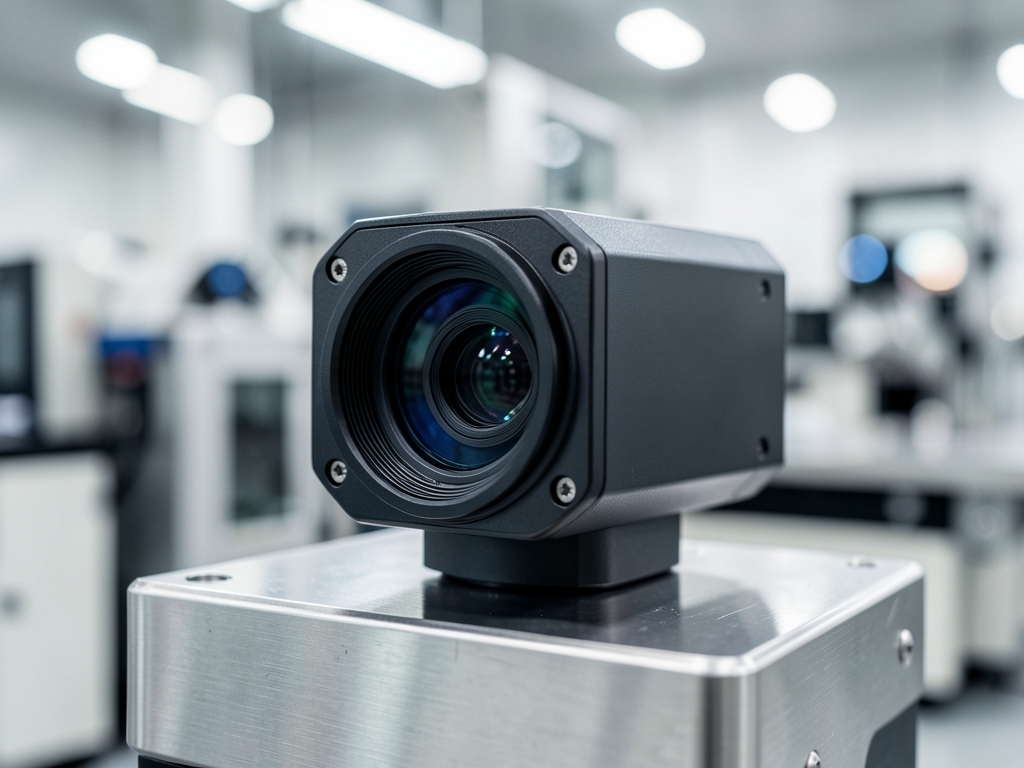
The landscape of edge computing and autonomous systems is undergoing a profound structural evolution as hardware manufacturers bridge the gap between abstract machine learning algorithms and physical real-world environments. Recent industry milestones highlight a critical shift toward specialized processing hardware designed to operate outside traditional cloud data centers. Among these developments, the commencement of commercial production for advanced edge sensors marks a pivotal moment for industrial automation, smart infrastructure, and collaborative robotics.
Physical artificial intelligence requires robust, low-latency perceptual hardware capable of interpreting complex spatial dynamics in real time. Unlike enterprise software models that process structured text or pre-recorded video feeds, edge-deployed intelligence must ingest high-volume sensor streams directly from the physical world. This necessitates specialized semiconductor architectures, high-resolution solid-state lidar systems, and sophisticated optical recognition units that operate reliably under varying environmental constraints.
The Architecture of Physical AI at the Edge
Deploying artificial intelligence directly onto physical hardware platforms introduces rigorous engineering challenges. Power consumption, thermal dissipation, mechanical vibration tolerance, and optical interference all impose strict design limits on modern sensor systems. To overcome these barriers, manufacturers have refined their optical and silicon pipelines, integrating advanced perception algorithms directly into hardware modules.
At the core of this hardware revolution is the integration of high-density spatial sensing with localized neural processing units. Traditional machine learning workflows often rely on transmitting raw sensor telemetry to centralized cloud servers for inference. However, applications such as autonomous material handling, automated guided vehicles, and smart infrastructure demand instantaneous decision-making where network latency or connectivity loss could result in critical system failures.
By processing data locally at the edge, devices can execute collision avoidance, path planning, and object classification within milliseconds. This localized approach reduces bandwidth congestion, enhances operational security, and ensures continuous performance even in remote or disconnected environments. The commercial introduction of scalable edge hardware allows developers to deploy sophisticated spatial awareness models across diverse commercial fleets without redesigning underlying host architectures.
Industrial Applications and Sector Impact
The maturation of edge-native sensing technology impacts multiple industrial sectors seeking reliable automation solutions. Warehousing and logistics operations represent primary deployment zones, where autonomous mobile robots must navigate dynamic environments filled with moving personnel, shifting inventory pallets, and variable lighting conditions.
Advanced lidar and perception systems provide these robots with millimeter-accurate depth perception and velocity calculations. This high-fidelity spatial data feeds directly into onboard decision-making frameworks, allowing automated systems to predict pedestrian trajectories and adjust navigation paths fluidly. Beyond logistics, smart infrastructure initiatives utilize edge sensors for traffic management, structural monitoring, and perimeter security.
- Autonomous Material Handling: Real-time obstacle detection and dynamic rerouting in crowded industrial facilities.
- Smart Transportation: Enhanced intersection monitoring and pedestrian tracking for intelligent transport networks.
- Industrial Robotics: Precise collaborative positioning for robotic arms working alongside human operators on factory floors.
- Perimeter Security: Automated intrusion detection systems capable of distinguishing between environmental interference and genuine physical threats.
The standardization of these components simplifies integration for system integrators and original equipment manufacturers. Instead of engineering proprietary sensing arrays from scratch, developers can incorporate production-ready modules certified for industrial deployment, significantly shortening time-to-market for new automation products.
Overcoming Hardware and Integration Challenges
Transitioning from laboratory prototypes to full-scale commercial manufacturing involves navigating complex supply chain requirements and rigorous quality control standards. Industrial hardware must withstand extreme temperature fluctuations, continuous mechanical shock, and persistent exposure to moisture and dust.
Manufacturers achieve this durability through advanced hermetic sealing, solid-state optical design with no moving mechanical parts, and rigorous stress testing protocols. Eliminating moving components drastically reduces wear and tear over extended operational lifespans, minimizing maintenance overhead for enterprise fleets.
Info! Edge-native AI hardware architectures prioritize low power draw and high thermal efficiency to ensure reliable operation within closed, unventilated enclosures.
Furthermore, software compatibility remains a vital consideration. Modern edge sensors are equipped with standardized application programming interfaces and hardware abstraction layers, enabling seamless integration with popular robotics operating systems and computer vision libraries. This interoperability ensures that engineering teams can update perception models and calibration parameters over the air without requiring physical access to deployed hardware units.
The Broader Outlook for Edge Computing and Sensor Integration
As commercial production ramps up across the sector, the accessibility of high-performance edge hardware is expected to accelerate innovation in spatial computing. Industries previously hesitant to adopt automation due to reliability concerns or high integration costs now have access to standardized, robust components.
The convergence of advanced optics, efficient silicon accelerators, and refined machine learning models points toward a future where intelligent physical systems operate autonomously and safely in unstructured environments. Whether deployed in automated manufacturing plants, agricultural machinery, or urban transit systems, edge-native AI is redefining the boundaries of what automated hardware can achieve.
What is physical AI at the edge?
Physical AI at the edge refers to artificial intelligence systems that run directly on local hardware devices—such as sensors, robots, and vehicles—allowing them to perceive and react to the physical world instantly without relying on cloud servers.
Why is commercial production of edge sensors important?
Commercial production ensures that reliable, standardized, and industrial-grade spatial sensing hardware is widely available to manufacturers and system integrators, lowering deployment costs and accelerating automation projects.
How do solid-state sensors improve industrial reliability?
By eliminating moving mechanical parts, solid-state sensors reduce wear and tear over time, making them highly resistant to mechanical shock, vibration, and harsh environmental conditions found in factories and warehouses.
What industries benefit most from edge perception technology?
Warehousing and logistics, industrial manufacturing, smart city infrastructure, autonomous transportation, and agricultural automation benefit significantly from real-time spatial sensing and localized data processing.
In conclusion, the successful transition of advanced perception modules into commercial manufacturing marks a foundational step for the next generation of smart devices. By combining ruggedized physical design with localized artificial intelligence, the technology empowers autonomous systems to navigate complex environments with unprecedented precision and reliability.
