

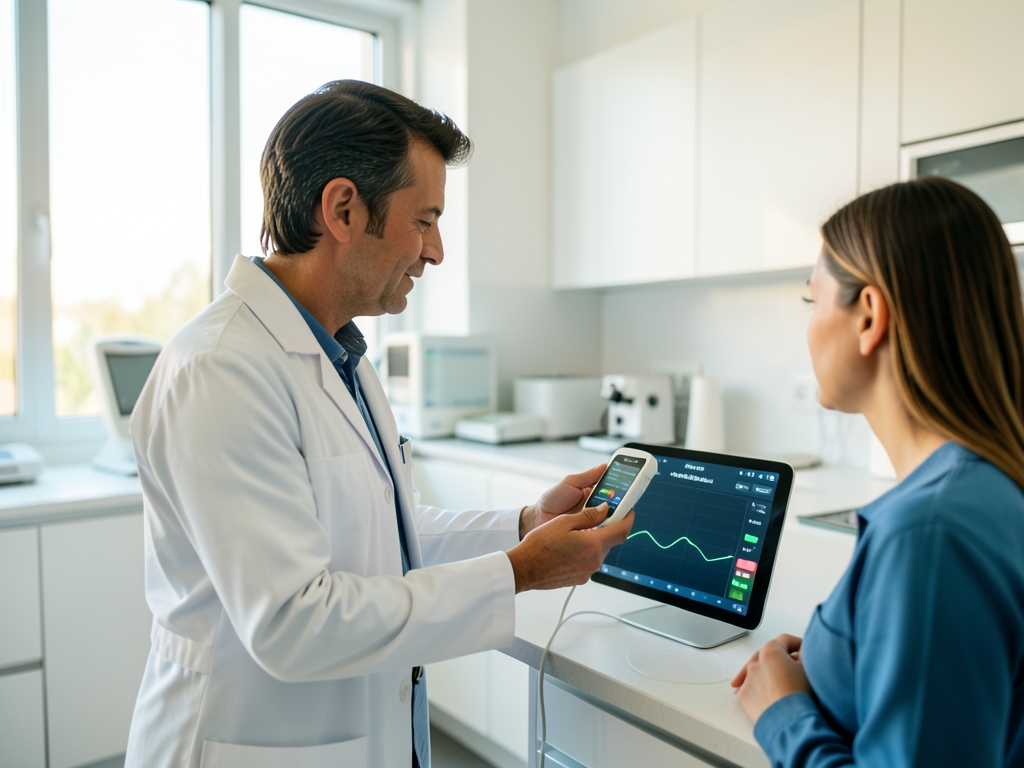
The management of diabetes has historically been divided by a sharp clinical line: those who require insulin therapy and those who manage their condition through oral medications, lifestyle adjustments, and diet alone. For decades, continuous glucose monitoring (CGM) devices were considered an essential tool primarily for individuals taking multiple daily insulin injections. However, recent landmark clinical investigations published in the New England Journal of Medicine (NEJM) are challenging traditional paradigms, demonstrating significant health benefits for expanding CGM adoption among individuals with diabetes who do not take insulin.
This evolving therapeutic landscape represents a major shift in how clinicians approach glucose tracking, patient empowerment, and metabolic control. By providing real-time glycemic data without the discomfort of routine finger-prick blood glucose tests, modern sensor technology offers profound insights into how daily nutrition, physical activity, and stress influence blood sugar levels. Understanding the methodology behind these findings and their broader implications for international healthcare systems is vital for patients and medical professionals alike.
The Paradigm Shift in Non-Insulin Diabetes Management
For individuals managing diabetes without insulin, monitoring blood sugar has traditionally relied on self-monitoring of blood glucose (SMBG) using traditional blood glucose meters. While SMBG provides isolated snapshots of blood sugar levels at specific moments in time, it often fails to capture dangerous glycemic variability, overnight fluctuations, or post-prandial spikes. Without continuous visibility, patients frequently struggle to connect specific daily habits with their metabolic responses.
The recent NEJM study highlights how continuous glucose monitoring bridges this informational gap. By wearing a small, discreet sensor on the back of the arm that measures interstitial glucose levels continuously, patients gain access to continuous data streams. This constant feedback loop empowers individuals to make informed behavioral modifications long before glycemic control deteriorates to the point of requiring medication escalation. Clinical researchers emphasize that wearable sensors transform passive patients into active participants in their own chronic disease management.
Key Findings From the Recent NEJM Clinical Investigation
The research published in the New England Journal of Medicine provides robust empirical evidence regarding the efficacy of CGM technology in non-insulin-treated populations. Investigators evaluated clinical endpoints, including changes in glycated hemoglobin (HbA1c) levels, frequency of hypoglycemic events, and overall patient adherence to chronic monitoring regimens.
Principal findings from the investigation indicate that participants utilizing continuous glucose monitors achieved meaningful reductions in HbA1c compared to control groups relying solely on traditional blood glucose meters. Furthermore, patients demonstrated enhanced time-in-range metrics, reflecting more stable glycemic control throughout a typical twenty-four-hour cycle. These improvements occurred without a corresponding increase in severe hypoglycemic episodes, alleviating a primary safety concern historically associated with intensive glucose monitoring.
| Metric Evaluated | Traditional SMBG Group | CGM Intervention Group | Clinical Outcome |
|---|---|---|---|
| Average HbA1c Reduction | Minimal change | Statistically significant decrease | Improved long-term glycemic control |
| Glycemic Variability | High undetected volatility | Real-time visibility and mitigation | Reduced post-prandial glucose spikes |
| Patient Engagement Score | Moderate compliance | High continuous engagement | Sustained lifestyle modifications |
Understanding the Technology Behind Continuous Glucose Monitors
To fully appreciate the clinical impact of these research findings, it is helpful to examine how modern continuous glucose monitors function. Unlike traditional meters that measure glucose from whole blood drawn via finger punctures, CGM systems measure glucose concentrations in the interstitial fluid surrounding tissue cells.
A typical CGM system comprises three core components:
- A tiny disposable sensor inserted just beneath the skin by a specialized applicator, designed to remain in place for up to fourteen days.
- A small reusable transmitter attached to the sensor that collects and wirelessly transmits electrochemical readings to a compatible mobile phone or dedicated receiver.
- Software applications featuring customizable alarms, trend arrows, and comprehensive ambulatory glucose profile reports that summarize glycemic patterns over time.
Info! Modern continuous glucose monitors do not require routine fingerstick calibrations, making them significantly more convenient for daily use among non-insulin-dependent individuals.
Implications for Global Healthcare Systems and Clinical Practice
The integration of CGM technology into standard care protocols for non-insulin-treated diabetes carries profound economic and logistical implications for healthcare providers across Europe, the United States, and international markets. Chronic disease management represents a major portion of global healthcare expenditures, with diabetes-related complications accounting for hundreds of billions of dollars annually.
By preventing long-term microvascular and macrovascular complications through proactive early glycemic control, expanded CGM utilization has the potential to reduce hospitalization rates, emergency department visits, and long-term pharmacological costs. However, widespread clinical adoption requires healthcare policymakers, insurance providers, and national health services to reevaluate reimbursement policies that have historically restricted CGM coverage exclusively to insulin-dependent patient cohorts.
The translation of clinical trial findings into everyday practice requires robust health economic evaluations, ensuring that patients who stand to benefit most from continuous glucose monitoring gain equitable access regardless of their specific pharmaceutical regimen.
Addressing Potential Challenges and Limitations
Despite overwhelmingly positive clinical outcomes, researchers and healthcare professionals acknowledge several practical challenges associated with widespread CGM adoption among non-insulin-treated patients. Understanding these limitations ensures realistic expectations and helps clinicians tailor interventions effectively.
- Skin Sensitivity and Adhesive Reactions: A subset of users may experience localized skin irritation or allergic contact dermatitis caused by the medical-grade adhesives securing the sensor.
- Data Overload and Anxiety: Continuous access to complex biometric data can occasionally induce anxiety or obsessive tracking behaviors if patients are not adequately supported by clinical education.
- Device Cost and Reimbursement Barriers: Out-of-pocket expenses for ongoing sensor supplies remain a substantial hurdle for individuals whose health insurance plans do not cover CGM technology for non-insulin users.
- Sensor Dislodgement: Physical activity, contact sports, or accidental catching on clothing can occasionally dislodge sensors prematurely, requiring replacement before the standard wear cycle concludes.
Warning! Patients should always consult their primary care physician or endocrinologist before altering diabetes management plans or discontinuing prescribed monitoring routines.
Future Directions in Metabolic Health Research
The NEJM study serves as a foundational stepping stone for future research in metabolic health and preventive endocrinology. Investigators are already planning subsequent studies to evaluate the cost-effectiveness of long-term CGM use in prediabetic populations and individuals with newly diagnosed type 2 diabetes.
As sensor technology continues to evolve, future iterations are expected to incorporate multi-biometric sensing capabilities, such as real-time lactate, ketoning, and continuous cortisol tracking. These advancements will provide an even more comprehensive picture of metabolic health, bridging the gap between clinical endocrinology and consumer wellness platforms.
Who was included in the recent NEJM study on continuous glucose monitors?
The study specifically evaluated individuals diagnosed with diabetes who do not take insulin, assessing how continuous glucose monitoring impacts their long-term glycemic control compared to traditional blood glucose meters.
How do continuous glucose monitors differ from traditional blood glucose meters?
Traditional meters require painful finger pricks to measure whole blood glucose at isolated moments, whereas continuous glucose monitors use a small subcutaneous sensor to measure interstitial fluid glucose levels automatically every few minutes.
Did participants using CGMs experience more hypoglycemic events?
No, clinical data showed that patients achieved better overall glycemic stability and improved time-in-range metrics without experiencing an increase in severe hypoglycemic episodes.
Are insurance policies expected to cover CGM devices for non-insulin users?
While coverage varies significantly by region and insurance provider, mounting clinical evidence from reputable journals like the NEJM is actively influencing policymakers to reevaluate reimbursement criteria for broader patient populations.
In conclusion, the publication of the NEJM study marks a pivotal turning point in diabetes care. By validating the efficacy of continuous glucose monitoring for individuals managing diabetes without insulin, the medical community is moving toward a more proactive, personalized, and data-driven approach to metabolic health. As healthcare systems adapt to these findings, patients stand to benefit from improved clinical outcomes, enhanced disease awareness, and healthier futures.
