

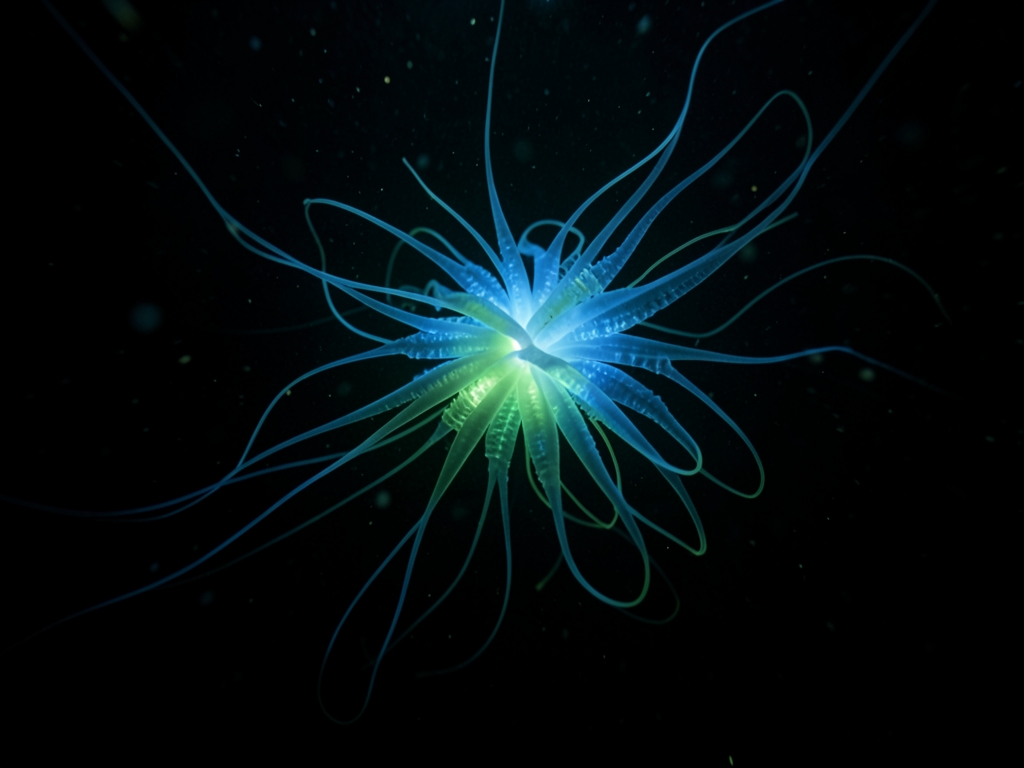
The deep ocean, a vast expanse covering more than 60 percent of the Earth's surface, remains the planet's final frontier. While surface-level marine ecosystems have been studied extensively, the bathypelagic zone—the 'midnight zone'—continues to yield groundbreaking discoveries. Recent findings published within the last month by marine biologists utilizing advanced submersible technology have shed new light on the sophisticated methods of bioluminescent communication used by organisms living in complete darkness.
Understanding the Midnight Zone's Light Language
Bioluminescence is not merely a curious byproduct of chemical reactions in the deep sea; it is a fundamental survival mechanism. Recent research has confirmed that organisms in the deep sea, ranging from jellyfish to complex cephalopods, employ intricate light signaling patterns to navigate, hunt, and defend against predators. Scientists have long known that these creatures produce their own light through luciferin-luciferase reactions, but the nuance of these signals is only now being fully decoded.
The latest study, which integrated data from remote-operated vehicles (ROVs) equipped with ultra-low-light cameras, suggests that these signals are far more diverse than previously thought. Researchers observed that specific species use rhythmic pulsing to attract mates, while others deploy rapid, multi-colored 'flashes' as a defensive mechanism to confuse potential attackers. This discovery challenges the traditional view of the deep sea as a silent, static environment, revealing it instead as a vibrant, communicative landscape.
Technological Advancements in Deep-Sea Observation
The ability to capture these light patterns in real-time is a direct result of recent advancements in deep-sea optical sensors. Traditional cameras often required artificial lights that would inadvertently scare away the creatures being studied, effectively blinding them and disrupting their natural behavior. The new generation of high-sensitivity CMOS sensors allows scientists to record bioluminescent activity in its natural state without the need for intrusive illumination.
This technological leap has allowed for a breakthrough in ecological modeling. By mapping the frequency and duration of these light signals, researchers can now estimate the population density of specific midwater species with unprecedented accuracy. This is crucial for conservation efforts, as the deep sea is increasingly threatened by human activities such as deep-sea mining and bottom-trawling, which can alter the delicate chemical balance of the water column.
| Mechanism | Primary Function | Observed Species |
|---|---|---|
| Pulsing Light | Mating Attraction | Deep-sea Siphonophores |
| Rapid Flashing | Predator Distraction | Midwater Squid |
| Constant Glow | Counter-illumination | Hatchetfish |
| Localized Bursts | Prey Luring | Anglerfish |
The Ecological Importance of Bioluminescence
The research emphasizes that bioluminescence is central to the carbon cycle of the ocean. Many bioluminescent organisms are part of the vertical migration pattern, moving from the depths to the surface at night to feed and returning to the dark during the day. Their light patterns help them maintain group cohesion during these massive migrations, which act as a biological pump, transporting carbon from the surface to the deep ocean floor. Disruptions to this signaling, whether through light pollution or shifts in sea temperature, could have cascading effects on global climate regulation.
Furthermore, the chemical compounds used by these organisms are currently being investigated for potential applications in medical imaging and biotechnology. The enzymes that produce light are highly specific, and scientists are exploring how these could be used as markers in molecular diagnostics to track the movement of cells within the human body.
Info! The study highlights that bioluminescence is found in over 75 percent of deep-sea organisms, making it the most common form of communication in the largest habitat on Earth.
Implications for Deep-Sea Conservation
As international discussions regarding the protection of the high seas continue, this research provides a strong scientific basis for designating 'dark zones' as protected areas. Light pollution from industrial activities is a growing concern, as it can interfere with the signaling of species that have evolved over millions of years to thrive in absolute darkness. Protecting these ecosystems requires more than just limiting physical extraction; it requires maintaining the integrity of the sensory environment.
The researchers involved in this study have called for a global initiative to monitor bioluminescent activity as a key performance indicator for ocean health. By monitoring the 'light frequency' of the deep ocean, scientists can detect subtle shifts in biodiversity before they become irreversible. This is a proactive approach, moving away from reactive conservation methods that only address damage after it has occurred.
How do deep-sea organisms produce bioluminescence?
Deep-sea organisms produce light through a chemical reaction involving a light-emitting molecule called luciferin and an enzyme known as luciferase. When these combine with oxygen, they release energy in the form of light, which is typically blue or green because these wavelengths travel furthest in water.
Why is studying bioluminescence important for climate science?
Bioluminescent organisms play a critical role in the ocean's biological pump. Their migration patterns and feeding habits regulate the carbon cycle. Studying their communication and population health helps scientists understand how the ocean traps and stores carbon, which is essential for tracking global climate changes.
What are the risks of artificial light in the deep ocean?
Artificial light can disrupt the mating, hunting, and defensive behaviors of deep-sea creatures. Since many of these species rely entirely on their own bioluminescence to survive, human-introduced light can mask their signals, lead to confusion, and even cause them to become more vulnerable to predators.
Are there medicinal uses for bioluminescent proteins?
Yes, the proteins and enzymes responsible for bioluminescence are currently being adapted for use in medical research. They serve as valuable biological markers, allowing scientists to visualize processes inside living cells and tissues, which aids in the development of new diagnostic tools for diseases.
In conclusion, the exploration of deep-sea bioluminescence serves as a vital reminder of how much we still have to learn about our planet. The recent findings not only provide a window into the complex social lives of creatures living thousands of meters below the surface but also underscore the fragility of these environments. As we continue to push the boundaries of technology to peer into the abyss, our responsibility to preserve these alien, yet essential, ecosystems becomes clearer. The light of the deep ocean is a beacon for both scientific progress and environmental stewardship, guiding us toward a more sustainable relationship with the blue heart of our world.
