

Physics has long relied on mathematical abstractions to peer into realms far beyond the reach of human senses. Nearly a century ago, pioneering theorists formulated intricate equations describing exotic states of matter, predicting that under extreme conditions of near-absolute zero, atoms would organize themselves into intricate quantum structures governed entirely by wave mechanics rather than classical trajectories. For generations, these fascinating theoretical models remained untestable blueprints penned on chalkboards and paper, lingering as elusive ghosts of quantum mechanics waiting for technological innovation to catch up with human imagination.
Today, that long wait has come to a definitive end. Recent experimental breakthroughs by research teams working with ultracold atomic systems have successfully observed these century-old quantum structures in a controlled laboratory setting. By chilling clouds of atoms down to microkelvin temperatures—just a fraction of a degree above absolute zero—scientists have coaxed matter into forming the exact macroscopic quantum configurations that legendary theorists envisioned decades ago. This monumental achievement not only validates foundational quantum theory but also opens unprecedented pathways for exploring many-body physics, quantum simulation, and advanced materials engineering.
The Theoretical Foundations of Ultracold Atomic Physics
To understand the significance of observing these quantum structures, one must appreciate the extreme nature of ultracold physics. At room temperature, atoms are frantic, high-energy particles colliding constantly, bouncing off one another with thermal velocities that completely blur their underlying quantum mechanical wave nature. In this everyday thermal regime, classical mechanics dominates, and particles behave much like microscopic billiard balls bouncing across a chaotic table.
However, as physicists apply laser cooling and evaporative cooling techniques to lower the temperature of an atomic gas toward absolute zero (-273.15 degrees Celsius), the thermal de Broglie wavelength of the atoms expands dramatically. When this wavelength becomes comparable to the distance between neighboring particles, their individual wave functions overlap. At this critical juncture, the cloud undergoes a profound collective transformation. Instead of acting as independent particles, the atoms begin to behave as a single coherent quantum entity.
Info! Laser cooling utilizes precise frequencies of laser light to slow down atomic motion, effectively robbing the particles of kinetic energy and cooling them to temperatures millions of times colder than interstellar space.
The theoretical frameworks developed nearly a hundred years ago predicted that within these degenerate quantum gases, delicate symmetries and spatial correlations would emerge spontaneously. Yet, observing these phenomena required overcoming formidable experimental hurdles. Maintaining temperatures close to absolute zero while simultaneously trapping atoms without physical container walls—which would disrupt their fragile states—demanded the development of sophisticated magnetic and optical traps.
How Researchers Captured Century-Old Quantum Predictions
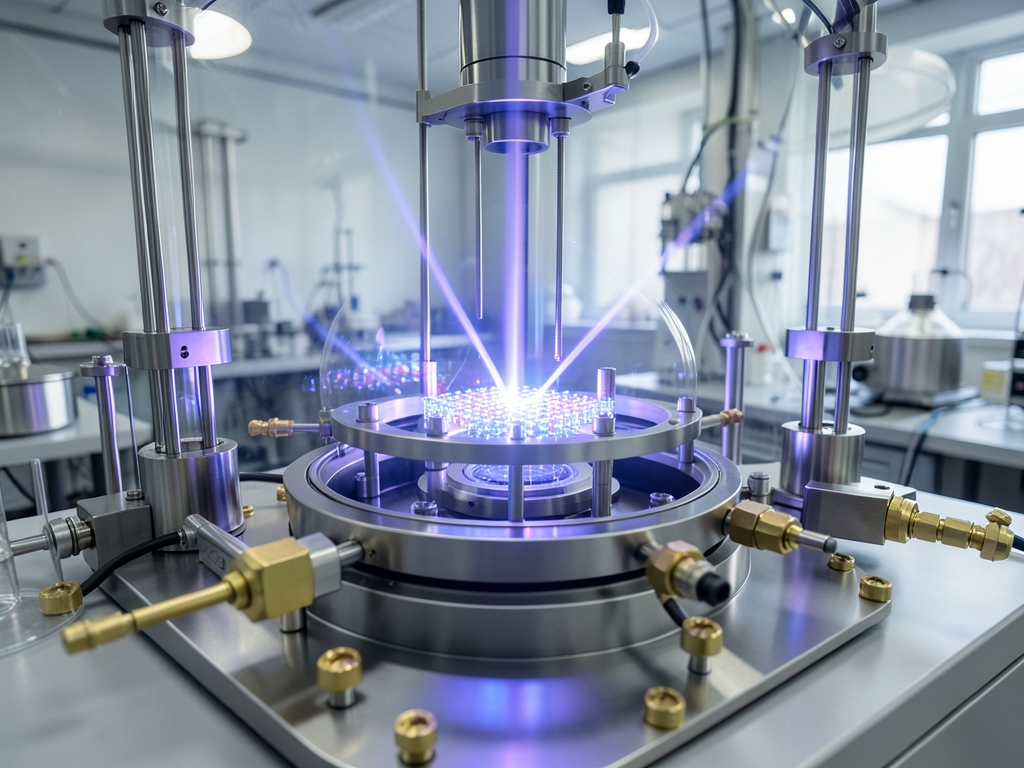
The recent observation of these long-predicted quantum structures required an exquisite orchestration of laser technology, vacuum physics, and high-resolution imaging systems. Researchers began by isolating a specific species of atoms, often alkali metals such as rubidium or lithium, inside an ultra-high vacuum chamber designed to eliminate thermal interference from the surrounding environment.
Once the atoms were loaded into a magnetic trap, scientists applied counter-propagating laser beams to construct an optical lattice—a crystalline landscape of light created by interfering laser light fields. In this artificial crystal, atoms settle into the periodic potential wells, mimicking the behavior of electrons inside a solid-state crystal but with a level of purity and tunability impossible to achieve in natural materials.
By manipulating the depth and geometry of the optical lattice, experimentalists can tune the interactions between individual atoms with unprecedented precision, turning the quantum gas simulator into a macroscopic window for observing fundamental physical laws in real time.
To capture the newly observed structures, researchers utilized advanced in-situ imaging techniques, including high-resolution fluorescence microscopy and quantum gas microscopy. These methods allow scientists to photograph individual atoms frozen within the lattice sites without destroying the fragile quantum state. The resulting images revealed striking spatial patterns and density correlations that matched the theoretical predictions formulated nearly a century ago with astonishing accuracy.
Implications for Quantum Technology and Many-Body Physics
The successful observation of these quantum structures extends far beyond historical validation; it marks a critical milestone for the future of quantum technology. Understanding how complex quantum states organize and interact at ultracold temperatures provides invaluable insights for developing next-generation quantum simulators.
Traditional supercomputers struggle exponentially when attempting to model complex many-body quantum systems because the number of possible quantum states scales astronomically with the number of particles. By utilizing ultracold atomic gases as direct quantum simulators, researchers can construct physical models of complex materials, high-temperature superconductors, and exotic magnetic phases, observing their behavior directly rather than relying on approximation algorithms.
| Experimental Feature | Traditional Solid-State Systems | Ultracold Atomic Simulators |
|---|---|---|
| Purity and Control | Limited by material defects and impurities | Virtually defect-free with tunable interactions |
| Operating Temperature | Varies from cryogenic to room temperature | Fractions of a microkelvin above absolute zero |
| Imaging Resolution | Often indirect or bulk-averaged | Single-atom spatial resolution |
| System Flexibility | Fixed by chemical composition | Highly reconfigurable via laser fields |
Furthermore, these experimental advancements contribute directly to the stability and coherence requirements of quantum computing architectures. By mastering the control of quantum degenerate gases, researchers gain a deeper understanding of decoherence mechanisms, quantum entanglement, and topological excitations—phenomena that are central to building fault-tolerant quantum computers capable of solving problems intractable for classical machines.
Challenges and Future Research Directions
Despite these remarkable successes, experimental physics in the ultracold regime remains exceptionally demanding. Maintaining ultra-low temperatures and isolating delicate quantum systems from ambient magnetic noise and thermal radiation requires continuous engineering refinements. Even minuscule fluctuations in laser intensity or magnetic field stability can disrupt the fragile quantum structures, causing the atomic cloud to heat up and lose its coherence.
Looking ahead, research teams are focusing on scaling these platforms to incorporate larger numbers of atoms and more complex lattice geometries. By introducing multi-species atomic mixtures and synthetic gauge fields, physicists aim to simulate even more exotic phenomena, including quantum Hall states and relativistic quantum mechanics in tabletop laboratories.
- Refining laser cooling protocols to achieve even lower temperatures and higher phase-space densities.
- Developing advanced quantum gas microscopes capable of non-destructive, continuous real-time monitoring of atomic dynamics.
- Constructing larger-scale optical lattices to simulate complex molecular bonds and chemical reactions at the quantum level.
- Integrating ultracold quantum simulators with photonic interconnects for hybrid quantum processing networks.
As these techniques mature, the boundary between theoretical physics and experimental verification continues to blur. The realization of century-old predictions demonstrates the profound power of foundational science, proving that theoretical insights forged in an earlier era can successfully guide humanity into a new technological age.
What are ultracold atoms and how are they created?
Ultracold atoms are clouds of gaseous atoms cooled to temperatures within a fraction of a microkelvin of absolute zero. They are typically created inside ultra-high vacuum chambers using a combination of laser cooling to slow atomic motion and magnetic or optical trapping to hold the particles without physical walls.
Why did it take nearly 100 years to observe these quantum structures?
Observing these structures required overcoming extreme technical challenges, including the need to reach microkelvin temperatures where thermal agitation ceases, develop stable optical lattices using precise lasers, and build high-resolution quantum gas microscopes capable of imaging individual atoms without destroying their fragile states.
How do ultracold atomic experiments help quantum computing?
Ultracold atomic platforms serve as controllable quantum simulators. By studying how complex quantum structures form and interact, researchers gain insights into quantum entanglement, decoherence, and many-body physics, which help inform the design of more stable and fault-tolerant quantum computing hardware.
What is an optical lattice in atomic physics?
An optical lattice is an artificial crystalline structure created by interfering laser beams. It forms a periodic landscape of light potential wells that trap neutral atoms in an orderly arrangement, mimicking the behavior of electrons inside solid crystals with exceptional purity and tunability.
The successful observation of century-old quantum predictions stands as a testament to the enduring value of fundamental research. By bridging theoretical physics with cutting-edge experimental control, scientists continue to unlock the deepest secrets of matter, paving the way for innovations that will shape the technological landscape of tomorrow.
