

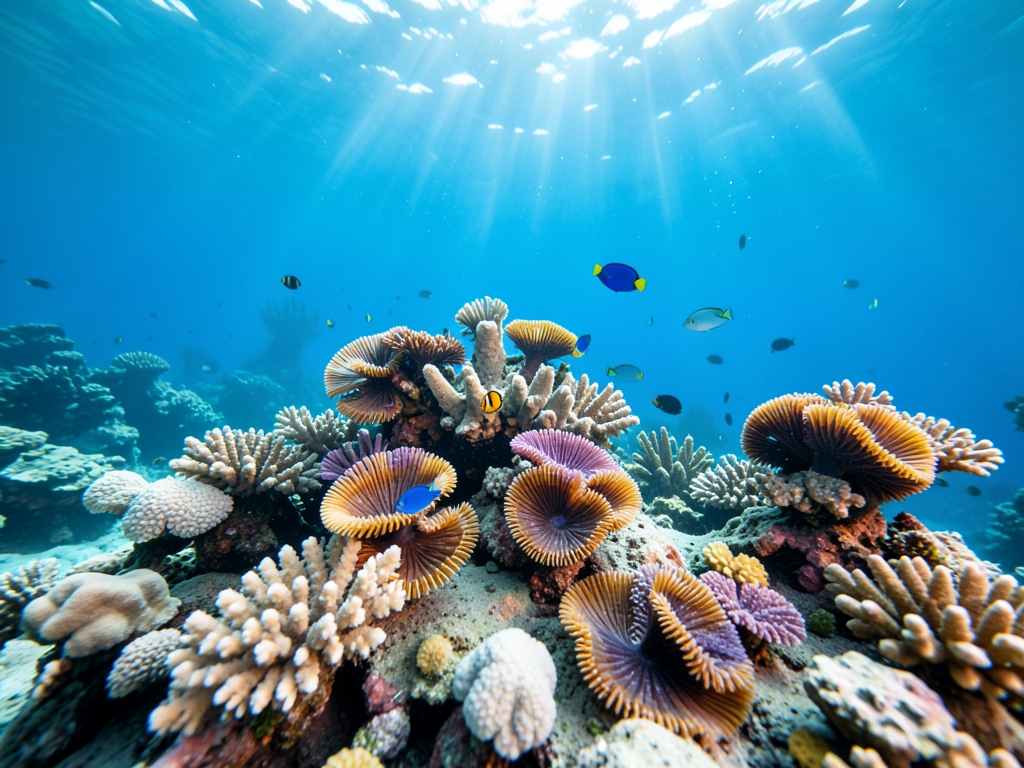
The global environmental community is confronting an increasingly stark reality regarding the future of marine ecosystems. According to recent scientific assessments highlighted by international conservation bodies and United Nations advisors, almost every shallow-water coral reef on planet Earth faces the severe threat of ecosystem collapse within the next fifty years. These findings, underscored by institutions such as the International Union for Conservation of Nature (IUCN), signal an unprecedented ecological crisis across tropical and subtropical marine zones. Understanding the mechanisms driving this projected collapse requires a detailed examination of thermal stress, ocean acidification, and the complex biological interdependencies that sustain reef habitats.
Shallow-water coral reefs occupy less than one percent of the marine floor yet support over twenty-five percent of all known marine species. They function as nurseries for countless fish populations, protect coastlines from storm surges and erosion, and sustain the livelihoods of hundreds of millions of people worldwide through fishing and tourism. However, rising sea surface temperatures have pushed these delicate ecosystems beyond historical tolerance thresholds. When ocean waters remain abnormally warm for extended periods, corals expel the symbiotic algae known as zooxanthellae that live within their tissues. This process, known as coral bleaching, strips the corals of their primary energy source and vivid coloration, leaving them highly vulnerable to starvation and disease.
The 2075 Timeline and Scientific Consensus
The projection pointing toward widespread ecosystem collapse by the year 2075 is derived from comprehensive climate modeling and observational data gathered over decades. Scientific bodies emphasize that current greenhouse gas emission trajectories continue to drive ocean warming at a pace that exceeds the natural evolutionary adaptation rate of scleractinian (stony) corals. While isolated reef pockets in deeper waters or upwelling zones may experience temporary refuge, the vast majority of shallow-water formations lack adequate thermal protection.
Marine biologists stress that bleaching events are no longer isolated anomalies occurring once a decade. Instead, recurring marine heatwaves strike the same reef systems in consecutive years, denying damaged colonies the necessary window for physiological recovery. Consequently, structural degradation accelerates as bioeroding organisms break down dead coral skeletons faster than living polyps can deposit new calcium carbonate.
| Decade Marker | Primary Environmental Stressor | Estimated Global Impact Level |
|---|---|---|
| Present Era | Recurring Marine Heatwaves | Widespread annual bleaching alerts |
| 2045 Projection | Thermal Threshold Breaches | Critical loss of fast-growing branching corals |
| 2075 Projection | Ecosystem Functional Collapse | widespread degradation of shallow reef frameworks |
Ocean Acidification and Chemical Pressures
Beyond thermal stress, the absorption of excess anthropogenic carbon dioxide by the world's oceans triggers a chemical shift known as acidification. As seawater absorbs carbon dioxide, pH levels decline, reducing the concentration of carbonate ions that corals require to build their calcium carbonate skeletons. This chemical barrier compounds the biological stress caused by high temperatures, making skeletal repair increasingly difficult for stressed colonies.
Info! Ocean acidification lowers the saturation state of aragonite, the mineral form of calcium carbonate that stony corals use to construct their hard skeletons, fundamentally altering the structural integrity of reefs.
Furthermore, local anthropogenic stressors amplify global climatic pressures. Coastal development, agricultural runoff laden with excess nutrients, overfishing of herbivorous species that control macroalgae, and destructive fishing practices weaken the resilience of reef ecosystems. When a reef is already compromised by local pollution, its ability to withstand thermal stress diminishes significantly.
Conservation Strategies and Management Interventions
Despite the sobering timeline outlined by conservation advisors, international efforts are underway to protect and restore resilient reef patches. Marine Protected Areas (MPAs) and Other Effective Area-based Conservation Measures (OECMs) play a vital role in shielding specific habitats from local pressures such as overfishing and destructive industrial activities. By safeguarding these zones, conservationists aim to preserve genetic reservoirs that may possess higher thermal tolerance.
Warning! While active restoration techniques such as coral gardening and selective breeding of heat-resistant strains offer localized benefits, experts emphasize they cannot substitute for urgent global emission reductions.
Innovative scientific initiatives also focus on assisted evolution, where researchers breed coral strains capable of withstanding higher temperatures. While these measures offer hope for specific high-value tourism sites or culturally significant coastlines, scaling them across millions of square kilometers of ocean remains an immense logistical and financial challenge.
Global climate policy frameworks continue to serve as the foundational mechanism for preventing the worst-case scenarios outlined in recent UN and IUCN reports. Limiting global temperature rise remains the single most effective intervention to secure the long-term viability of shallow-water marine environments.
Why are shallow-water coral reefs facing collapse by 2075?
Shallow-water coral reefs face ecosystem collapse primarily due to recurring marine heatwaves driven by climate change, which cause severe coral bleaching, combined with ocean acidification and local environmental stressors such as pollution and overfishing.
What is coral bleaching and why is it dangerous?
Coral bleaching occurs when prolonged high water temperatures cause corals to expel the symbiotic algae living inside their tissues. This strips them of their primary food source and color, leading to starvation and mortality if conditions do not improve quickly.
How does ocean acidification affect coral skeletal growth?
Absorption of excess carbon dioxide lowers ocean pH and reduces carbonate ion availability, making it chemically difficult for corals to build and maintain their hard calcium carbonate skeletons.
Can local conservation efforts stop global reef decline?
Local conservation measures like Marine Protected Areas and reducing pollution enhance resilience and protect genetic diversity, but experts stress they must be paired with global greenhouse gas reductions to prevent widespread collapse.
Conclusion
The scientific warnings regarding shallow-water coral reefs serve as a critical indicator of broader planetary health. While the projected timeline to 2075 highlights the urgency of immediate intervention, it also reinforces the necessity of combining global climate mitigation with rigorous local conservation. Protecting marine biodiversity requires sustained international cooperation, rigorous habitat management, and an unwavering commitment to reducing atmospheric carbon emissions.
Sources and Further Reading
- Almost every shallow-water coral reef on the planet faces ecosystem collapse by 2075, UN advisors say - The Guardian — The Guardian (published 2026-10-22 22:13)
- Nearly all coral reefs risk collapse in 50 years: IUCN - The Japan Times — The Japan Times (published 2026-10-22 13:58)
- Nearly all coral reefs at risk of collapse by 2075, conservation body warns - RFI — RFI (published 2026-10-22 12:29)
