

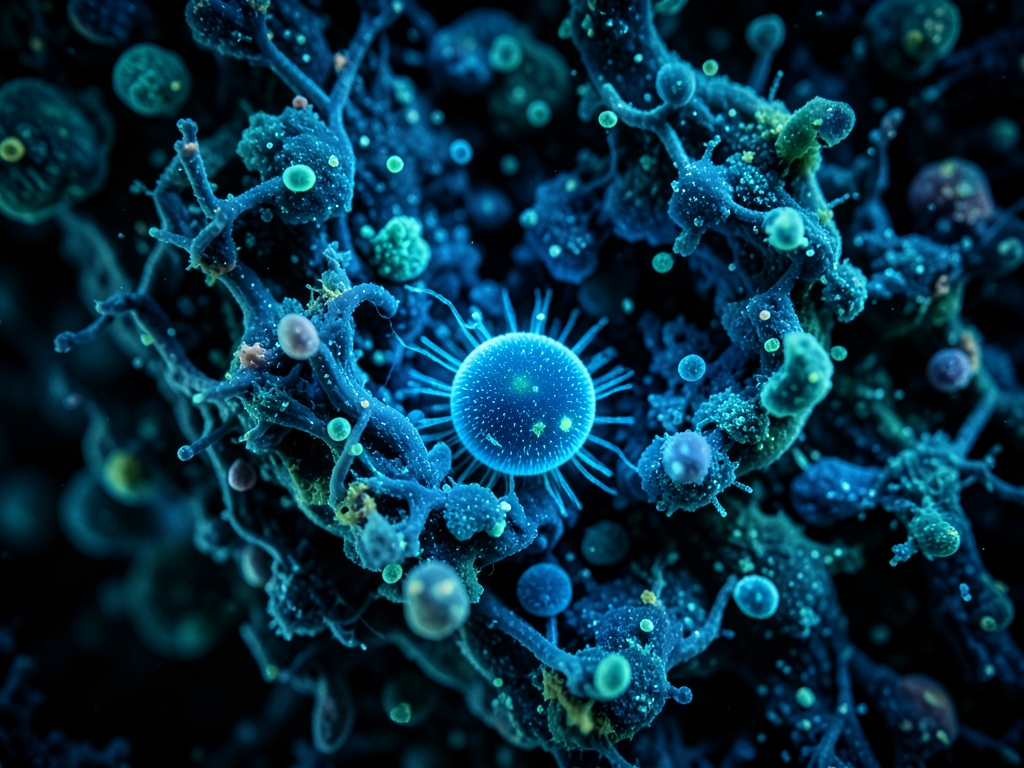
The vast expanses of the world’s oceans harbor countless microscopic organisms that continue to challenge our understanding of biology and the limits of life. Among these microscopic entities, archaea represent a fundamental domain of single-celled organisms that often thrive in extreme environments, yet they also play crucial roles in global nutrient cycles within temperate marine ecosystems. Recent scientific investigations into the hidden inhabitants of ocean plankton have yielded a remarkable discovery: researchers have identified a tiny, elusive microbe possessing the smallest archaeal genome ever recorded on scientific record. Measuring just 238,000 DNA base pairs, this unprecedented finding provides profound insights into genome reduction, symbiotic dependencies, and the absolute minimal genetic requirements necessary to sustain cellular life.
The Significance of Minimal Genomes in Marine Microbiology
To appreciate the magnitude of this discovery, it is essential to understand how genetic information governs cellular function. Typical free-living bacteria and archaea possess genomes containing millions of base pairs, encoding thousands of proteins responsible for independent metabolism, energy production, replication, and environmental adaptation. However, a specialized subset of microorganisms known as symbionts or parasites undergo a evolutionary process characterized by genome streamlining. Over countless generations, as these organisms adapt to life inside or alongside host cells, they shed genes that encode metabolic pathways which their hosts can provide for them.
This evolutionary reduction results in ultra-compact genomes that hover near the theoretical lower limit for cellular existence. Prior to this finding, scientists cataloged various streamlined bacteria and archaea with remarkably small genetic blueprints, but breaking the threshold down to 238,000 DNA base pairs represents a striking new benchmark. This extreme minimization forces evolutionary biologists to re-evaluate what constitutes an autonomous biological system versus a dependent genetic entity, blurring the traditional lines between cellular life and biological macromolecules.
Info! The newly discovered microbe hides directly inside larger ocean plankton, utilizing its host's cellular machinery to compensate for its drastically reduced metabolic capabilities.
Uncovering the Microbe Within Ocean Plankton
The discovery was made possible through advanced metagenomic sequencing techniques and high-throughput bioinformatics pipelines that allow researchers to analyze complex microbial communities without the need to culture every individual species in a laboratory setting. Culturing many marine microorganisms remains notoriously difficult because scientists often cannot replicate the precise chemical and physical conditions of their natural oceanic habitats. By extracting total DNA from ocean plankton samples collected during marine expeditions, researchers can reconstruct individual genomes from short sequencing reads using sophisticated computational algorithms.
When analyzing the sequencing data from planktonic fractions, scientists noticed an exceptionally small, fragmented genomic assembly that initially appeared to be contamination or sequencing noise. However, rigorous verification steps confirmed that the sequence belonged to a novel archaeal lineage living in intimate association with ocean plankton. Further analysis revealed that the organism's genome lacked numerous genes essential for basic biosynthetic pathways, confirming its status as a highly streamlined symbiont reliant upon its planktonic host.
Biological Implications and Metabolic Limitations
A genome containing only 238,000 DNA base pairs leaves very little coding capacity for proteins. Typically, such a compact genome can encode only a couple of hundred proteins, forcing the organism to operate with extreme biological efficiency. Major metabolic functions that most free-living organisms take for granted—such as the synthesis of certain amino acids, nucleotides, and lipids—are completely absent from this microbe's genetic code. Instead, the organism must import these essential building blocks directly from its host.
This reliance raises fascinating questions regarding host-microbe interactions in marine environments. While the host plankton provides shelter and chemical nutrients, the resident archaeon likely offers subtle metabolic or regulatory contributions in return, maintaining a delicate symbiotic balance rather than acting as a purely destructive pathogen. Understanding these subtle metabolic exchanges is crucial for marine ecologists seeking to map the complex web of interactions that sustain ocean ecosystems.
The discovery of a 238,000-base-pair archaeal genome redefines our understanding of cellular minimalism, demonstrating how far evolution can pare down the blueprint of life when a host provides a supportive environment.
Comparative Scale of Smallest Known Genomes
| Organism Type | Approximate Genome Size (Base Pairs) | Ecological Strategy |
|---|---|---|
| Typical Free-Living Bacterium | 3,000,000 to 5,000,000+ | Independent metabolism and replication |
| Streamlined Marine Bacterium (Pelagibacter) | 1,300,000 to 1,500,000 | Highly optimized free-living oligotroph |
| Previous Record-Holding Symbiotic Microbe | 500,000 to 600,000 | Obligate host-dependent association |
| Newly Discovered Planktonic Archaeon | 238,000 | Extreme genome reduction via host dependency |
Future Directions in Marine Genomic Research
The identification of this record-breaking archaeal genome opens exciting avenues for future research in microbiology, evolutionary biology, and biotechnology. Scientists are now working to determine whether similar ultra-small genomes exist in other marine environments, such as deep-sea hydrothermal vents, oxygen minimum zones, and polar ice sheets. Expanding these surveys will help researchers understand whether 238,000 base pairs represents a universal floor for cellular life or if even more streamlined organisms remain undiscovered.
Furthermore, studying the minimalist architecture of these genomes offers valuable insights for synthetic biology. By identifying the absolute core set of genes required to maintain a functioning cell, bioengineers hope to gain a deeper understanding of cellular design principles, potentially aiding in the construction of customized synthetic microorganisms designed for targeted industrial or environmental applications.
What makes this newly discovered archaeal genome unique?
This microbe possesses just 238,000 DNA base pairs, making it the smallest archaeal genome ever recorded on scientific record and pushing the known boundaries of cellular minimalism.
How do scientists study microorganisms that cannot be cultured in a lab?
Researchers rely on advanced metagenomic sequencing techniques, extracting total DNA from environmental samples like ocean plankton and using bioinformatics pipelines to reconstruct genomes computationally.
Why is the microbe's genome so small?
Through an evolutionary process of genome reduction, the organism has shed genes for biosynthetic pathways because it relies on its ocean plankton host to supply essential nutrients and metabolic products.
What are the broader implications of this discovery for science?
The finding helps evolutionary biologists understand the minimal genetic requirements for cellular life and provides valuable insights that could inform research in synthetic biology and microbial ecology.
Conclusion
The discovery of a 238,000-base-pair archaeal genome hiding within ocean plankton highlights the astonishing adaptability of life on Earth. By pushing the boundaries of genome reduction, this microscopic organism demonstrates how complex biological systems can thrive through symbiotic interdependence. As marine metagenomics continues to advance, researchers will undoubtedly uncover further hidden secrets within the world's oceans, expanding our comprehension of microbial diversity and the fundamental rules governing cellular existence.
